★
Loading archive…
Loading archive…

Captain, U.S. Army
Support & adopt this hero ↓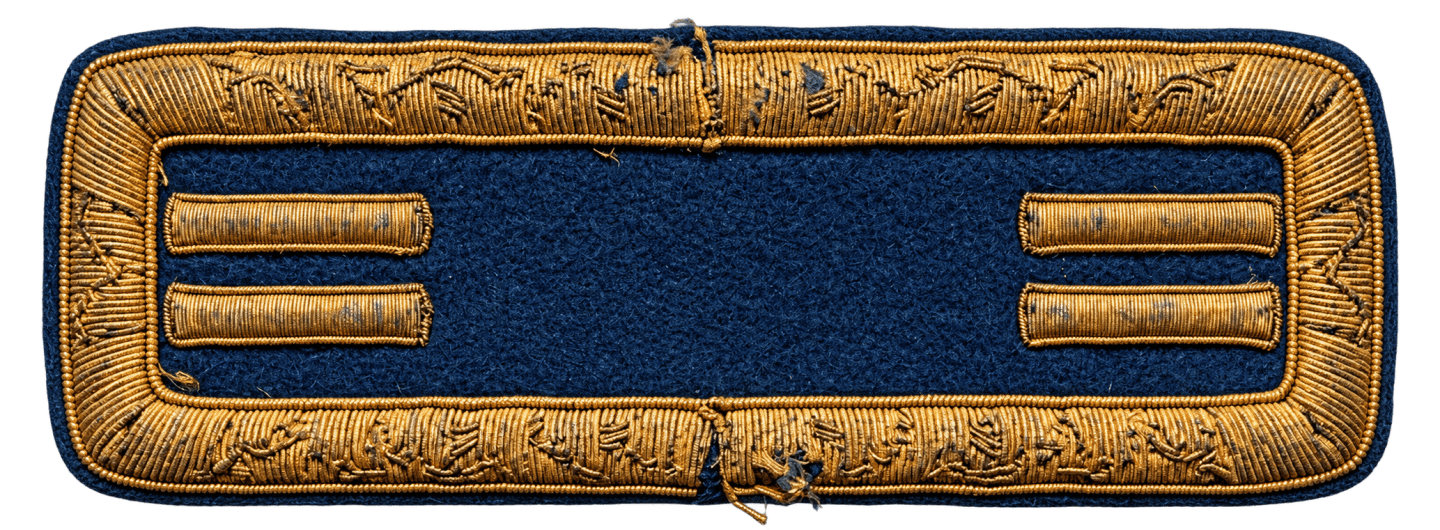
Hubert Anton Casimir Dilger was a German-born professional artillery officer who became one of the most respected Union artillery commanders of the American Civil War and later received the Medal of Honor for his extraordinary conduct at the Battle of Chancellorsville. He was born on March 5, 1836, in Engen in the Grand Duchy of Baden, in what is now Germany. Unlike many volunteer officers who learned military skills only after the Civil War began, Dilger entered the conflict with formal professional artillery training and several years of military experience. As a young man, Dilger attended military training in Baden and entered the artillery service of the Grand Duchy. His progression through the Baden military establishment included cadet training, service as a noncommissioned cadet, and eventually commissioning as an artillery officer. By the late 1850s he had reached the rank of lieutenant in the Baden artillery. His service included assignments connected with Karlsruhe and Rastatt, where he acquired practical experience with mounted artillery, mobility, gun handling, range estimation, and the rapid deployment of batteries. When the American Civil War began in 1861, Dilger left Baden military service and traveled to the United States. His professional artillery background made him particularly valuable to the rapidly expanding Union Army, which urgently needed experienced officers capable of training volunteers and commanding field batteries. Dilger became Captain of Battery I, 1st Ohio Light Artillery. This rank remained his highest verified United States Army rank and was also the rank he held during the action that later earned him the Medal of Honor. Battery I soon became closely associated with its commander and was widely known as “Dilger’s Battery.” Dilger himself acquired the nickname “Leatherbreeches,” a reference to the durable riding trousers he wore while serving with the artillery. The battery saw demanding combat service in the Eastern Theater. During the 1862 campaigns, Dilger demonstrated the aggressive and highly mobile artillery tactics that became characteristic of his command. At Cross Keys, his battery used rapid and accurate fire against attacking Confederate troops. Later that year, at Second Bull Run, Battery I again operated under severe battlefield conditions and helped cover Union movements during the fighting. These early engagements helped establish Dilger’s reputation as an unusually capable field artillery officer. He emphasized accuracy, mobility, rapid firing, and the careful selection of targets rather than simply firing large quantities of ammunition. By the spring of 1863, Battery I was serving with the Union XI Corps of the Army of the Potomac. The defining action of Dilger’s military career occurred on May 2, 1863, during the Battle of Chancellorsville, Virginia. That afternoon, Lieutenant General Thomas J. “Stonewall” Jackson launched a massive Confederate flank attack against the exposed right side of the Union Army. The XI Corps bore the force of the assault. Confederate troops struck unexpectedly and drove large portions of the Union line backward. The retreat threatened to become a complete collapse. Dilger immediately recognized the danger and positioned his artillery to slow the Confederate advance. Battery I initially used its guns to fire against the approaching Confederate forces. Dilger’s professional artillery judgment became particularly important as the situation deteriorated. Rather than remaining fixed in one position until his entire battery was lost, he used a controlled withdrawal, repeatedly moving guns to new positions and continuing to fire. His battery initially delayed the advancing Confederates with its full complement of guns. As the enemy closed in and Union infantry positions became impossible to hold, Dilger ordered most of his guns withdrawn while personally remaining with a single piece. The final stage of the action became the basis of his Medal of Honor citation. Dilger continued fighting until Confederate troops were nearly upon his position. He then had one gun hauled by hand into the road and used it to form a rear guard. From this position, he repeatedly fired at the advancing enemy. The rapidity and accuracy of his fire helped delay Confederate pursuit while retreating Union troops moved toward safer positions. Dilger continued this rear-guard action until virtually the last possible moment. His official Medal of Honor citation summarized the action by recording that he fought his guns until the enemy were upon him, then used a single gun drawn into the road by hand to form the rear guard, kept the enemy at bay through rapid fire, and was the last man in the retreat. This was not simply an act of remaining at an artillery piece under fire. It demonstrated professional battlefield judgment under extreme pressure. Dilger had to determine when to fire, when to withdraw each gun, which targets posed the greatest danger, and how long a single remaining artillery piece could delay the Confederate advance without being captured. He successfully transformed what could have become the loss of his battery into an organized delaying action. Battery I continued active service after Chancellorsville. Only two months later, Dilger and his men fought at Gettysburg. On July 1, 1863, Battery I entered action north of Gettysburg as part of the XI Corps artillery. Dilger aggressively positioned his guns and engaged Confederate artillery and infantry while the Union line west and north of the town came under increasing pressure. During the fighting, he moved his artillery forward to obtain more effective range and directed sustained fire against Confederate positions. When the XI Corps eventually withdrew through Gettysburg, Dilger again used artillery to help cover the retreat. Battery I then occupied positions on Cemetery Hill and remained engaged during the later stages of the battle. The battery’s participation at Gettysburg demonstrated that Chancellorsville had not been an isolated example of Dilger’s skill. His command repeatedly operated in exposed positions, conducted controlled withdrawals when necessary, and provided artillery support during some of the Army of the Potomac’s most difficult fighting. Later in 1863, the XI Corps was transferred west. Dilger and Battery I therefore moved from the Virginia and Pennsylvania battlefields to the Western Theater. During 1864, Battery I participated in the Atlanta Campaign under Major General William T. Sherman. The campaign required almost continuous movement and combat as Union forces advanced through northern Georgia toward Atlanta. Dilger’s battery served with the Fourteenth Corps and took part in operations around places such as Resaca, Dallas, New Hope Church, Kennesaw Mountain, and the approaches to Atlanta. By this stage of the war, Battery I had become a veteran artillery organization. Reports from the campaign repeatedly praised its effectiveness, discipline, and courage under fire. Dilger remained Captain throughout his verified United States Army service. Despite his extensive combat experience and strong reputation, no completed promotion above Captain has been verified, so Captain remains his correct highest U.S. Army rank. After the major campaigning of 1864, Dilger’s wartime service moved toward its conclusion. The Civil War ended in 1865, and Dilger left active Union service having commanded artillery in both the Eastern and Western theaters. That same year, he married Elise Tiedemann in Philadelphia. The couple subsequently raised a large family. Dilger continued to maintain a connection with military affairs after the war. In Illinois, he entered state military administration and served as Adjutant General of Illinois from 1869 to 1873. In that position he participated in the management of the state’s postwar military organization during a period when the volunteer armies of the Civil War were being replaced by peacetime militia structures. Later, Dilger moved to Virginia. By the late nineteenth century he had established himself near Front Royal, where he lived as a farmer and rancher. This period of his life was far removed from the artillery battlefields on which he had made his reputation, but his identity as a veteran Union officer remained central to his public legacy. For thirty years after Chancellorsville, Dilger did not possess the Medal of Honor. The formal national recognition came on August 17, 1893. On that date, the United States awarded Hubert Dilger the Medal of Honor for his conduct at Chancellorsville on May 2, 1863. The distinction between these dates is important. His heroic action occurred in 1863. His Medal of Honor was issued in 1893. Therefore, for the project database, his correct medal entry is: Medal of Honor 1862–1895 Army — 1893. The Medal of Honor had been authorized for the United States Army during the Civil War in 1862. At that time, the American military did not possess the broad hierarchy of valor decorations that developed during the twentieth century. The Medal of Honor therefore became the principal national decoration available for extraordinary military conduct. Many Civil War recipients were decorated during the conflict, while others were recognized years or even decades later after their wartime actions were reviewed. Dilger belonged to this later group. His award was not posthumous. He was alive to receive the national recognition of an action he had performed thirty years earlier. The decoration specifically honored his Chancellorsville rear-guard action rather than his entire military career. His service at Cross Keys, Second Bull Run, Gettysburg, and through the Atlanta Campaign added to his reputation, but the Medal of Honor recognized the particular moment on May 2, 1863 when he continued fighting with his artillery during the collapse of the XI Corps position and used one remaining gun to protect the retreat. No additional device or clasp is associated with his verified Medal of Honor entry. Dilger lived into the early twentieth century. In 1907, he returned for a visit to his native Baden, decades after leaving Europe to fight in the American Civil War. By then, he had spent most of his adult life in the United States and had become closely identified with American military history. Hubert Anton Casimir Dilger died on May 14, 1911, near Front Royal, Virginia, at the age of seventy-five. He was buried in Rock Creek Cemetery in Washington, D.C. His military legacy rests especially on his mastery of field artillery and his ability to remain effective during battlefield crises. At Chancellorsville, when Union formations were breaking under Stonewall Jackson’s flank attack, Dilger did not simply abandon his guns. He conducted a disciplined withdrawal, reduced his position step by step, retained a single artillery piece as a rear guard, and continued firing while the remainder of the Union force withdrew. Thirty years later, that action was formally recognized with the Medal of Honor. Hubert Anton Casimir Dilger’s final verified military profile therefore records him as a United States Army Captain and commander of Battery I, 1st Ohio Light Artillery, with Artillery as his Combat Achievement classification. His defining Medal of Honor action occurred at Chancellorsville, Virginia, on May 2, 1863. His sole verified decoration for the profile is Medal of Honor 1862–1895 Army — 1893, with no device or clasp.
Become the named supporter for this profile and edit the tribute biography and portrait (Owner account required). Proceeds help keep the archive online.
$25 USD / year — annual sponsorship renewal. Keeps the page online and, where enabled, the family anniversary remembrance emails active.