★
Loading archive…
Loading archive…
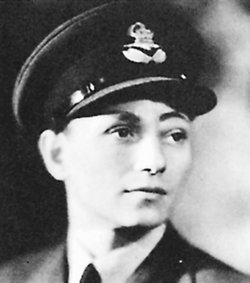
Wing Commander, Royal Air Force
Support & adopt this hero ↓
Leading bombers into battle with no fighter cover in Tunisia
Hugh Gordon Malcolm was born at Broughty Ferry, Dundee, on 2 May 1917. The son of Kenneth and Marjorie Malcolm, he attended Craigflower Preparatory School near Dunfermline and Trinity College, Glenalmond, in Perthshire. He entered the Royal Air Force College Cranwell in January 1936 and graduated as a commissioned pilot in December 1937. His first squadron was No. 26 at Catterick, where his work included Army co-operation exercises and training at Old Sarum.
On 20 May 1939, Malcolm suffered a fractured skull when his Westland Lysander crashed during practice for an Empire Air Day display. He spent four months recovering at Princess Mary Hospital, Halton, where he met the nurse Helen Swan, whom he married in 1940. Although initially told he would never fly again, he returned to his squadron in September 1939.
His wartime postings included Nos. 4, 241 and 225 Squadrons, flying Lysanders. He became a flight lieutenant in September 1940 and a squadron leader in December 1941. After a brief posting to No. 17 Operational Training Unit, he joined No. 18 Squadron at Wattisham as a flight commander in April 1942. Flying Bristol Blenheim IV bombers, he attacked German night-fighter airfields to support Bomber Command's operations. On the night of 30/31 May, he led seven Blenheims against St Trond during the first thousand-bomber raid, directed against Cologne. He also flew in support of subsequent raids on Essen and Bremen.
On 1 July 1942, Malcolm and his crew located a dinghy off the Dutch coast and remained nearby for four hours, providing position fixes that helped bring about the airmen's rescue. Their conduct earned a commendation. In September he took command of No. 18 Squadron with the acting rank of wing commander. The squadron re-equipped with Blenheim Vs and moved to Algeria in November as part of No. 326 Wing, supporting the Allied campaign in North Africa.
His leadership in attacks on Bizerta and his final mission brought a posthumous Victoria Cross. On 4 December 1942, he led an urgent attack on an enemy airfield near Chouigui, Tunisia, despite the absence of a fighter escort. Enemy fighters overwhelmed the bombers. Malcolm and his two crewmen were killed when their aircraft was shot down. He was 25, and his life and service ended in the action for which he was decorated. He is buried in Beja War Cemetery, Tunisia.
Official Victoria Cross citation London Gazette, Second Supplement, 27 April 1943, issue 35992, page 1905
Air Ministry, 27th April, 1943. ROYAL AIR FORCE.
The KING has been graciously pleased to confer the VICTORIA CROSS on the undermentioned officer in recognition of most conspicuous bravery:
Acting Wing Commander Hugh Gordon MALCOLM (33322) (deceased), No. 18 Squadron.
This officer commanded a squadron of light bombers in North Africa. Throughout his service in that theatre his leadership, skill and daring were of the highest order.
On 17th November, 1942, he was detailed to carry out a low-level formation attack on Bizerta airfield, taking advantage of cloud cover. Twenty miles from the target the sky became clear, but Wing Commander Malcolm carried on, knowing well the danger of proceeding without a fighter escort. Despite fierce opposition, all bombs were dropped within the airfield perimeter. A Junkers 52 and a Messerschmitt 109 were shot down; many dispersed enemy aircraft were raked by machine gun fire. Weather conditions became extremely unfavourable and as a result, two of his aircraft were lost by collision; another was forced down by enemy fighters. It was due to this officer's skilful and resolute leadership that the remaining aircraft returned safely to base.
On 28th November, 1942, he again led his squadron against Bizerta airfield which was bombed from a low altitude. The airfield on this occasion was heavily defended and intense and accurate anti-aircraft fire was met. Nevertheless, after his squadron had released their bombs, Wing Commander Malcolm led them back again and again to attack the airfield with machine gun fire.
These were typical of every sortie undertaken by this gallant officer; each attack was pressed to an effective conclusion however difficult the task and however formidable the opposition.
Finally, on 4th December, 1942, Wing Commander Malcolm, having been detailed to give close support to the First Army, received an urgent request to attack an enemy fighter airfield near Chouigui. Wing Commander Malcolm knew that to attack such an objective without a fighter escort (which could not be arranged in the time available) would be to court almost certain disaster; but believing the attack to be necessary for the success of the Army's operations, his duty was clear. He decided to attack. He took off with his squadron and reached the target unmolested, but when he had successfully attacked it, his squadron was intercepted by an overwhelming force of enemy fighters. Wing Commander Malcolm fought back, controlling his hard-pressed squadron and attempting to maintain formation. One by one his aircraft were shot down until only his own aircraft remained. In the end he, too, was shot down in flames.
Wing Commander Malcolm's last exploit was the finest example of the valour and unswerving devotion to duty which he constantly displayed.
Become the named supporter for this profile and edit the tribute biography and portrait (Owner account required). Proceeds help keep the archive online.
$25 USD / year — annual sponsorship renewal. Keeps the page online and, where enabled, the family anniversary remembrance emails active.