★
Loading archive…
Loading archive…

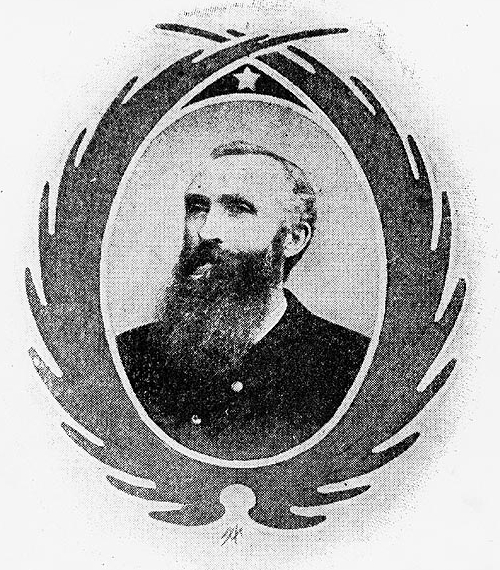
Hugh Molloy was born on September 25, 1841, in County Wexford, Ireland. Like many Irish immigrants of his generation, he eventually made his way to the United States and settled in the Midwest. Before entering military service, he was living in the Chicago area, where he worked in civilian employment. When the American Civil War created an enormous demand for sailors to serve on the nation’s expanding river and coastal fleets, Molloy entered the United States Navy and began a period of service that would permanently associate his name with one of the most dangerous naval engagements on the western rivers. Molloy entered the Navy at Chicago in June 1863. He initially enlisted as a Landsman and was sent to Cairo, Illinois, one of the major Union naval bases supporting operations on the Mississippi River and its tributaries. He spent a short period aboard the receiving ship Clara Dolsen and was subsequently assigned briefly to USS Conestoga before being transferred to USS Fort Hindman. During his service aboard Fort Hindman, he advanced to the rating of Ordinary Seaman, the rank he held when he performed the act of extraordinary courage that later earned him the Medal of Honor. USS Fort Hindman was a side-wheel river steamer serving with the Mississippi Squadron. Originally a civilian vessel, she was purchased by the Navy in 1863 and eventually received the name Fort Hindman. The vessel operated extensively on the Mississippi River system and its tributaries, where Union gunboats performed a demanding combination of patrol, troop transport, reconnaissance, escort, and combat duties. Service on these inland waterways exposed crews to Confederate artillery, sharpshooters, ambushes from riverbanks, difficult navigation, and the constant danger of operating heavily armed steam vessels in confined channels. By early 1864, Fort Hindman was operating in Louisiana as part of Union naval efforts on the Black, Ouachita, and Red River systems. On March 2, 1864, the vessel became heavily engaged with Confederate forces near Harrisonburg, Louisiana. The engagement was particularly dangerous because Confederate artillery and infantry could fire directly upon the gunboats from positions on shore. Fort Hindman came under concentrated fire and sustained numerous hits during the fighting. The vessel’s starboard engine was disabled, and casualties occurred among her crew as Confederate musketry and artillery struck the ship. Molloy was serving with one of Fort Hindman’s gun crews when a Confederate shell penetrated the bow casemate near Gun No. 1. The explosion mortally wounded the first sponger, whose job was essential to maintaining the weapon’s rate of fire. In the confusion of the shellburst, the sponge used to clean and prepare the gun was dropped outside the gun port onto the forecastle. Without that equipment, the gun crew’s ability to continue firing was seriously compromised. Molloy immediately acted. He climbed through the gun port and moved onto the exposed forecastle to recover the sponge. This position placed him outside the protection of the gunboat’s armored structure and directly within the field of Confederate musket fire. After retrieving the equipment, he did not simply return to cover. Instead, he remained in the exposed position and continued sponging and loading the gun for the remainder of the action. His work allowed the weapon to remain in operation while enemy fire continued to sweep the vessel. The physical danger involved in Molloy’s action was considerable. Civil War naval guns required disciplined teamwork. After a gun fired, the bore had to be sponged to extinguish any remaining sparks before a fresh powder charge could be inserted. Failure to complete this process correctly could cause a premature explosion. The gun then had to be reloaded, repositioned, aimed, and fired again. By taking over these duties while exposed outside the casemate, Molloy performed essential work under direct enemy fire at the moment when his gun crew had suffered a severe casualty. Molloy was not the only sailor aboard Fort Hindman whose conduct during the engagement attracted official recognition. The intensity of the fighting produced several remarkable acts of courage among the crew. His own conduct, however, was specifically distinguished by the combination of immediate initiative, continued exposure, and his determination to keep the ship’s gun functioning despite the danger around him. Only a short time after the engagement, Molloy’s bravery received official recognition. General Order No. 32, dated April 16, 1864, recorded his conduct and recognized him with the Medal of Honor. His verified decoration for the VictoriaCross.ca database is therefore Medal of Honor 1862–1912 Navy — 1864, with no device or clasp. The Medal of Honor was still a very new decoration when Hugh Molloy received it. Congress had authorized the Navy Medal of Honor on December 21, 1861, during the opening year of the Civil War. It was the first Medal of Honor authorized by the United States and was originally intended for enlisted naval personnel, including petty officers, seamen, landsmen, and Marines. The law was expanded in 1862, and the decoration became one of the principal means by which the Navy recognized extraordinary courage and heroism during the Civil War. Molloy’s award therefore belongs to the earliest generation of Medal of Honor recipients. Unlike later periods when the decoration was governed by more restrictive modern standards, the Civil War-era Navy Medal of Honor reflected the developing American system of formal military recognition. Molloy’s award was nevertheless rooted in a clearly documented combat action: he voluntarily exposed himself to enemy fire after a fellow crewman was mortally wounded and continued performing an essential combat task for the remainder of the engagement. Molloy remained aboard Fort Hindman until his discharge from naval service in June 1864. His active military career was relatively short, but the experience left lasting physical consequences. Years later, when describing his service in connection with a pension claim, Molloy recalled injuries and physical problems that continued to affect his ability to perform heavy labor after the war. His postwar testimony also preserved valuable details about his enlistment, assignments, and the action aboard Fort Hindman. After leaving the Navy, Molloy returned to Chicago. He spent much of his postwar working life employed in wholesale businesses and later described himself as a stock keeper. He remained closely connected to the city for decades. His wartime experiences did not disappear from his life, particularly because the physical effects of his service continued long after he returned to civilian employment. One of the most revealing episodes from Molloy’s later life occurred in 1891, when he and his former shipmate James K. L. Duncan assisted one another with their veterans’ pension claims. Duncan had served beside Molloy aboard Fort Hindman and had also been recognized with the Medal of Honor for his conduct in the same March 2, 1864 engagement. Nearly three decades after the battle, the two veterans provided statements supporting each other’s accounts of their wartime service and injuries. Their testimony preserved a direct connection between the young sailors who had fought together under fire and the aging veterans attempting to document the lasting consequences of that service. Molloy eventually received a veteran’s pension and continued living in Chicago into the twentieth century. By then, the United States Navy had changed enormously from the improvised river fleet in which he had served during the Civil War. Wooden and lightly armored steam gunboats had given way to modern steel warships, but the Medal of Honor continued to preserve the memory of sailors whose actions had helped establish the decoration’s earliest traditions. Hugh Molloy died in Chicago on March 8, 1922, at approximately eighty years of age. He was buried at Calvary Cemetery in Evanston, Illinois. By the time of his death, almost fifty-eight years had passed since the engagement near Harrisonburg that defined his military legacy. His verified military record remains centered on a single decoration: Medal of Honor 1862–1912 Navy — 1864 — no device or clasp. The award recognized a specific and exceptionally dangerous act aboard USS Fort Hindman on March 2, 1864. When a shell killed or mortally wounded a member of his gun crew and vital equipment fell outside the protection of the vessel, Ordinary Seaman Hugh Molloy exposed himself to enemy fire, recovered the equipment, and continued loading the gun so that his ship could remain in the fight. That act, performed during the violent river warfare of the American Civil War, became the defining moment of his service and secured his place among the earliest United States Navy recipients of the Medal of Honor.
Become the named supporter for this profile and edit the tribute biography and portrait (Owner account required). Proceeds help keep the archive online.
$25 USD / year — annual sponsorship renewal. Keeps the page online and, where enabled, the family anniversary remembrance emails active.