★
Loading archive…
Loading archive…

He stayed to burn the buildings as enemy troops closed fast.
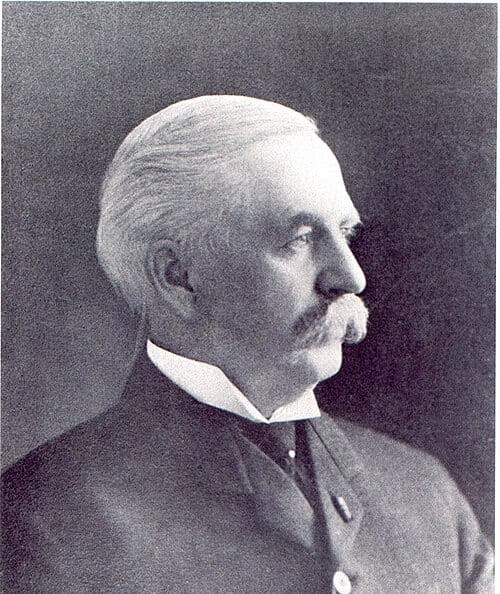
Irwin Shepard was born on 5 July 1843 at Skaneateles, New York. His family moved to Chelsea, Michigan, when he was thirteen. In 1859 he entered the state normal school at Ypsilanti, beginning the education that would eventually shape his civilian career. The Civil War interrupted those studies and took him into Company E of the 17th Michigan Infantry.
By November 1863 he was a corporal serving near Knoxville, Tennessee. Confederate sharpshooters were using buildings beyond the Union lines as protected firing positions. Removing that cover required a small party to cross into exposed ground and set the buildings alight, a task that could not be completed from the safety of the Union defences.
On 20 November Shepard volunteered for the mission. As the party worked, advancing Confederates brought it under fire. The order was given to withdraw. Shepard remained behind and continued setting the buildings alight until their destruction was assured. He had accepted the risk of entering the position; staying after the retirement order prolonged his exposure while the enemy drew closer.
His official Medal of Honor citation records both his voluntary participation and his decision to finish the work. It credits completion of the burning “at the imminent risk of his life” under the advancing enemy's fire (Congressional Medal of Honor Society, official citation: https://www.cmohs.org/recipients/irwin-shepard). The medal was awarded on 3 August 1897, almost thirty-four years after the operation. His highest military rank was first sergeant.
After the war he resumed higher education at Olivet College. He married Mary Bassett Elmer in 1871; they had three children, two of whom survived to adulthood. He became a school superintendent at Charles City, Iowa, before moving to Winona, Minnesota, in 1875.
There he served as a high-school principal and superintendent, then became president of the Winona State Normal School in 1879. Teacher education, kindergarten training and recognition of the normal-school diploma as a teaching qualification became important parts of his work. He later served as secretary of the National Educational Association, organising correspondence and conventions from his home.
Shepard died at Winona on 17 April 1916 and was buried in Woodlawn Cemetery. The veteran's later work in education gave him a second public career, extending the studies he had begun before entering military service.
Become the named supporter for this profile and edit the tribute biography and portrait (Owner account required). Proceeds help keep the archive online.
$25 USD / year — annual sponsorship renewal. Keeps the page online and, where enabled, the family anniversary remembrance emails active.