★
Loading archive…
Loading archive…
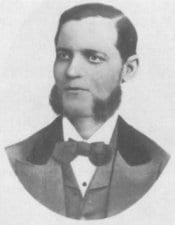
Gunner, Royal Navy
Support & adopt this hero ↓
One split-second decision stood between life and death aboard HMS Alexandra. As enemy fire battered the British fleet during the bombardment of Alexandria on 11 July 1882, a live shell penetrated the warship and landed on the main deck. Its fuse was burning. While the crew faced the terrifying possibility of a catastrophic explosion, one Royal Navy gunner stepped forward, seized the deadly projectile and prevented a disaster. His name was Israel Harding, and his extraordinary courage earned him Britain's highest award for gallantry, the Victoria Cross.
Israel Harding was a distinguished Royal Navy serviceman whose career spanned several major nineteenth-century naval campaigns. His courage, professionalism and willingness to place the lives of his shipmates above his own made him one of the notable naval recipients of the Victoria Cross.
Harding's naval career included service during the Crimean War, when he spent two years in the Baltic. His participation in this campaign earned him the Baltic Medal of 1854–55. His service continued during the Anglo-Ashanti War of 1873–74, when he served aboard HMS Victor Emanuel, employed as a hospital ship. For this campaign, he received the Ashantee Medal.
His most celebrated act of gallantry came during the Anglo-Egyptian War of 1882. Serving aboard HMS Alexandra, Harding was present during the British naval bombardment of Alexandria on 11 July. At approximately nine o'clock in the morning, a ten-inch spherical shell passed through the ship's side and lodged on the main deck near a hatchway. The fuse was still burning, creating an immediate threat to everyone aboard.
Hearing the warning that a live shell had landed above the hatchway, Harding rushed up from below. Recognising the danger, he took water from a nearby tub and threw it over the projectile. He then picked up the shell and placed it inside the tub, extinguishing the immediate threat. Had the projectile exploded, it could have destroyed many lives.
This remarkable act of presence of mind and selfless courage resulted in the award of the Victoria Cross. Harding's actions demonstrated that extraordinary bravery does not always involve advancing under fire or attacking an enemy. Sometimes, it means confronting an immediate danger when everyone else is at risk.
His connection with acts of courage extended beyond the battlefield. In June 1871, Harding led a landing party from HMS Gladiator to assist in fighting a serious fire at the Arsenal of War in Rio de Janeiro, Brazil. His lifesaving efforts were recognised by the Brazilian Imperial authorities, who presented him with a Medal of Distinction for Extraordinary Services to Humanity and an accompanying warrant. This foreign recognition reflected the same humanitarian spirit that would later define his most famous act aboard HMS Alexandra.
For his Egyptian campaign service, Harding also received the Egypt Medal 1882 with the Alexandria 11th July clasp and the Khedive's Star. Together with his Baltic and Ashantee medals, these honours represent a naval career marked by service across several important campaigns of the Victorian era.
Harding eventually attained the rank of Chief Gunner and retired from the Royal Navy in 1885. His medals were subsequently distributed among members of his family, ensuring that different parts of his remarkable service record remained preserved by his descendants.
Israel Harding died on 22 May 1917, leaving behind a legacy defined by courage, quick thinking and devotion to his fellow sailors. His Victoria Cross commemorates one extraordinary moment during the bombardment of Alexandria, but his wider naval career reveals a man whose service extended across decades of maritime operations and humanitarian action.
The story of Israel Harding is a reminder that heroism is not measured only by the scale of a battle or the number of enemies defeated. Sometimes, it is measured by the courage to reach for a live shell, knowing that the lives of everyone around you depend on what happens next. His actions aboard HMS Alexandra remain a powerful example of Royal Navy bravery and one of the memorable acts of gallantry recognised by the Victoria Cross.
Become the named supporter for this profile and edit the tribute biography and portrait (Owner account required). Proceeds help keep the archive online.
$25 USD / year — annual sponsorship renewal. Keeps the page online and, where enabled, the family anniversary remembrance emails active.