★
Loading archive…
Loading archive…
He Seized a Train and Made Medal of Honor History
Jacob Wilson Parrott was born on July 17, 1843, in Fairfield County, Ohio. When the American Civil War began, he entered Union service and became a Private in Company K of the 33rd Ohio Infantry. Still a young soldier, he would soon volunteer for one of the most unusual and dangerous operations of the war—an expedition deep into Confederate territory that became known as the Great Locomotive Chase.
In the spring of 1862, Union Major General Ormsby M. Mitchel was preparing operations aimed at Chattanooga, Tennessee, an important Confederate transportation center. Atlanta and Chattanooga were connected by the Western & Atlantic Railroad, which allowed Confederate forces to move troops and supplies rapidly. Civilian scout James J. Andrews proposed sending a small party south in disguise to seize a train and damage the railroad between Atlanta and Chattanooga, disrupting Confederate communications and reinforcement routes.
Parrott was one of the Union soldiers who volunteered for the mission. Traveling in small groups and wearing civilian clothing to avoid detection, the raiders moved through Confederate territory toward their rendezvous in Georgia. Their presence behind enemy lines carried enormous risk. If captured while operating in civilian clothes, the soldiers faced the possibility of being treated as spies rather than ordinary prisoners of war.
On April 12, 1862, Andrews and his men boarded a northbound train and reached Big Shanty, Georgia. When the passengers and train crew stopped for breakfast, the raiders seized the locomotive General along with its cars and headed north toward Chattanooga. Their objective was not simply to steal a train. They intended to damage track, destroy bridges, cut telegraph wires, and interfere with the Confederate railroad system as they moved toward Union lines.
The theft immediately triggered a pursuit. Railroad conductor William Fuller and others followed the raiders with remarkable determination, first on foot and later using a succession of rail vehicles and locomotives. Andrews and his men attempted to slow their pursuers by damaging the railroad and cutting communications, but delays and the increasing pressure of the chase prevented them from completing the destruction they had planned.
As the pursuers closed in and the General began running short of resources, the raiders were forced to abandon the locomotive before reaching Chattanooga. They scattered into the countryside and attempted to escape back to Union territory. The mission itself had failed to destroy the railroad system as intended, but the ordeal for Parrott and the other raiders was far from over.
Parrott was captured by Confederate forces. The prisoners faced military trials, and several members of the raid, including Andrews, were executed. Parrott endured harsh imprisonment and severe interrogation. His captors attempted to force him to reveal information about the purpose and organization of the mission, subjecting him to brutal physical punishment. Despite the treatment he received, he refused to provide the information demanded from him.
At one point, Parrott and other prisoners attempted to escape. Some succeeded in reaching safety, but Parrott and several companions were recaptured. He remained a prisoner until he and other surviving raiders were eventually released through a prisoner exchange in 1863.
After returning to Union control, Parrott traveled to Washington, D.C., where the significance of the Andrews Raid and the suffering of its participants received official recognition. The Army Medal of Honor had been authorized after the raid took place, creating a new decoration for enlisted soldiers who distinguished themselves through gallantry and soldierly conduct.
On March 25, 1863, Secretary of War Edwin M. Stanton presented Medals of Honor to six of the surviving raiders. Jacob Parrott was the first man in that group to receive the decoration, making him the first person in American history to be physically presented with the Medal of Honor.
His place in Medal of Honor history is therefore unique. He was not the earliest soldier to perform the action for which a Medal of Honor would eventually be awarded, but he was the first recipient to actually receive the decoration. His Medal of Honor recognized his participation in the extraordinary mission that carried Union soldiers deep into Confederate territory to seize a railroad train and attempt to destroy a strategically important transportation line.
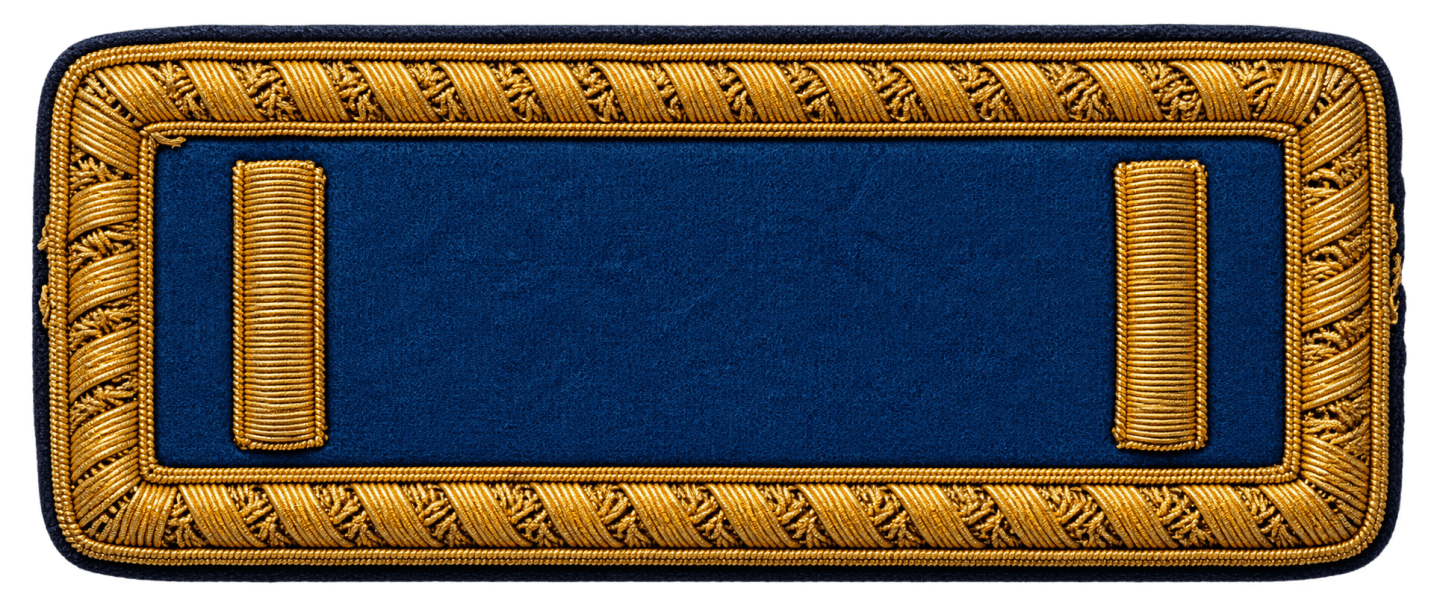
Parrott continued his military career after returning from captivity. He was commissioned a Second Lieutenant in Company K of the 33rd Ohio Infantry, effective May 3, 1863. He later attained the rank of First Lieutenant, the highest verified rank of his military service. His advancement reflected a remarkable transformation from the young Private who had volunteered for the secret railroad raid to a commissioned officer in the Union Army.
The injuries and mistreatment Parrott suffered during his captivity affected him long after his return. His wartime experience later became the subject of federal pension consideration, preserving official recognition of the physical consequences of the treatment he had endured as a prisoner.
His Civil War service was also recognized by the Civil War Campaign Medal. Established by the Army in 1907, the medal honored qualifying military service during the conflict. Parrott was still living when the decoration was established, more than four decades after the raid that had made him one of the best-known enlisted soldiers of the Civil War.
The Medal of Honor itself also changed in appearance during Parrott’s lifetime. His original 1863-design medal survived and eventually became part of the collection at the United States Military Academy at West Point, preserving a direct physical connection to the first Medal of Honor presentation in American history.
Jacob Wilson Parrott died on December 22, 1908, at the age of sixty-five after suffering a heart attack while walking near his home in Kenton, Ohio. He was buried in Grove Cemetery in Kenton, where his grave continues to mark the resting place of the first person ever presented with the Medal of Honor.
His legacy reaches beyond the dramatic seizure of the General. The Great Locomotive Chase became one of the most famous special missions of the American Civil War, remembered for the determination of the raiders, the extraordinary railroad pursuit that followed them, and the severe consequences faced by those who were captured.
For Parrott, that mission brought imprisonment, brutal treatment, and lasting physical consequences. It also placed him permanently in the history of America’s highest military decoration. From a young Private volunteering to travel deep behind enemy lines to a First Lieutenant and the first man ever presented with the Medal of Honor, Jacob Wilson Parrott’s life became inseparably connected with courage, endurance, and one of the most remarkable military adventures of the Civil War.
Become the named supporter for this profile and edit the tribute biography and portrait (Owner account required). Proceeds help keep the archive online.
$25 USD / year — annual sponsorship renewal. Keeps the page online and, where enabled, the family anniversary remembrance emails active.
