★
Loading archive…
Loading archive…

Colonel, British Army
Support & adopt this hero ↓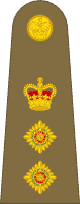
The Hero Who Led the Glorious Glosters at the Imjin River
Surrounded by thousands of enemy soldiers, cut off from reinforcements, and facing almost certain defeat, one British commander refused to abandon his men. His name was James Power Carne, and his extraordinary courage during the Korean War would earn him the Victoria Cross and a permanent place in British military history.
Born on 11 April 1906 in Falmouth, Cornwall, James Power Carne dedicated more than three decades of his life to the British Army. Educated at the Royal Military College, Sandhurst, he was commissioned into the Gloucestershire Regiment in September 1925. His military career took him through the Second World War, including service associated with the Burma campaign, before he emerged as one of Britain's most celebrated commanders of the Korean War. His distinguished service also included a Mention in Despatches.
In 1950, Lieutenant Colonel Carne took command of the 1st Battalion, Gloucestershire Regiment, part of the British 29th Independent Infantry Brigade fighting under United Nations command in Korea. His leadership was tested in February 1951 during an assault on a heavily defended hill. Advancing with his forward companies, Carne personally directed the fighting, reorganised the attack after a company commander was wounded, and inspired his soldiers to capture the objective following fierce hand-to-hand combat. His exceptional leadership and gallantry earned him the Distinguished Service Order (DSO), announced in the London Gazette on 13 July 1951.
But his greatest test was still ahead.
Between 22 and 25 April 1951, during the Battle of the Imjin River, Carne and his Gloucestershire soldiers faced overwhelming Chinese forces. Their defensive positions around Hill 235, later immortalised as Gloster Hill, became the scene of one of the British Army's most remarkable last stands.
As enemy attacks intensified, Carne repeatedly moved between his companies under devastating mortar and machine-gun fire. On two occasions, armed with a rifle and grenades, he personally led counterattacks that drove back enemy troops at critical moments. His courage, composure, and refusal to surrender inspired his exhausted soldiers to continue resisting despite their increasingly desperate situation.
For these extraordinary actions, Carne was awarded the Victoria Cross (VC), Britain's highest decoration for gallantry in the presence of the enemy. His citation, published in the London Gazette on 27 October 1953, recognised his exceptional personal bravery and inspirational leadership during the battle.
When continued resistance became impossible, Carne organised opportunities for small groups of soldiers to withdraw but chose to remain with his wounded men. He was subsequently captured and spent more than two years as a prisoner of war, enduring prolonged solitary confinement before his release in 1953.
His remarkable conduct also earned international recognition. The United States awarded Carne the Distinguished Service Cross, citing his extraordinary heroism, tactical skill, and devotion to his soldiers throughout the Imjin River engagement. The American citation particularly praised his determination to remain with the wounded despite the danger to his own life.
The Gloucestershire Regiment's stand became legendary, earning its soldiers the enduring nickname "The Glorious Glosters." Their resistance helped delay the Chinese advance and gave other United Nations forces valuable time to regroup. The battalion also received Presidential Unit Citations from the United States and South Korea in recognition of its collective courage.
After returning home, Carne continued his distinguished military career, attaining the rank of Colonel before retiring in 1957. He later served as a Deputy Lieutenant of Gloucestershire and remained closely connected to his community. His lifetime recognition also included the Queen Elizabeth II Silver Jubilee Medal in 1977.
Colonel James Power Carne died on 19 April 1986, aged 80. His Victoria Cross and other medals were subsequently entrusted to the Soldiers of Gloucestershire Museum, preserving the story of his extraordinary service for future generations.
James Power Carne's legacy is not simply that he held his ground against overwhelming odds. It is that, when leadership demanded the greatest personal sacrifice, he placed the lives and welfare of his soldiers before his own. His courage at the Imjin River remains an enduring example of duty, loyalty, and the unbreakable bond between a commander and his men.
Become the named supporter for this profile and edit the tribute biography and portrait (Owner account required). Proceeds help keep the archive online.
$25 USD / year — annual sponsorship renewal. Keeps the page online and, where enabled, the family anniversary remembrance emails active.