★
Loading archive…
Loading archive…
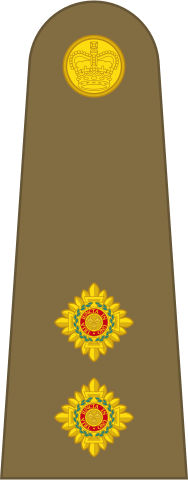
A wounded soldier, a fallen officer, and a desperate rescue mission under relentless enemy fire. On the night of 6 September 1855, Colour Sergeant James Craig displayed the extraordinary courage that would earn him one of Britain's highest distinctions for gallantry, the Victoria Cross. His story is one of battlefield bravery, determination and a remarkable devotion to a fellow soldier during the Crimean War.
James Craig was born near Perth, Scotland, on 10 September 1824. The son of a farmer, he began his working life as a labourer before enlisting in the Scots Fusilier Guards in August 1843. Through years of dedicated service, he rose through the ranks, becoming a corporal in 1846 and a sergeant in 1851. His military career would soon take him into one of the most dangerous conflicts of the nineteenth century.
During the Crimean War, Craig served with his regiment in the campaign against Russian forces. At the Battle of Inkerman on 5 November 1854, he was severely wounded when gunshots struck both his legs. Despite the seriousness of his injuries, he recovered and returned to military duty. By June 1855, he had been promoted to colour sergeant, a position reflecting his experience and standing within the regiment.
His defining moment came during the Siege of Sevastopol. On the night of 6 September 1855, Captain Buckley was reported wounded beyond the advanced British trenches near the formidable Russian defences of the Redan. Recovering an injured soldier from such exposed ground was an exceptionally dangerous undertaking, particularly under the constant threat of Russian small-arms and artillery fire.
Craig did not hesitate. He volunteered to search for his fallen officer and helped gather a party of volunteers for the rescue attempt. Accompanied by a drummer, he advanced into the darkness under intense enemy fire. When they reached Captain Buckley, they discovered that he had died from his wounds. Rather than abandon his officer's body, Craig and his companion undertook the dangerous task of bringing him back through the exposed ground. Craig himself was wounded during the recovery.
It was an act of exceptional courage and selflessness. His willingness to risk his life in an attempt to save his officer, even when the mission had become a recovery operation, demonstrated the extraordinary commitment that distinguished his service. For this action, James Craig was awarded the Victoria Cross.
The announcement appeared in the London Gazette on 20 November 1857. On 21 November 1857, Queen Victoria personally presented Craig with his Victoria Cross at Windsor Castle, formally recognising his remarkable bravery during the Crimean War.
Craig's military career continued after the conflict. He received a commission in the Land Transport Corps and subsequently served with the Military Train. He later transferred to the 10th Regiment of Foot, where he served as a lieutenant and adjutant. His transition from the ranks to commissioned service marked an important chapter in a military career that had begun with his enlistment as a young labourer.
His campaign honours included the Victoria Cross, the Crimea Medal with the Balaklava, Inkermann and Sebastopol clasps, and the Turkish Crimea Medal, reflecting his service during the campaign and the recognition of his gallantry.
Craig was subsequently posted to South Africa. In February 1861, he married Harriet Mary Rowley in Cape Town. His earlier marriage, to Elizabeth Ann Scruse in 1849, had resulted in the birth of a daughter.
Tragically, his life came to an early end. On 18 March 1861, James Craig died near Port Elizabeth, South Africa, aged just 36. Contemporary newspaper reporting and the subsequent inquest described a sudden mental crisis and recorded his death as suicide. He was buried the following day at St Mary's Cemetery in Port Elizabeth.
James Craig's life was relatively short, but his courage during the Crimean War secured his place among Britain's Victoria Cross recipients. His actions at Sevastopol were not driven by the expectation of recognition or reward. Faced with danger, he chose to go forward when others might have remained behind. His Victoria Cross remains a lasting testament to a soldier whose bravery was defined by loyalty, sacrifice and an unwavering determination to stand by his comrades.
Become the named supporter for this profile and edit the tribute biography and portrait (Owner account required). Proceeds help keep the archive online.
$25 USD / year — annual sponsorship renewal. Keeps the page online and, where enabled, the family anniversary remembrance emails active.
