★
Loading archive…
Loading archive…
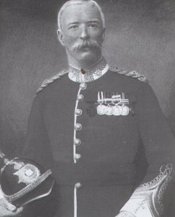
Major, British Army
Support & adopt this hero ↓
He crossed fierce fire to carry a vital message to comrades.
James Edward Ignatius Masterson was born at Birr, Ireland, on 20 June 1862, the son of an army officer. Educated by the Marist Brothers, he entered the Royal Irish Fusiliers in 1881. He fought at Tel-el-Kebir in Egypt the following year and advanced through the noncommissioned ranks before receiving a commission in the Devonshire Regiment in 1891.
Service in Burma and on India's North-West Frontier preceded the Second Boer War. In South Africa he served with the 1st Devonshires at Elandslaagte and during the defence of Ladysmith. On 6 January 1900 his company took part in the counterattack at Wagon Hill. After the position had been regained, fire from the flanks endangered the exposed Devonshire companies.
Masterson volunteered to carry a message to the Imperial Light Horse, asking their commander to redirect supporting fire. He crossed open ground under intense crossfire. Hit in both thighs, he continued by crawling until he reached the trench and delivered the instructions. He then collapsed from his wounds and exhaustion. His intervention helped protect the isolated troops and earned the Victoria Cross.
The decoration was presented to him in India in September 1901. He later became a major in the King's Own Royal Lancaster Regiment and retired in 1912. Recalled after the outbreak of the First World War, he served as a transport officer in France and remained on the army's books until 1919.
He lived in Hampshire after his final retirement. Unmarried, he died at his sister's home in Waterlooville on 24 December 1935 and was buried in the town's Hulbert Road Cemetery.
Become the named supporter for this profile and edit the tribute biography and portrait (Owner account required). Proceeds help keep the archive online.
$25 USD / year — annual sponsorship renewal. Keeps the page online and, where enabled, the family anniversary remembrance emails active.