★
Loading archive…
Loading archive…
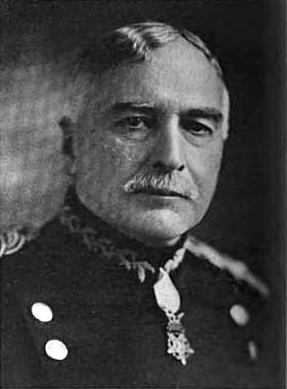
Major General, U.S. Army
Support & adopt this hero ↓
The Medal of Honor Hero Who Defied Overwhelming Odds
What does courage look like when darkness falls, the enemy outnumbers your men, and retreat is no longer an option? On December 4, 1899, Lieutenant Colonel James Parker faced such a test at Vigan, Luzon, in the Philippines. Commanding a small American garrison under attack by a vastly superior force, Parker led his soldiers through hours of fierce, close-quarters fighting. His extraordinary leadership earned him the Medal of Honor, but that remarkable night was only one chapter in a military career spanning more than four decades.
Born on February 20, 1854, in Newark, New Jersey, James Parker graduated from the United States Military Academy at West Point in 1876 and received his commission in the 4th U.S. Cavalry. His early years took him across the American frontier during the Indian Wars, where he developed the battlefield experience that would shape his leadership. On May 22, 1885, at Devil's Creek, New Mexico, Parker distinguished himself through gallantry in action against Apache warriors. His courage that day earned the first of three gallantry citations later recognized with the Silver Star. His frontier service was also recognized by the Indian Campaign Medal.
Parker's military responsibilities expanded during the Spanish-American War of 1898, when he served with volunteer forces before undertaking occupation duties in Cuba. His service during this period was reflected in the Spanish War Service Medal and Army of Cuban Occupation Medal. Yet the most defining battles of his career still lay ahead.
During the Philippine-American War, Parker demonstrated exceptional courage on multiple occasions. On August 12, 1899, he was cited for gallantry against insurgent forces at Mariquina, Luzon. Just three months later, on November 14, he received another citation for gallantry near Manaoag, Pangasinan. Together with his earlier action at Devil's Creek, these engagements accounted for three Silver Star awards, represented by two bronze oak leaf clusters on his Silver Star ribbon.
Then came the battle that secured his place in American military history.
On the night of December 4, 1899, Parker commanded the 45th Infantry, U.S. Volunteers, at Vigan. When a much larger insurgent force launched a determined night assault, his small garrison held its ground through hours of close combat in darkness. His official Medal of Honor citation recognized his successful defense against overwhelming numbers under exceptionally dangerous circumstances. Awarded on March 8, 1902, the Medal of Honor commemorated an extraordinary display of battlefield gallantry during the Philippine-American War, for which Parker also received the Philippine Campaign Medal.
But Parker's contributions extended well beyond personal bravery. Between 1906 and 1909, he served during the second American intervention in Cuba, commanding troops at Pinar del Río and earning recognition through the Army of Cuban Pacification Medal. Later, as a brigadier general, he commanded cavalry forces along the Mexican border, including the strategically important Brownsville District during a period of considerable regional instability. His military record also documents the Mexican Service Medal.
When the United States entered World War I in 1917, Parker assumed some of the Army's most demanding leadership responsibilities. He commanded the Southern Department before leading the 32nd Infantry Division and subsequently the 85th Infantry Division. His Army Distinguished Service Medal citation praised his exceptional leadership, sound judgment, professional ability, and devotion to duty. It specifically recognized the effective training, discipline, and high morale maintained by the organizations under his command, qualities that contributed to the Army's preparation for wartime operations. His service during this period was further reflected in the World War I Victory Medal.
Parker retired from active service on February 20, 1918, after reaching the statutory retirement age. In 1930, he was advanced to major general on the retired list. Beyond his distinguished military record, he contributed to military education and literature through works including The Mounted Rifleman (1916) and The Old Army: Memories, 1872–1918 (1929).
Major General James Parker died on June 2, 1934, at the age of 80. He was buried at St. Mary's Episcopal Churchyard in Portsmouth, Rhode Island.
From the frontier campaigns of the nineteenth century to the formation of American divisions for World War I, James Parker's career tells a story of courage, discipline, and leadership. His Medal of Honor recalls one unforgettable night at Vigan, while his three Silver Stars and Distinguished Service Medal reveal a soldier whose contributions continued across generations of American military history.
Become the named supporter for this profile and edit the tribute biography and portrait (Owner account required). Proceeds help keep the archive online.
$25 USD / year — annual sponsorship renewal. Keeps the page online and, where enabled, the family anniversary remembrance emails active.