★
Loading archive…
Loading archive…
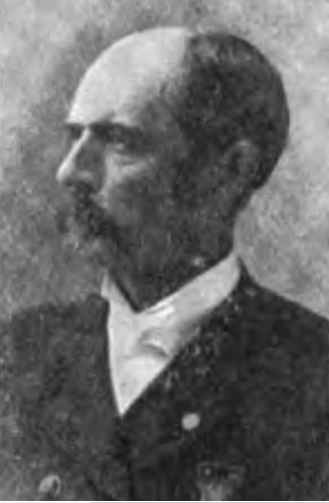
Captain, U.S. Army
Support & adopt this hero ↓
James Milton Pipes was born on November 10, 1840, in Pennsylvania. He came of age during a period of increasing national division over slavery, sectional politics, and the future of the Union. When the American Civil War expanded in 1862, Pipes entered military service and began a career that would take him from the enlisted ranks to command as a Captain, leave him permanently disabled by battle wounds, and eventually earn him the Medal of Honor for courageous actions during two separate engagements. On August 18, 1862, Pipes enlisted for Union service and became a member of Company A, 140th Pennsylvania Volunteer Infantry. The regiment was organized from communities in western Pennsylvania and entered Federal service during a period when the Union Army was rebuilding and expanding following the costly campaigns of 1862. Pipes initially served in the enlisted ranks and developed into a dependable noncommissioned officer. By the time the 140th Pennsylvania entered one of the greatest battles of the war, he was serving as a Sergeant. The regiment belonged to the Army of the Potomac and in the summer of 1863 moved northward as General Robert E. Lee’s Army of Northern Virginia invaded Pennsylvania. The armies met at Gettysburg in early July 1863. The fighting lasted three days and became the largest battle ever fought in North America. For the 140th Pennsylvania, July 2 brought especially severe combat as the regiment entered the fighting associated with the Wheatfield and the Union left-center. The Wheatfield became one of the most violently contested areas of the Gettysburg battlefield. Union and Confederate formations repeatedly advanced and withdrew across the same ground, and control of the area changed several times. Smoke, broken formations, wounded soldiers, and rapidly advancing Confederate troops created extraordinary confusion. During the Union withdrawal on July 2, Sergeant James Pipes was moving back with his company as Confederate forces advanced rapidly. At that moment, he and another Union soldier encountered a wounded and helpless comrade who could not escape on his own. Stopping to assist the wounded soldier placed Pipes in immediate danger. Confederate troops were already close behind the retreating Union line, and every moment of delay increased the possibility of death, injury, or capture. Pipes nevertheless stopped. Together with his companion, he lifted the wounded soldier and carried him to a place where the man would have some protection. Their decision represented a deliberate sacrifice of their own opportunity to retreat safely. Both rescuers were severely wounded during the attempt. Pipes himself suffered a serious wound during the Gettysburg fighting. Yet the injury did not end his military career. After recovering sufficiently, he returned to service with the 140th Pennsylvania. His continued service demonstrated remarkable determination. Gettysburg had already exposed him to some of the most intense infantry combat of the Civil War, and he had been wounded while attempting to save another soldier. Even so, Pipes remained with the Army and continued advancing through the ranks. By 1864, he had risen to Captain and commanded Company A of the 140th Pennsylvania Infantry. His promotion fundamentally changed his responsibilities. As an enlisted Sergeant at Gettysburg, he had been responsible for immediate leadership among the soldiers around him. As Captain, he now carried formal command responsibility for an entire company. The summer of 1864 found the Army of the Potomac locked in the prolonged struggle around Petersburg, Virginia. General Ulysses S. Grant sought to cut the railroads and transportation routes supplying Richmond and Petersburg, while Confederate forces under General Robert E. Lee attempted to protect those vital lines. One of the important transportation routes was the Weldon Railroad, which connected Petersburg with areas farther south. Union forces repeatedly attempted to seize, destroy, or permanently disrupt sections of the railroad. This struggle led to the Second Battle of Reams Station on August 25, 1864. At Reams Station, Union troops occupied positions along the railroad when Confederate forces launched a powerful attack. Pipes was serving as Captain and was commanding a skirmish line during the engagement. Skirmishers operated in relatively open formations ahead of the main line, making their officers especially exposed to enemy movements and fire. During the battle, Pipes recognized a Confederate movement threatening the Union flank. Instead of withdrawing to a safer location, he voluntarily helped oppose the maneuver. His Medal of Honor citation later specifically recognized this decision. Pipes assisted in checking the enemy’s flank movement at a moment when the Union position was under severe pressure. During that effort, he was again badly wounded. This time the injury was catastrophic. Pipes suffered a wound so severe that his arm had to be amputated. The injury permanently altered his life and brought his active battlefield career toward its end. The contrast between his Gettysburg and Reams Station actions is important. At Gettysburg, Pipes was a Sergeant voluntarily stopping during a retreat to rescue a helpless wounded comrade. At Reams Station, more than a year later, he was a Captain exercising battlefield command and voluntarily acting against an enemy flank movement. Both actions demonstrated courage, but in different forms. The first showed personal self-sacrifice for another soldier. The second demonstrated command responsibility and willingness to expose himself to danger in order to protect his troops and their position. The loss of his arm made continued frontline military service impossible. Pipes underwent a long period of treatment and recovery and ultimately left active military service with Captain as his highest verified rank. His war had lasted from his enlistment in 1862 through repeated campaigning, Gettysburg, recovery from wounds, promotion, renewed combat, and finally the devastating injury at Reams Station. He had entered the Army as a young volunteer and left it permanently disabled but with an exceptional record of service. After the Civil War, Pipes began rebuilding his civilian life. His family had connections in West Virginia, and he became increasingly involved in the civic and political life of the young state. Despite the loss of an arm, Pipes did not withdraw from public affairs. Instead, he entered government service and politics, demonstrating the same determination that had marked his return to military duty after being wounded at Gettysburg. He became active in Republican politics in West Virginia and was elected to local public office. His growing reputation eventually brought him to statewide office. From 1869 to 1871, James M. Pipes served as Secretary of State of West Virginia. Holding such an office only a few years after losing an arm in combat illustrates the remarkable transition many Civil War veterans made from battlefield service into political and civic leadership. West Virginia itself had been created during the Civil War, becoming a state in 1863 after the western counties separated politically from Confederate Virginia. Pipes therefore participated in the government of one of the newest states in the Union during its formative postwar period. His public career continued after his term as Secretary of State. He remained involved in political affairs and later participated in West Virginia’s constitutional and civic life. In subsequent years, he also held positions associated with the Federal Government in Washington, D.C. His wartime disabilities remained a permanent part of his life. He eventually used an artificial arm, allowing him to function more effectively in his professional and personal activities. The prosthesis could not replace what he had lost at Reams Station, but Pipes adapted to the injury and continued pursuing an active career. He also established a family during the postwar years. His civilian life extended for more than six decades after the end of the Civil War, allowing him to witness enormous transformations in American society, government, transportation, industry, and military technology. For many years, however, the extraordinary events of Gettysburg and Reams Station had not resulted in the formal presentation of the nation’s highest military decoration. That recognition finally came in 1898. On April 5, 1898, James Milton Pipes was presented with the Medal of Honor. More than three decades had passed since the actions for which he was recognized. His Medal of Honor is unusual because the citation explicitly records courageous conduct from two different battles separated by more than a year. The citation first recognized his conduct at Gettysburg, when, as a Sergeant, he and a companion stopped during a dangerous retreat to carry a wounded and helpless comrade to safety, receiving serious wounds themselves in the process. It then recognized his later conduct at Reams Station, where, as an officer commanding a skirmish line, he voluntarily helped check an enemy flank movement and suffered the severe wound that resulted in the loss of his arm. The Medal of Honor itself had originated during the Civil War. Congress authorized the Army Medal of Honor in 1862 as a means of recognizing exceptional military conduct. In the decades following the war, many Civil War actions continued to be investigated and formally recognized. Pipes belonged to this later group of recipients. His battlefield heroism occurred in 1863 and 1864, but the formal presentation did not take place until 1898. This difference in dates is important for accurately recording his medal history. The heroic actions took place at Gettysburg on July 2, 1863, and Reams Station on August 25, 1864. The Medal of Honor was formally presented on April 5, 1898. Because the award was presented during the Army Medal of Honor design period beginning in 1896, the historically appropriate database representation is Medal of Honor 1896–1903 Army — 1898. Pipes received one Medal of Honor. The two actions described in his citation do not represent two separate Medals of Honor. They are two separate heroic episodes recognized by a single decoration. No additional star, clasp, bar, oak leaf cluster, or other device has been verified with the medal. His final verified medal record is therefore Medal of Honor 1896–1903 Army — 1898 — no device or clasp. By the time Pipes received the decoration, the young Sergeant who had fought at Gettysburg had become a prominent Civil War veteran with decades of public service behind him. The award formally connected his later civilian identity with the battlefield sacrifices that had shaped his early adulthood. His Medal of Honor also preserved the progression of his military career within a single citation. At Gettysburg, he appears as the Sergeant who risked himself for a wounded comrade. At Reams Station, he appears as the Captain responsible for soldiers under his command. The surviving photographic record reinforces the physical cost of that service. A wartime portrait preserved by the Library of Congress shows Captain Pipes in uniform after the loss of his arm, wearing his II Corps badge and holding a sword. The image captures a veteran whose military advancement had been accompanied by devastating personal sacrifice. Pipes lived into the twentieth century and remained connected to the national community of Union veterans. During those decades, the Civil War gradually passed from living national crisis into historical memory. Veterans who had actually fought at Gettysburg and Petersburg became increasingly important witnesses to an earlier generation. James Milton Pipes died on December 1, 1928, in Washington, D.C., at the age of eighty-eight. He was buried in Arlington National Cemetery, one of the nation’s most significant military burial grounds. His grave is located in Section 3, preserving his place among generations of American service members and other Medal of Honor recipients. His life had carried him through several distinct identities: young Pennsylvania volunteer, Sergeant at Gettysburg, wounded rescuer, returning soldier, Captain of infantry, permanently disabled combat veteran, state political leader, federal public servant, and Medal of Honor recipient. Yet his military legacy remains centered on two moments. On July 2, 1863, Sergeant James Milton Pipes interrupted his own retreat at Gettysburg to help carry a helpless wounded comrade away from immediate danger, accepting the risk that resulted in his own severe wound. On August 25, 1864, Captain Pipes voluntarily helped oppose a Confederate flank movement at Reams Station while commanding a skirmish line, receiving the wound that cost him an arm. More than thirty years later, the United States united those two episodes in a single Medal of Honor citation. His final verified decoration remains Medal of Honor 1896–1903 Army — 1898 — no device or clasp. James Milton Pipes’s story is therefore not simply one episode of courage, but a record of repeated self-sacrifice: first for a helpless fellow soldier and later for the men and position placed under his command.
Become the named supporter for this profile and edit the tribute biography and portrait (Owner account required). Proceeds help keep the archive online.
$25 USD / year — annual sponsorship renewal. Keeps the page online and, where enabled, the family anniversary remembrance emails active.