★
Loading archive…
Loading archive…
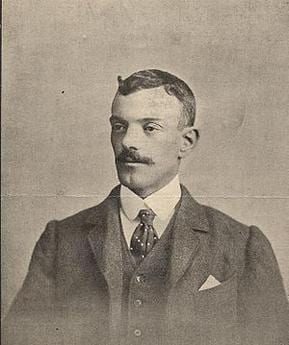
Corporal, British Army
Support & adopt this hero ↓
The Blackburn Soldier Who Held Caesar's Camp for Fifteen Hours
When enemy fire swept across Caesar's Camp and the defenders around him fell, Private James Pitts refused to abandon his position. For fifteen hours, without food or water and under intense enemy fire, he and Private Robert Scott held their isolated sangar during one of the fiercest engagements of the Siege of Ladysmith. Their extraordinary courage made Pitts one of the most distinguished Victoria Cross recipients of the Second Boer War.
Born on 26 February 1877 at Blackburn, Lancashire, James Pitts was the son of Patrick Pitts, an umbrella maker, and Mary McHugh. One of sixteen children, he attended St Anne's and St Alban's schools before working as an apprentice weaver. On 10 March 1896, he enlisted in the British Army and joined the 1st Battalion, Manchester Regiment. After serving at Aldershot and Gibraltar, he arrived in South Africa in September 1899 as the Second Boer War intensified.
His defining moment came on 6 January 1900 during the Boer attack on Caesar's Camp, near Ladysmith, Natal. As enemy forces overwhelmed neighbouring defensive positions, Pitts and Scott continued to hold their sangar despite being exposed to sustained and extremely heavy fire. Their determination prevented the position from being abandoned until relieving troops drove the Boers from the hill. The official Victoria Cross citation, published in The London Gazette on 26 July 1901 (Issue 27338, page 4949), recognized their fifteen-hour defence without food or water and their continued vigilance and return of fire despite the enemy occupying nearby positions. Pitts received his Victoria Cross from Lord Kitchener at Pretoria in June 1902.
His South African service was recognized by the Queen's South Africa Medal with the Elandslaagte, Defence of Ladysmith and Belfast clasps, and the King's South Africa Medal with the South Africa 1901 and South Africa 1902 clasps. After the war, Pitts served in Singapore before returning to Blackburn in 1904, where he worked as a foundry labourer and later for Blackburn Corporation's Highways Department.
In October 1914, Pitts answered the call to serve again, rejoining the Manchester Regiment during the First World War. With the 11th Battalion, he served at Gallipoli, subsequently in Egypt, and on the Western Front in France from 1916 until the end of the war. His wartime service earned him the 1914–15 Star, British War Medal and Victory Medal. In 1918, he was also awarded the Meritorious Service Medal in recognition of his valuable military service. His later honours included the King George VI Coronation Medal of 1937 and the Queen Elizabeth II Coronation Medal of 1953.
After leaving the Army in 1920, Pitts returned to civilian life and continued working for Blackburn Corporation until his retirement in 1942. He later reunited with Robert Scott at a Manchester Regiment gathering in 1954, bringing together two men whose courage had become inseparable from the regiment's history.
James Pitts died at Blackburn Infirmary on 18 February 1955, aged 77. He was buried with full military honours in Whalley Road Cemetery. His Victoria Cross remains a lasting testament to his courage, and his story stands as a reminder of the extraordinary determination displayed by ordinary soldiers in the face of overwhelming danger.
Become the named supporter for this profile and edit the tribute biography and portrait (Owner account required). Proceeds help keep the archive online.
$25 USD / year — annual sponsorship renewal. Keeps the page online and, where enabled, the family anniversary remembrance emails active.