★
Loading archive…
Loading archive…
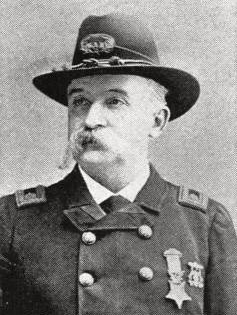
Lieutenant Colonel, U.S. Army
Support & adopt this hero ↓
James Quinlan was born on September 13, 1833, in County Tipperary, Ireland. He spent his childhood in Ireland before emigrating to the United States, arriving in New York in 1850. Like many Irish immigrants of his generation, Quinlan became part of the rapidly growing Irish community in New York City, but his path soon distinguished him through technical study, militia service, and eventually battlefield leadership during the American Civil War. After arriving in New York, Quinlan studied engineering. His technical background was well suited to the military environment of the period, when engineers were responsible for field works, roads, bridges, defensive positions, and other tasks that could directly influence military operations. Quinlan also became involved in New York’s organized militia before the Civil War. In 1853, he joined the National Guard and became associated with the 69th Regiment, one of New York’s most famous Irish military organizations. His abilities brought advancement: he was commissioned a Lieutenant in 1855 and a Captain in 1856. These years of militia experience meant that Quinlan entered the Civil War with substantially more military preparation than many of the volunteers who joined after the firing on Fort Sumter. He understood drill, organization, command, and military engineering before the conflict began. When war erupted in April 1861, Quinlan immediately entered active service. On April 23, he left New York with the 69th Regiment as Captain of Engineers. The regiment soon became part of the Union forces assembling around Washington, D.C., as the government prepared for its first major campaign against Confederate forces in Virginia. Quinlan participated in the early operations that culminated in the First Battle of Bull Run. He was present during the fighting at Blackburn’s Ford on July 18, 1861, an engagement that preceded the larger battle by several days and gave both armies an early indication of the difficulties ahead. On July 21, the Union Army advanced against Confederate forces near Manassas. The resulting First Battle of Bull Run became the first major land battle of the Civil War. What many civilians had imagined might be a short conflict instead revealed itself as a large, violent, and complicated war. Quinlan fought with the 69th during the battle and was seriously wounded. The Union army ultimately withdrew toward Washington, but the experience gave Quinlan firsthand knowledge of large-scale combat and further established him as an experienced officer. After the expiration of the 69th Regiment’s initial service, Irish-American leaders in New York began organizing a new formation that would become famous as the Irish Brigade. Brigadier General Thomas Francis Meagher played a central role in its creation, gathering predominantly Irish regiments into a brigade that would serve in the Army of the Potomac. Quinlan joined this new effort and entered the 88th New York Infantry. He was mustered into the regiment as Major on September 10, 1861. The 88th was one of the principal New York regiments of Meagher’s Irish Brigade and was recruited largely from New York City, Brooklyn, and the surrounding Irish-American community. As Major, Quinlan became one of the regiment’s senior field officers. His responsibilities extended far beyond those of a company commander. He was expected to help control the regiment during marches, drills, deployments, and combat and to assume command whenever circumstances required. The 88th New York spent the winter near Washington before moving with the Army of the Potomac into the Peninsula Campaign of 1862. Major General George B. McClellan hoped to approach Richmond by moving the army onto the Virginia Peninsula and advancing toward the Confederate capital. The campaign exposed Quinlan and the 88th New York to sustained combat. The Irish Brigade became increasingly known for aggressive battlefield performance, while Quinlan developed a reputation for personal courage and energetic command. By late June 1862, the strategic situation had changed dramatically. General Robert E. Lee had assumed command of the Army of Northern Virginia and launched a series of attacks against McClellan’s army. These engagements became known collectively as the Seven Days Battles. Union forces began withdrawing from positions near Richmond toward the James River. The movement was difficult and dangerous because large parts of the army, its artillery, supply trains, wounded soldiers, and support units had to move while Confederate forces continued attacking. One of the critical engagements during this withdrawal occurred at Savage Station on June 29, 1862. Savage Station contained large numbers of wounded Union soldiers and military supplies. As Union formations moved through the area, Confederate forces pressed the retreat. The Union rear guard had to delay the Confederate advance long enough for the rest of the army to continue moving toward safety. During the battle, Brigadier General William W. Burns’s Philadelphia Brigade came under severe pressure. Confederate artillery was positioned so that its fire threatened the Union line and complicated the withdrawal. At this moment, Major James Quinlan and the 88th New York were ordered forward to reinforce the hard-pressed Union troops. Quinlan rapidly deployed his regiment while under enemy fire. The movement required both speed and discipline. A regiment moving from column into battle line could become vulnerable if the formation broke apart, particularly when artillery and musketry were already striking the area. Quinlan successfully brought the 88th New York into position and led the regiment toward the Confederate battery. The Irish soldiers moved forward at the double-quick. As they approached the existing Union line, the command to charge was given. Quinlan led the regiment directly against the enemy guns. The attack succeeded. The Confederate battery that had been punishing the Union position was silenced and forced from its position. Quinlan and his men then held the ground despite the presence of substantially stronger Confederate forces. His action did not end with the initial charge. Holding the position was essential because Union forces were still withdrawing. By maintaining the line against superior numbers, the 88th New York helped protect the movement of other Union troops. Quinlan’s official Medal of Honor citation later summarized the achievement with exceptional clarity: he led his regiment against the enemy battery, silenced its guns, held the position against overwhelming numbers, and covered the retreat of the Second Army Corps. Each part of that citation reflects a separate element of battlefield leadership. First, he personally led an offensive movement against artillery. Second, his regiment succeeded in stopping the battery’s fire. Third, he maintained the captured or contested ground even though Confederate forces greatly outnumbered his command in the immediate area. Finally, the position held by Quinlan and his men helped protect the withdrawal of other Union formations. The Battle of Savage Station ultimately formed part of McClellan’s larger retreat during the Seven Days Battles, but Quinlan’s conduct demonstrated the importance of disciplined rear-guard actions. An army withdrawing under pressure could easily be transformed into a rout if its rear formations collapsed. Officers such as Quinlan had to maintain organization and sometimes attack aggressively precisely when the larger army was moving away from the battlefield. The 88th New York continued serving through the dangerous withdrawal toward the James River. It fought again during the Seven Days operations, including the battles around White Oak Swamp and Malvern Hill. The Irish Brigade endured some of the hardest campaigning yet experienced by the Army of the Potomac. Quinlan remained in service after the Peninsula Campaign and continued as one of the senior officers of the 88th New York. His experience during these months reflected the transformation of the Union Army from a collection of relatively inexperienced volunteer regiments into a force hardened by repeated campaigning. His advancement followed soon afterward. On September 22, 1862, Quinlan was promoted to Lieutenant Colonel of the 88th New York Infantry. This became his highest verified military rank. The promotion recognized his status as one of the regiment’s senior commanders and placed him directly below the Colonel in the regimental command structure. The distinction between his action-time rank and highest rank is important. Quinlan was a Major when he performed the heroic action at Savage Station on June 29, 1862. He later became Lieutenant Colonel. His Medal of Honor citation therefore correctly identifies him according to the rank he held when the action occurred. Quinlan’s Civil War service had already included two distinct phases. During his first period of service with the 69th New York militia, he had fought at Blackburn’s Ford and First Bull Run and suffered a serious wound. During his second period, he served as a field officer of the 88th New York and played a major leadership role during the Peninsula Campaign. His health ultimately prevented him from remaining indefinitely in active service. On February 4, 1863, Lieutenant Colonel James Quinlan was honorably discharged on a medical certificate of disability. He therefore left active wartime service after nearly two years of demanding campaigning. He had entered the conflict with prior militia experience, fought in the first major campaign of the war, recovered from serious wounds, returned to service, helped organize and lead one of the Irish Brigade’s regiments, and reached the rank of Lieutenant Colonel. For many years after the war, however, his extraordinary leadership at Savage Station had not yet resulted in the formal presentation of the nation’s highest military decoration. The Medal of Honor had been authorized for the United States Army in 1862, the same year as Quinlan’s action. It was created during the Civil War as a national means of recognizing extraordinary military conduct. The system for identifying and approving recipients was not always immediate. Many Civil War soldiers were awarded the Medal of Honor years or even decades after their actions as supporting evidence was gathered, eyewitness testimony was reviewed, and formal recommendations were submitted. Quinlan’s recognition followed this pattern. Former officers who had witnessed the Savage Station fighting provided strong testimony regarding his conduct. Brigadier General William W. Burns, whose troops had been under heavy pressure during the battle, described how Quinlan brought the 88th New York into position and drove the Confederate battery from the road. The documentation made clear that Quinlan’s conduct had materially affected the battle. He had not merely displayed personal bravery. His leadership changed the immediate tactical situation and helped protect the retreating Union force. On February 18, 1891, nearly twenty-nine years after Savage Station, James Quinlan was formally presented with the Medal of Honor. The time separating the action from the presentation is an important part of his award history. His Medal of Honor action occurred on June 29, 1862. His Medal of Honor was formally presented on February 18, 1891. For the historical database, his verified decoration is therefore represented as Medal of Honor 1862–1895 Army — 1891. The 1862–1895 designation identifies the historical Army Medal of Honor period applicable when Quinlan received the decoration. The year 1891 records his formal presentation year and must not be confused with the date of the heroic action itself. Quinlan received one Medal of Honor. No additional star, clasp, bar, oak leaf cluster, or other device has been verified with the decoration. His final verified medal record is therefore Medal of Honor 1862–1895 Army — 1891 — no device or clasp. The decoration commemorated one of the defining moments in the history of the 88th New York Infantry. The regiment had been ordered into a difficult situation during a retreat, and Quinlan had transformed that defensive emergency into an aggressive counterstroke against the Confederate artillery threatening the Union line. The action also reflected the character for which the Irish Brigade became famous. The brigade repeatedly earned a reputation for advancing under intense fire, often suffering severe casualties. Quinlan’s charge at Savage Station belonged to the early period in which that reputation was being established. For Irish-American soldiers, service in the Union Army carried meaning beyond conventional military duty. Many hoped that battlefield service would demonstrate the loyalty and contribution of Irish immigrants to their adopted country. Others retained a strong emotional connection to Ireland while serving the United States. The Irish Brigade became one of the most visible symbols of that dual identity. Quinlan himself embodied this experience. Born in Ireland, trained and commissioned in the New York militia, and twice called into significant Civil War service, he became part of both Irish-American and United States military history. After leaving active service, Quinlan remained closely connected with veterans of the Irish Brigade and with the memory of the Civil War. His wartime rank of Lieutenant Colonel and his later Medal of Honor placed him among the better-known surviving officers of the 88th New York. As the decades passed, the veterans of the Irish Brigade participated in reunions, commemorations, battlefield memorial activities, and organizations dedicated to preserving the history of their units. The brigade’s enormous sacrifices at battles such as the Seven Days, Antietam, and Fredericksburg became central parts of Irish-American Civil War memory. Quinlan lived long enough to see the Civil War pass from recent memory into national history. The battlefield where he had led the 88th New York in 1862 belonged to an earlier military generation, while the United States around him underwent enormous political, industrial, and demographic change. Yet his Medal of Honor ensured that the specific act for which he had been distinguished remained formally preserved. The citation did not rely on vague language about general good service. It recorded a clear sequence of tactical achievements: leading his regiment against an enemy battery, silencing the guns, holding the position against overwhelming numbers, and protecting the retreat of the Second Army Corps. That combination of personal courage and command effectiveness distinguishes Quinlan’s Medal of Honor record. James Quinlan died on August 29, 1906, in New York City. He was seventy-two years old. He was buried at Calvary Cemetery in Woodside, New York, where a number of other veterans associated with the Civil War and New York’s Irish military community were also laid to rest. His life had followed a remarkable path from County Tipperary to New York, from engineering studies and prewar militia service to the battlefields of Virginia, and from Captain of Engineers in the 69th Regiment to Major and ultimately Lieutenant Colonel of the 88th New York Infantry. The defining moment of that career came at Savage Station on June 29, 1862. With the Union army withdrawing and Confederate artillery threatening the rear guard, Major James Quinlan brought the 88th New York forward, deployed it under fire, led the charge against the battery, silenced the guns, maintained the position against superior numbers, and helped protect the retreating Second Army Corps. Nearly three decades later, the United States formally recognized that battlefield leadership with his single verified decoration: Medal of Honor 1862–1895 Army — 1891 — no device or clasp. James Quinlan’s legacy therefore rests not simply on personal bravery, but on battlefield command at a critical moment. His ability to move a regiment rapidly into action, strike a dangerous enemy position, and hold ground while the larger army withdrew made his conduct at Savage Station one of the most distinguished episodes in the history of the 88th New York Infantry and the Irish Brigade.
Become the named supporter for this profile and edit the tribute biography and portrait (Owner account required). Proceeds help keep the archive online.
$25 USD / year — annual sponsorship renewal. Keeps the page online and, where enabled, the family anniversary remembrance emails active.