★
Loading archive…
Loading archive…
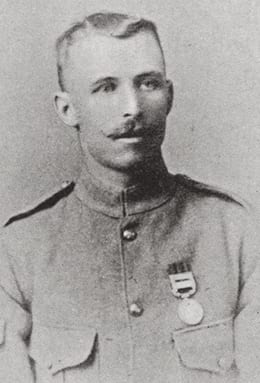
Staff / colour sergeant, British Army
Support & adopt this hero ↓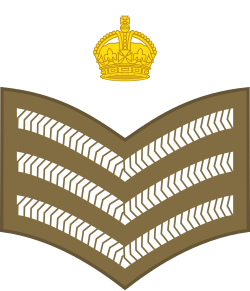
A wounded soldier stood his ground in a village engulfed in flames, refusing to abandon his comrades while enemy fire threatened the small British force around him. This was the extraordinary courage displayed by James Smith VC, a soldier of the 1st Battalion, The Buffs (East Kent Regiment), whose bravery during the Mohmand Campaign of 1897 earned him the Victoria Cross, Britain's highest award for gallantry.
Born in Maidstone, Kent, in 1871, James Smith enlisted in the British Army on 23 September 1893. Initially posted to the 2nd Battalion, The Buffs, he joined the 1st Battalion in December 1894 and travelled to India. He subsequently took part in the Chitral Relief Expedition between April and September 1895, gaining valuable experience on the difficult North-West Frontier.
His defining moment came during the night of 16–17 September 1897 at Bilot, in the Mamund Valley. When Lieutenant Thomas Watson called for volunteers to enter a village occupied by enemy fighters, Smith responded without hesitation. Accompanying the Royal Engineers officers into the burning settlement, he helped drive back the enemy with the bayonet. Despite being wounded, he continued firing steadily, assisted in carrying wounded soldiers to safety and remained at his position when Lieutenant Watson departed to obtain assistance. Smith exposed himself to further danger, watching the enemy and directing his men's fire until support arrived. His exceptional courage and determination were recognised in the official Victoria Cross citation published in The London Gazette on 21 April 1899, issue 27073, page 2545. He received his Victoria Cross on 5 July 1899.
Smith continued his military career after this remarkable act of bravery. Promoted to corporal following the Bilot action, he subsequently attained the ranks of lance sergeant and sergeant. His service took him through Burma, India and Aden before he returned to Britain in December 1904. Around 1908, he joined the permanent staff of the Royal Jersey Militia, eventually attaining the rank of colour sergeant.
His wider military service was recognised through the India Medal 1895–1902, bearing the clasps Relief of Chitral 1895 and Punjab Frontier 1897–98, and the Army Long Service and Good Conduct Medal, George V issue. These honours reflected his participation in frontier campaigns and his sustained service in the British Army.
James Smith spent his later years in Kent and died in Dartford on 18 March 1946. He was laid to rest at Watling Street Burial Ground, Dartford, where his grave commemorates a soldier whose courage under fire became part of the distinguished history of The Buffs. His actions at Bilot remain a powerful reminder that extraordinary heroism can emerge from the determination of an ordinary soldier to stand by his comrades when everything around him is falling apart.
Become the named supporter for this profile and edit the tribute biography and portrait (Owner account required). Proceeds help keep the archive online.
$25 USD / year — annual sponsorship renewal. Keeps the page online and, where enabled, the family anniversary remembrance emails active.