★
Loading archive…
Loading archive…

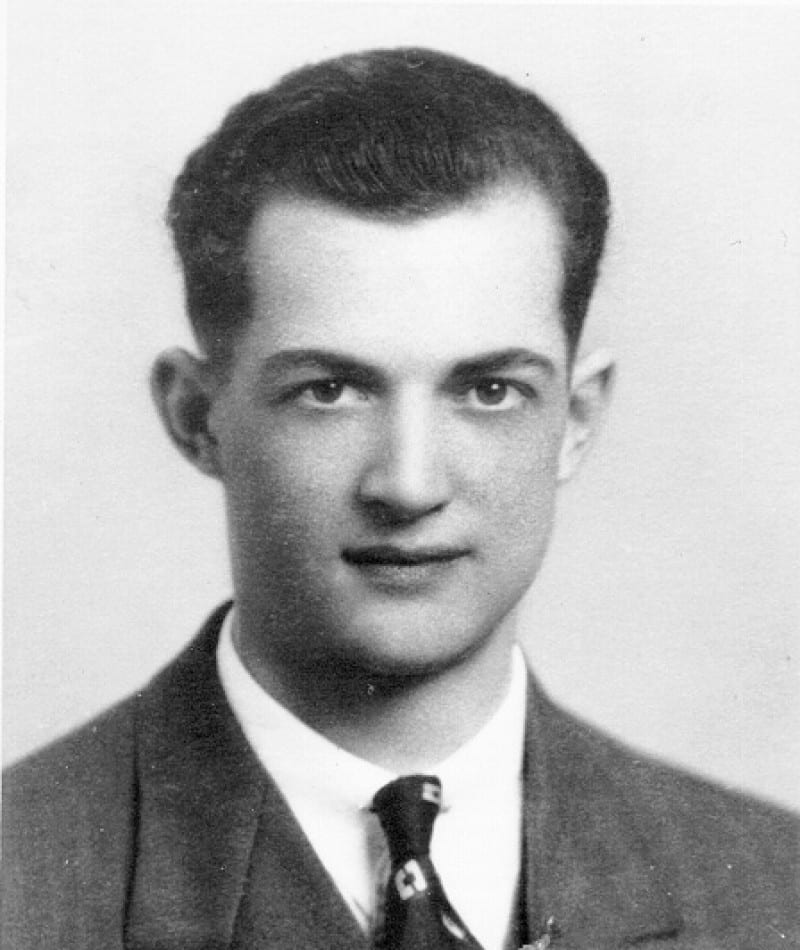
With arms bound, he gave his life to save fellow paratroopers.
Private First Class Joe Eugene Mann was a United States Army paratrooper who received the Medal of Honor posthumously for extraordinary courage during Operation Market Garden. Fighting near Best in the Netherlands on 18–19 September 1944, he attacked a German gun position, continued resisting despite repeated wounds, and finally used his body to shield his comrades from an exploding grenade. He was twenty-two years old. (army.mil, fairmountmemorial.com)
Born on 8 July 1922 in Reardan, Washington, Mann grew up on his family’s wheat ranch, the fifth of nine children. He developed considerable mechanical ability, repairing farm equipment and making things for his younger siblings. At Reardan High School he participated in football, baseball, tennis, theatre and debate. After graduating in 1941, he moved to Seattle and worked for Boeing. (reardanhistory.net, historylink.org)
Mann enlisted in the Army on 26 August 1942. He hoped to become a military pilot, but an old football injury prevented him from passing the required physical examination. Determined to serve, he volunteered for the parachute infantry instead. His training took him through Fort Lewis, Camp Toccoa and Fort Benning. Initially assigned to the 506th Parachute Infantry Regiment, he subsequently transferred to Company H, 502nd Parachute Infantry Regiment, 101st Airborne Division. (historylink.org, herocards.us)
An injury during preparations for the Normandy invasion kept Mann out of the D-Day assault. His opportunity to fight came on 17 September 1944, when he parachuted into the Netherlands during Operation Market Garden. The Allied operation depended on airborne troops capturing bridges ahead of advancing ground forces. Near Best, Mann served as a leading scout with troops moving towards the Wilhelmina Canal. They encountered much stronger German resistance than expected and became isolated. (herocards.us, thegirlwhoworefreedom.com)
On 18 September, Mann advanced under heavy fire to within rocket-launcher range of an enemy position. His Medal of Honor citation credits him with destroying an 88-millimetre gun and an ammunition dump. He then remained exposed, engaging German soldiers with his M1 rifle until he had been wounded four times. Although brought into shelter, he insisted on returning to a forward position to stand guard through the night. (army.mil)
The following morning, German troops attacked at close range, throwing grenades into the American position. One landed near Mann. His wounds had left both arms immobilized by bandages, preventing him from throwing it away. He warned the others and covered the grenade with his body, dying in the explosion and protecting the men beside him. (fairmountmemorial.com)
Mann’s Medal of Honor was authorized on 30 August 1945. His father accepted the decoration at Baxter General Hospital in Spokane. His remains were returned home and buried with military honours at Greenwood Cemetery, now Greenwood Memorial Terrace, in Spokane on 8 June 1949. In the Netherlands, the people of Best commemorated his sacrifice with a monument dedicated in 1956. His name also lives on in Spokane’s Mann-Grandstaff Veterans Affairs Medical Center. (historylink.org, reardanhistory.net)
Become the named supporter for this profile and edit the tribute biography and portrait (Owner account required). Proceeds help keep the archive online.
$25 USD / year — annual sponsorship renewal. Keeps the page online and, where enabled, the family anniversary remembrance emails active.