★
Loading archive…
Loading archive…
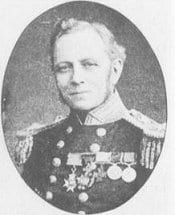
Rear-Admiral, Royal Navy
Support & adopt this hero ↓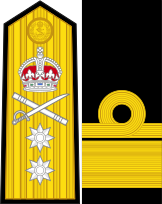
Hiding behind enemy lines they captured military despatches.
John Bythesea was born at Freshford, Somerset, on 15 June 1827, the son of the village rector. Educated at Grosvenor College, Bath, he entered the Royal Navy in December 1841. Early service aboard Alfred and Endymion led to promotion to lieutenant in 1849 and an appointment to Arrogant.
During the Baltic campaign in August 1854, Bythesea learned that Russian military despatches were being carried across Vardo Island to Bomarsund. With permission from his captain, he landed with Stoker William Johnstone and concealed himself ashore while awaiting the messengers.
On the night of 12 August, after an escort had passed, the two sailors intercepted the men carrying the mail. They captured three prisoners and the despatches and returned with them by boat to Arrogant. Both men received the Victoria Cross. Queen Victoria invested Bythesea at Hyde Park on 26 June 1857.
He subsequently commanded Locust and Cruizer, serving in the China War, and reached captain in 1861. His appointments included naval work concerning Canada's defence, service as naval attache in Washington and command of Phoebe during a world voyage.
His sea career ended after Lord Clyde grounded near Pantelleria while assisting another vessel in 1872. A court martial dismissed him from the ship and severely reprimanded him. He later became consulting naval officer to the Indian government, helping reorganise its naval service.
Bythesea married Frances Belinda Prior in 1874. He became a retired rear admiral in 1877, received the CB that year and the CIE in 1878. He died at South Kensington on 18 May 1906 and was buried in Bath Abbey Cemetery.
Official Victoria Cross citation
On the 9th of August, 1854, having ascertained that an Aide-de-Camp of the Emperor of Russia had landed on the Island of Wardo, in charge of a mail and despatches for the Russian General, Commander Bythesea obtained permission for himself and William Johnstone, a stoker, to proceed on shore with the view to intercept them. Being disguised and well armed, they concealed themselves till the night of the 12th, when the mail-bags were landed, close to the spot where they lay secreted in the bushes. The mails were accompanied by a military escort, which passed close to them, and which, as soon as it was ascertained that the road was clear, took its departure. Availing themselves of this opportunity, Commodore Bythesea and the stoker, attacked the five men in charge of the mail, took three of them prisoners, and brought them in their own boat on board the “Arrogant.” The despatches were carried to General Baraguay d’Hilliers, who expressed himself in the highest terms of approval. (Despatch from Captain Yelverton, inclosed in a Letter from Vice-Admiral Sir C. Napier, of 31st January, 1856.)
Supplement to The London Gazette of 24 February 1857. 24 February 1857, Numb. 21971, pp. 653-4
Become the named supporter for this profile and edit the tribute biography and portrait (Owner account required). Proceeds help keep the archive online.
$25 USD / year — annual sponsorship renewal. Keeps the page online and, where enabled, the family anniversary remembrance emails active.