★
Loading archive…
Loading archive…
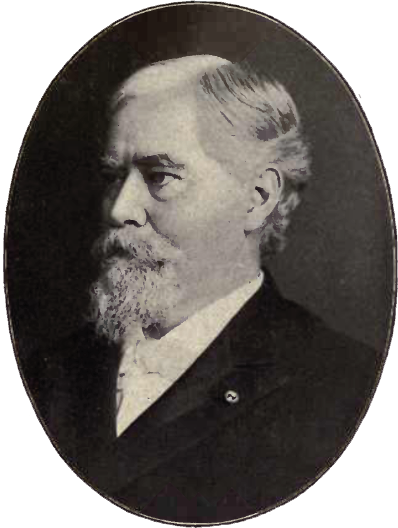
Brevet Brigadier General, U.S. Army
Support & adopt this hero ↓He Charged the Battery After Two Regiments Fell Back
John Charles Black was born on January 27, 1839, in Lexington, Mississippi. His family later moved to Illinois, and he grew up in Danville before beginning studies at Wabash College in Indiana. When the American Civil War erupted in 1861, Black left civilian life for military service and began a career that would carry him from the enlisted ranks to senior command.
He entered Union service on April 14, 1861, initially as a Private. His advancement came rapidly. Black became Sergeant Major, then Major, and eventually Lieutenant Colonel of the 37th Illinois Infantry. By late 1862, he was serving in that rank when his regiment entered the campaign that led to the Battle of Prairie Grove, Arkansas.
Prairie Grove was fought on December 7, 1862, as Union and Confederate forces struggled for control of northwestern Arkansas. Confederate troops occupied strong elevated positions, and Union attacks against the heights encountered determined resistance.
Black’s regiment was ordered into this violent fight.
Before the 37th Illinois moved forward, two other Union regiments had already attempted to attack the Confederate position and had been driven back. The situation demonstrated how difficult the objective would be. Enemy troops held advantageous ground, and the Union forces advancing toward them faced concentrated fire.
Lieutenant Colonel John Charles Black nevertheless led his regiment forward.
Rather than directing the attack from a protected position behind his soldiers, Black placed himself at the head of the regiment as it charged the Confederate line. The 37th Illinois advanced up the contested ground and reached the enemy position.
During the assault, Black and his men captured a Confederate artillery battery.
The achievement came at severe personal cost. Black was seriously wounded during the fighting. His injuries did not erase the importance of what had been accomplished: after two earlier regiments had been repulsed, he had personally led another attack against the same position and helped seize the enemy guns.
The Battle of Prairie Grove ended without a simple tactical destruction of either army, but strategically it strengthened Union control in northwestern Arkansas. For Black, the engagement became the defining moment of his military career.
He continued serving despite his wounds and advanced further in rank. He eventually became Colonel of the 37th Illinois Infantry and remained in service through the closing stages of the Civil War.
His later wartime record included service during the campaign against Mobile, Alabama. On April 9, 1865, Union troops stormed Fort Blakeley, one of the final major Confederate defensive positions in the region. Black’s service in that assault later brought him the brevet rank of Brigadier General.
The brevet was an honorary recognition of distinguished service rather than the same thing as a permanent promotion in the regular rank structure. For that reason, his Medal of Honor action should remain associated with his actual rank at Prairie Grove: Lieutenant Colonel. His highest recorded Civil War distinction was Brevet Brigadier General.
Black left military service in August 1865 after more than four years in uniform.
His battlefield courage at Prairie Grove was formally recognized decades later. On October 31, 1893, John Charles Black received the Medal of Honor for gallantly leading his regiment against the Confederate position on December 7, 1862, capturing an artillery battery after other Union attacks had failed and suffering a severe wound during the assault.
The award preserved one particular episode from a much longer military career. Black had entered the war as a Private and emerged as an experienced senior officer, but the Medal of Honor recognized the moment when, as a Lieutenant Colonel, he placed himself at the front of his regiment and led his soldiers directly against a strongly defended position.
After the Civil War, Black resumed his education and then studied law. He was admitted to the bar in Illinois in 1867 and began practicing in Danville. His postwar career eventually moved beyond private legal work into federal public service.
From 1885 to 1889, Black served as United States Commissioner of Pensions. The position placed him at the center of a federal system dealing extensively with the claims of veterans and their families, a particularly significant responsibility in the decades after the Civil War.
He later served Illinois in the United States House of Representatives during the 53rd Congress. His congressional service lasted from March 1893 until January 1895, when he resigned his seat.
Black subsequently became United States Attorney for the Northern District of Illinois, serving from 1895 to 1899. He also remained deeply involved with Civil War veterans’ organizations, including leadership positions within the Grand Army of the Republic. In 1903 and 1904, he served as commander in chief of that organization.
His public service continued into the twentieth century. Black became a member of the United States Civil Service Commission in 1904 and eventually served as its president. He remained with the commission until 1913, bringing to a close a long career that had included military service, law, veterans’ affairs, elected office, federal legal work, and civil administration.
John Charles Black died on August 17, 1915, in Chicago, Illinois. He was buried in Spring Hill Cemetery in Danville.
His life stretched across several distinct chapters of American history, but the event most closely associated with his Medal of Honor occurred on a battlefield in Arkansas more than half a century earlier.
At Prairie Grove, after two Union regiments had already been driven back, Lieutenant Colonel Black went forward at the head of the 37th Illinois Infantry. His regiment charged the Confederate position, captured an artillery battery, and Black was severely wounded in the attack.
That act of personal leadership earned him the Medal of Honor and permanently established his place in the history of American military valor.
Become the named supporter for this profile and edit the tribute biography and portrait (Owner account required). Proceeds help keep the archive online.
$25 USD / year — annual sponsorship renewal. Keeps the page online and, where enabled, the family anniversary remembrance emails active.