★
Loading archive…
Loading archive…
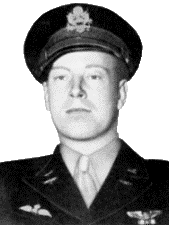
Lieutenant Colonel, United States Army Air Corps
Support & adopt this hero ↓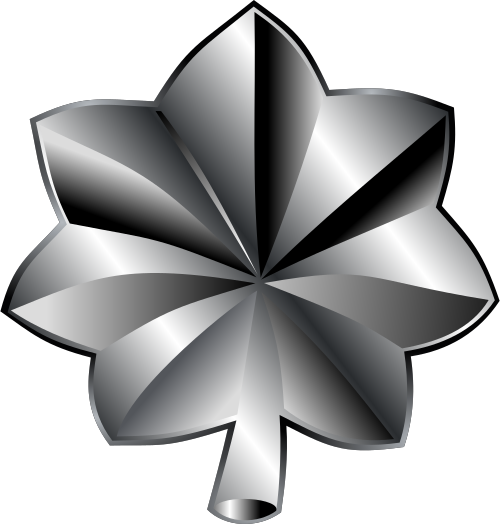
What would you do if your aircraft were being torn apart by enemy fighters, your pilot lay severely wounded and delirious, and the lives of your entire crew depended on you? For John Cary Morgan, there was only one answer. He took control of the aircraft, fought to restrain his wounded commander, and kept a crippled B-17 Flying Fortress flying in formation for nearly two hours. His extraordinary courage would earn him the Medal of Honor and establish his place among the most remarkable American aviators of the Second World War.
Born on August 24, 1914, in Vernon, Texas, John Cary Morgan developed an early fascination with aviation. Determined to become a military pilot, he initially attempted to join the United States Army Air Corps. However, a previous neck injury prevented him from entering American military aviation. Unwilling to abandon his ambition, Morgan travelled to Canada and enlisted in the Royal Canadian Air Force on August 4, 1941. Following flight training, he went to Britain, where he flew operational missions with the Royal Air Force during the early years of the war. His determination eventually brought him into the United States Army Air Forces in 1943 as a flight officer.
Morgan was assigned to the 326th Bombardment Squadron, 92nd Bombardment Group, operating B-17 Flying Fortress heavy bombers from England as part of the Eighth Air Force. It was here that he would perform the extraordinary act of heroism that changed his life forever.
On July 26, 1943, during a bombing mission against Hannover, Germany, Morgan was serving as co-pilot when his B-17 came under a fierce attack by German fighters. Enemy fire shattered the cockpit windshield, severely wounded the pilot and damaged the aircraft's oxygen and interphone systems. The pilot suffered a catastrophic head injury and became delirious, collapsing over the controls while desperately resisting attempts to move him. The situation deteriorated further when the aircraft's upper turret gunner was gravely wounded, while other crew members lost consciousness because of the damaged oxygen supply.
With communications destroyed, Morgan could not call for assistance. He also had no reliable way of knowing how many crew members remained conscious or alive. Facing the possibility of flying the damaged bomber to its target and back to England almost entirely alone, he made a decision that demanded extraordinary physical strength and mental determination. He seized control of the aircraft, using one hand to keep the wounded pilot from interfering with the controls while operating the bomber with the other.
For approximately two hours, Morgan maintained the aircraft's position within the formation despite continuing enemy threats and the desperate struggles of his injured commander. He refused to abandon the mission or the men who might still be alive aboard the aircraft. When the navigator eventually reached the cockpit and helped secure the situation, the bomber continued to its target, completed its mission and returned safely to England. The aircraft was so badly damaged that it was subsequently declared beyond repair.
Morgan's actions represented extraordinary courage, determination and devotion to his fellow airmen. On December 17, 1943, Lieutenant General Ira Eaker presented him with the Medal of Honor, the United States military's highest decoration for valor. He also received the Distinguished Flying Cross and the Air Medal with one Oak Leaf Cluster for his wartime service.
Yet Morgan's story did not end with the ceremony. Although he had been authorized to stop flying combat missions after receiving the Medal of Honor, he chose to return to operational flying. He continued participating in dangerous missions over occupied Europe, determined to contribute until the war was over.
On March 6, 1944, during the first major Berlin bombing raid of that year, Morgan was aboard another B-17 when enemy action brought the aircraft down. He survived the destruction of the bomber but was captured by German forces. Taken prisoner, he was sent to Stalag Luft I, a German prisoner-of-war camp at Barth, where he endured approximately fourteen months of captivity. He remained there until the final months of the war, when Allied forces liberated the camp.
Morgan's wartime experience created an extraordinary historical distinction. He is recognized as the only known Medal of Honor recipient to have been captured and held as a prisoner of war after receiving the decoration. Few stories illustrate the personal cost of military service as powerfully as that of an airman who continued flying after receiving his country's highest award, only to spend the remainder of the conflict behind enemy lines.
Following his release, Morgan returned to the United States and separated from active military service in January 1946. However, his commitment to aviation and military service continued. When the Korean War began, he returned to active duty and flew cargo aircraft, contributing to American military operations in another major international conflict. He subsequently continued his association with the Air Force Reserve and ultimately retired with the rank of Lieutenant Colonel.
Outside the military, Morgan built a successful civilian career with Texaco. Returning to the company between periods of military service, he eventually became a division manager in its International Aviation Sales Department. His professional achievements demonstrated that the determination which had defined his wartime service also shaped his life beyond the cockpit.
John Cary Morgan died on January 17, 1991, in Papillion, Nebraska, at the age of 76. He was laid to rest at Arlington National Cemetery, among the nation's most honoured military figures.
His legacy is not simply the story of a Medal of Honor recipient. It is the story of a young Texan who refused to surrender his dream of flying, an airman who confronted an impossible situation thousands of feet above enemy territory, and a prisoner of war who endured captivity after already demonstrating extraordinary courage. From the Royal Canadian Air Force and the Royal Air Force to the United States Army Air Forces and the United States Air Force, Morgan's remarkable journey crossed national boundaries and two major conflicts.
When asked about heroism, Morgan resisted the idea that he was extraordinary. He believed that people were often placed in circumstances where they had to act, and that others might have responded similarly. Yet the events of that July day over Germany tell a different story. John Cary Morgan did not merely keep a damaged bomber in the air. He kept faith with his crew when everything around him was falling apart.
His courage ensured that the aircraft returned, his crew had a chance to survive, and his name would forever be remembered among America's greatest wartime heroes.
Become the named supporter for this profile and edit the tribute biography and portrait (Owner account required). Proceeds help keep the archive online.
$25 USD / year — annual sponsorship renewal. Keeps the page online and, where enabled, the family anniversary remembrance emails active.