★
Loading archive…
Loading archive…
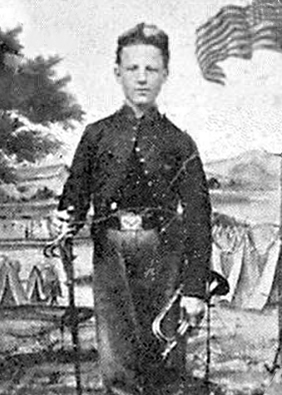
Bugler, U.S. Army
Support & adopt this hero ↓At Fifteen, He Took His Place Beside the Guns
John Cook was born on August 16, 1847. Historical records differ over whether his birthplace was in England or Ohio, but his early life soon became closely connected with the United States. Still only a boy when the American Civil War began, Cook entered military service at an age when most young men were years away from carrying the responsibilities of a soldier.
Cook enlisted in the United States Army in June 1861 and served with Battery B, 4th U.S. Artillery. His assigned position was that of a bugler, an important battlefield role used to communicate orders through prescribed calls. Despite his youth and noncombat specialty, Cook would soon find himself directly involved in one of the bloodiest battles of the Civil War.
On September 17, 1862, Union and Confederate armies collided near Antietam Creek in Maryland. The Battle of Antietam became a day of extraordinary violence, with artillery batteries playing a crucial role in supporting infantry formations and contesting key positions across the battlefield. Cook was only fifteen years old.
During the battle, Battery B came under intense enemy fire and suffered casualties among its artillerymen. Cook helped a wounded officer reach a place of greater safety and then returned toward the battery. Seeing the depleted gun crews struggling to keep their pieces in action, the young bugler voluntarily abandoned his normal duties and took the place of a cannoneer.
Under heavy Confederate fire, Cook helped serve the artillery piece alongside the surviving members of the battery. Loading and operating a Civil War field gun required soldiers to work in exposed positions and demanded close coordination among the crew. Cook remained with the guns despite the danger, performing work far beyond the normal duties expected of a teenage bugler.
His actions at Antietam became the defining moment of his military service. Cook continued serving in the Army after the battle and remained with the 4th U.S. Artillery until completing his wartime enlistment in June 1864.
More than three decades after Antietam, the courage Cook had demonstrated as a fifteen-year-old soldier received formal national recognition. On June 30, 1894, he was awarded the Medal of Honor for voluntarily serving as a cannoneer under devastating enemy fire during the battle of September 17, 1862.
Cook's Medal of Honor recognized an extraordinary decision made in the chaos of battle. He had entered the Army as a bugler, but when casualties threatened the effectiveness of his battery, he stepped into the gun crew and continued fighting beside experienced artillerymen. His age made the action particularly remarkable, but the award was based on the courage he displayed while voluntarily exposing himself to the same deadly fire faced by the men operating the guns.
After the Civil War, Cook returned to civilian life and eventually settled in Washington, D.C. He lived for more than half a century after the Battle of Antietam, carrying with him the distinction earned during his teenage military service.
John Cook died on August 3, 1915. He was buried at Arlington National Cemetery in Virginia.
His legacy remains inseparable from the morning of September 17, 1862. At only fifteen years old, a young Army bugler saw an artillery battery suffering under intense enemy fire and chose to return to the guns. By voluntarily serving as a cannoneer in the midst of one of the Civil War's fiercest battles, John Cook performed the act of courage that ultimately earned him the Medal of Honor.
Become the named supporter for this profile and edit the tribute biography and portrait (Owner account required). Proceeds help keep the archive online.
$25 USD / year — annual sponsorship renewal. Keeps the page online and, where enabled, the family anniversary remembrance emails active.