★
Loading archive…
Loading archive…

Captain, British Army
Support & adopt this hero ↓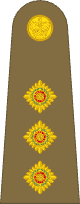
Led a small patrol to capture an enemy gun in the Cameroons.
John Fitzhardinge Paul Butler was born at Berkeley, Gloucestershire, on 20 December 1888. Educated at Wellington College and Sandhurst, he entered the King's Royal Rifle Corps in 1907. After service in India, he was seconded to the Gold Coast Regiment in 1913.
During the First World War campaign in the Cameroons, Butler led thirteen men into thick bush on 17 November 1914. They attacked a substantially larger enemy force, defeated it and captured a machine gun and ammunition. On 27 December he swam the enemy-held Ekam River alone under fire, reconnoitred the far bank and returned safely.
These actions earned the Victoria Cross. Promoted to captain, he also received the Distinguished Service Order for his African campaigning. In 1916 he joined operations in German East Africa. Wounded near Matombo, he died on 5 September 1916 and is commemorated by his grave in Morogoro Cemetery, Tanzania.
Official Victoria Cross citation
For most conspicuous bravery in the Cameroons, West Africa. On 17th November, 1914, with a party of 13 men, he went into the thick bush and at once attacked the enemy, in strength about 100, including several Europeans, defeated them, and captured their machine-gun and many loads of ammunition. On 27th December, 1914, when on patrol duty, with a few men, he swam the Ekam River, which was held by the enemy, alone and in the face of a brisk fire, completed his reconnaissance on the further bank, and returned in safety. Two of his men were wounded while he was actually in the water.
Third Supplement to The London Gazette of 20 August 1915. 23 August 1915, Numb. 29272, p. 8373.
Become the named supporter for this profile and edit the tribute biography and portrait (Owner account required). Proceeds help keep the archive online.
$25 USD / year — annual sponsorship renewal. Keeps the page online and, where enabled, the family anniversary remembrance emails active.