★
Loading archive…
Loading archive…

First Lieutenant, U.S. Army
Support & adopt this hero ↓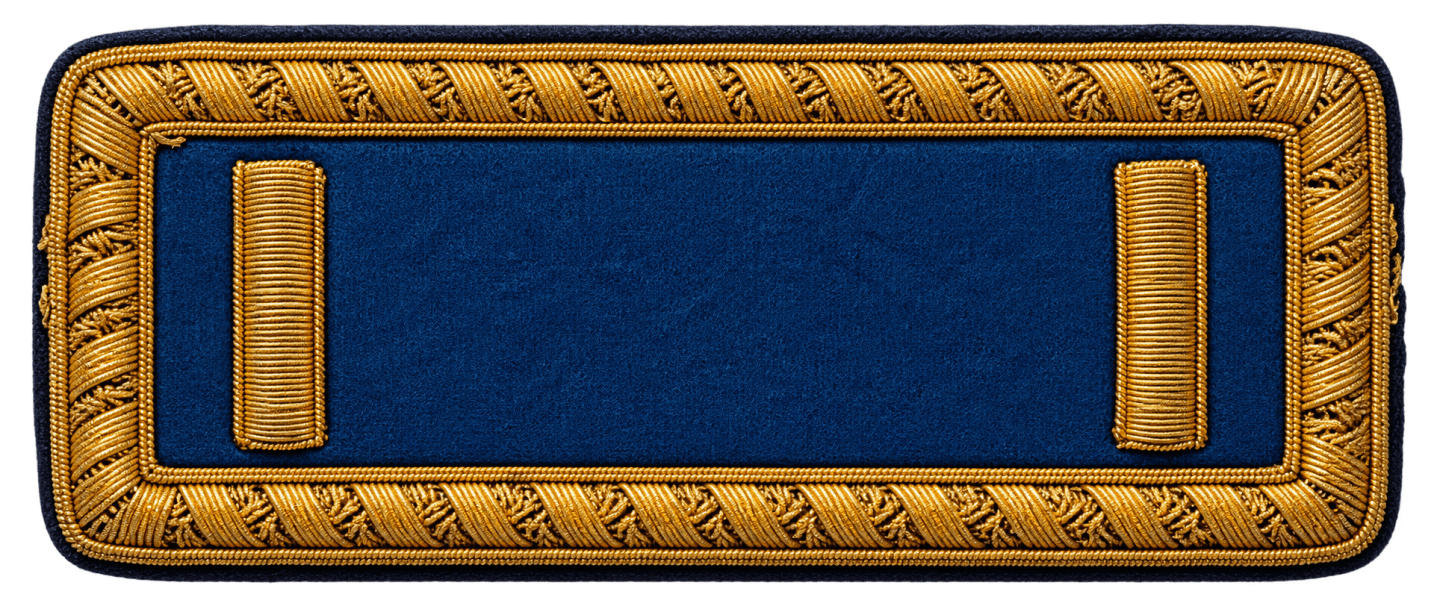
He Joined the Forlorn Hope at Vicksburg
John H. Fisher was born in 1837 in Monmouth, Pennsylvania. During the American Civil War, he entered the United States Army and served with Company B of the 55th Illinois Infantry. He began his military career as a Private, and it was in that enlisted rank that he performed the act of courage for which he would later receive the Medal of Honor.
By the spring of 1863, Fisher and the 55th Illinois Infantry were participating in the Union campaign against Vicksburg, Mississippi. Vicksburg was one of the Confederacy's most important strongholds on the Mississippi River. Its defensive position, protected by extensive earthworks and commanding high ground, made a direct assault extraordinarily difficult.
Major General Ulysses S. Grant's forces had maneuvered through Mississippi and driven Confederate troops back toward Vicksburg. After a series of battles, the Union army closed around the city. Before settling into a prolonged siege, Grant attempted to break the Confederate defenses through direct attacks.
One of the largest assaults took place on May 22, 1863.
Ahead of the main attacking force, a special group of volunteers was organized to move against the Confederate works. Their task placed them at the front of the assault, where they would face concentrated enemy fire while attempting to help open the way for the troops following behind them.
The mission became known as the volunteer storming party.
It was an assignment of extraordinary danger.
Private John H. Fisher volunteered.
On May 22, he advanced with the storming party toward the Confederate defenses at Vicksburg. The volunteers moved ahead of the main Union assault and entered an area exposed to intense enemy fire. Their position at the front meant that they faced the defensive fire before the larger attacking formations could reach the works.
The Confederate fortifications proved extremely difficult to overcome.
Union soldiers advancing toward the defenses encountered obstacles, broken terrain, fortified positions, and heavy fire from troops protected by earthworks. The attack became a costly struggle, and the storming party was exposed to some of the greatest danger of the assault.
Fisher remained with the volunteers during the charge.
His Medal of Honor citation later summarized his conduct simply as gallantry in the charge of the volunteer storming party.
Those words placed Fisher among a remarkable group of soldiers who knowingly accepted one of the most dangerous assignments of the Vicksburg Campaign.
The May 22 attack did not break the Confederate defenses. After the failure of the direct assaults, Grant shifted to siege operations. Union forces gradually tightened their lines around Vicksburg, cutting the Confederate garrison off from reliable supplies and reinforcement.
The siege continued until July 4, 1863, when the Confederate forces at Vicksburg surrendered.
The capture of Vicksburg was one of the most strategically important Union victories of the Civil War. Combined with Union control of other positions along the Mississippi, it effectively opened the river to Federal traffic and divided the Confederacy.
For Fisher, however, the defining moment of the campaign remained the charge of May 22.
He continued serving after Vicksburg and later advanced beyond the rank he had held during the Medal of Honor action. His service record shows that his military career eventually brought promotion to First Lieutenant.
That distinction is important.
Fisher is often identified in Medal of Honor records by his later rank of First Lieutenant, but during the Vicksburg storming-party action he was serving as a Private. His heroism therefore belonged to the earlier enlisted period of his military career, before his later advancement.
The Medal of Honor was not presented immediately.
Like many Civil War soldiers whose actions were formally recognized years after the conflict, Fisher waited decades before receiving the nation's highest military decoration.
On September 2, 1893, John H. Fisher received the Medal of Honor for his gallantry with the volunteer storming party at Vicksburg on May 22, 1863.
Thirty years had passed since the assault.
By then, the battlefield at Vicksburg had become part of national history, and the young Private who had volunteered to advance against the Confederate works had long since completed his military service.
No additional clasp, bar, star, or other device accompanied Fisher's Medal of Honor.
The decoration recognized one specific moment: his participation in the charge of the volunteer storming party.
The significance of that action came from the nature of the assignment itself. Fisher did not find himself accidentally at the front of the assault. He had volunteered to go there.
The men of the storming party understood that their position would expose them to exceptional danger. They were being sent forward before the main body of Union troops against prepared Confederate defenses.
Fisher accepted that risk.
His Medal of Honor therefore commemorated not only what happened during the attack, but also the decision to step forward for a mission in which the chances of being killed or wounded were severe.
John H. Fisher died on September 16, 1895, in Spencer, Iowa, only two years after receiving the Medal of Honor. He was buried at Mountain View Cemetery in Longmont, Colorado.
His military legacy remains closely connected to Vicksburg and to the soldiers who formed the volunteer storming party on May 22, 1863.
The larger assault failed to carry the Confederate works that day, but the courage of the men who went forward was not forgotten.
Private John H. Fisher was one of them.
Decades later, the United States formally recognized his gallantry with the Medal of Honor, preserving his place in the history of the 55th Illinois Infantry and one of the Civil War's most important campaigns.
Become the named supporter for this profile and edit the tribute biography and portrait (Owner account required). Proceeds help keep the archive online.
$25 USD / year — annual sponsorship renewal. Keeps the page online and, where enabled, the family anniversary remembrance emails active.