Loading archive…
Loading archive…

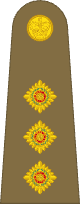
Captain, British Army
Support & adopt this hero ↓Captain John Leslie Green VC
John Leslie Green was born at Buckden, Huntingdonshire, on 4 December 1888, the son of John George Green, a landowner and justice of the peace, and Florence May Green. Known as Leslie to distinguish him from his father, he attended Felsted School before winning a scholarship to Downing College, Cambridge. He completed the Natural Sciences Tripos in 1910 and continued his medical training at St Bartholomew’s Hospital in London, qualifying MRCS and LRCP in 1913. He subsequently worked as a house surgeon at Huntingdon County Hospital and served for a time as a ship’s surgeon on a voyage to West Africa. Downing College
Following the outbreak of the First World War, Green was commissioned as a lieutenant in the Royal Army Medical Corps, Territorial Force, on 28 September 1914. His appointment was published in the London Gazette on 14 November 1914. He arrived in France on 2 March 1915 and served successively with the 1/5th Battalion, South Staffordshire Regiment, the 1/2nd North Midland Field Ambulance and the 1/5th Battalion, The Sherwood Foresters. He was promoted to captain in 1915. London Gazette commission | Lord Ashcroft’s account
Green’s family had already suffered a grievous loss. His younger brother, Second Lieutenant Alan Edward Green of the 1/5th South Staffordshire Regiment, was killed at the Hohenzollern Redoubt during the Battle of Loos on 13 October 1915. He was 19 and has no known grave. His name is recorded on the Loos Memorial. Commonwealth War Graves Commission
On New Year’s Day 1916, Leslie Green married Edith Mary Nesbitt Moss, herself a qualified doctor. Their marriage would last only six months.
On 1 July 1916, the opening day of the Battle of the Somme, the 46th (North Midland) Division attacked the German-held Gommecourt Salient. The 1/5th Sherwood Foresters advanced towards Gommecourt Wood under devastating machine-gun and artillery fire. Of the 734 officers and men who participated, 491 became casualties. Green, serving as the battalion’s medical officer, followed behind the advancing waves.
Near the German wire he found Captain Frank Bradbury Robinson, an officer of the 1/6th Sherwood Foresters commanding the 139th Machine Gun Company. Robinson had been seriously wounded and was entangled in the enemy’s barbed wire. Although Green had also been wounded, he went forward under continuing fire, freed Robinson and dragged him into a shell hole. There he dressed the officer’s wounds while German bombs and rifle grenades fell around them.
Green then attempted to bring Robinson back to the British lines. He had almost succeeded when he was struck and killed. Robinson was recovered but died from his wounds at No. 20 Casualty Clearing Station on 3 July 1916. Lord Ashcroft’s account
Green was posthumously awarded the Victoria Cross. The award was published in the London Gazette of 4 August 1916:
“For most conspicuous devotion to duty. Although himself wounded, he went to the assistance of an officer who had been wounded and was hung up on the enemy’s wire entanglements, and succeeded in dragging him to a shell hole, where he dressed his wounds, notwithstanding that bombs and rifle grenades were thrown at him the whole time. Captain Green then endeavoured to bring the wounded officer into safe cover, and had nearly succeeded in doing so when he was himself killed.”
Official Victoria Cross citation, London Gazette, Issue 29695, page 7743
Green’s body remained on the battlefield until it was recovered in the spring of 1917. He was buried in Foncquevillers Military Cemetery, Pas-de-Calais, France, in Plot III, Row D, Grave 15. Although the Commonwealth War Graves Commission records his age as 26, his documented birth and death dates establish that he was 27. Commonwealth War Graves Commission
King George V presented Green’s Victoria Cross to his widow at Buckingham Palace on 7 October 1916. Contemporary reports described the appearance of a widow receiving a posthumous VC as an unusual feature of the investiture. It is believed to have been the first occasion on which a reigning monarch personally presented a posthumous Victoria Cross to a recipient’s relative, although this distinction has not been conclusively established. Victoria Cross and George Cross Association
In addition to the Victoria Cross, Green was entitled to the 1914–15 Star, British War Medal 1914–1920 and Victory Medal 1914–1919. There is no confirmed evidence that he was Mentioned in Despatches, so no oak-leaf emblem should be displayed on his Victory Medal ribbon.
Edith Green later remarried and presented her first husband’s medal group to the Royal Army Medical Corps. The group remains in the collection of the Museum of Military Medicine. The museum has closed its former galleries at Keogh Barracks and is relocating to Whittington Barracks, Staffordshire. Museum of Military Medicine
Captain John Leslie Green’s Victoria Cross recognized more than courage under fire. As a physician and medical officer, he knowingly exposed himself to almost certain death because a wounded man needed him. His final act embodied the highest traditions of the Royal Army Medical Corps: steadfast in adversity and faithful to the wounded, regardless of the danger.
Become the named supporter for this profile and edit the tribute biography and portrait (Owner account required). Proceeds help keep the archive online.
$25 USD / year — annual sponsorship renewal. Keeps the page online and, where enabled, the family anniversary remembrance emails active.