★
Loading archive…
Loading archive…

He Volunteered for the Charge Into Vicksburg’s Defenses
John N. Eckes was born in May 1844 in what is now Lewis County, West Virginia. His early life is only lightly documented, but before he reached adulthood the United States was torn apart by the Civil War. Eckes entered Union service and became a private in Company E of the 47th Ohio Infantry, a regiment that would spend much of the war campaigning through the Western Theater.
The 47th Ohio Infantry served in demanding operations across the South, and by the spring of 1863 it had become part of Major General Ulysses S. Grant’s campaign against Vicksburg, Mississippi. The Confederate stronghold controlled a critical section of the Mississippi River, and its capture was essential to the Union strategy of opening the river and dividing the Confederacy.
After a series of successful maneuvers and battles in Mississippi, Grant’s forces reached the defenses surrounding Vicksburg. The Confederate army had withdrawn behind a formidable network of earthworks, rifle pits, forts, and artillery positions.
On May 22, 1863, Union forces launched a major assault against those defenses.
The attack required soldiers to cross exposed ground under intense fire before reaching the Confederate works. Among those selected for one of the most dangerous assignments was Private John N. Eckes.
Eckes volunteered for the storming party.
The men in this group were expected to move at the front of the assault and help open the way for the larger attacking force. Their position placed them among the first soldiers exposed to Confederate artillery and rifle fire as the Union troops advanced toward the fortifications.
Eckes went forward with them.
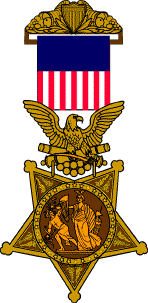
His official Medal of Honor citation would later recognize his “gallantry in the charge of the volunteer storming party.” The words were brief, but they recorded his willingness to participate in one of the most hazardous actions of the assault on Vicksburg.
The Union attack of May 22 failed to break the Confederate defenses. The strength of the fortifications and the fire of the defenders forced the attacking troops back after severe fighting. Grant then abandoned further attempts to take the city by direct assault and settled into a siege.
Vicksburg eventually surrendered on July 4, 1863.
The victory was one of the most important strategic achievements of the Civil War. Union control of Vicksburg, combined with operations farther south, gave the United States effective command of the Mississippi River and divided the Confederacy geographically.
For Eckes, however, the war was far from over.
He remained with the 47th Ohio Infantry as the regiment continued campaigning through the Western Theater. The unit later participated in operations connected with the Chattanooga and Atlanta campaigns as Union armies pushed deeper into Confederate territory.
On July 22, 1864, during the fighting around Atlanta, Eckes was wounded.
The injury came more than a year after his dangerous service at Vicksburg and demonstrated that his combat experience extended well beyond the single action for which he would later become famous. He survived his wound and ultimately returned to civilian life after his military service ended.
Eckes never rose above the rank of private in his verified service record. His Medal of Honor therefore recognized the courage of an enlisted soldier serving directly in the ranks rather than that of an officer or senior commander.
Three decades passed before his actions at Vicksburg received the nation’s highest military recognition.
On July 21, 1894, John N. Eckes was awarded the Medal of Honor for his gallantry during the charge of the volunteer storming party on May 22, 1863.
By then, the desperate assault against Vicksburg had become part of the established history of the Civil War. The Medal of Honor ensured that the soldiers who had volunteered to go forward in that dangerous attack would be remembered individually as well as collectively.
For Eckes, the decoration preserved the defining moment of his wartime service: a private soldier volunteering to move toward heavily defended enemy works while knowing that the assignment placed him at the front of the attack.
His broader Union Army service also fell within the qualifying period later represented by the Army Civil War Campaign Medal. That decoration was created decades after the war to recognize qualifying Army service during the conflict. Eckes was still alive when it was authorized in 1907, although no surviving recipient-specific issue record has been confirmed for a physical medal issued personally to him.
The two decorations therefore represent different parts of his military record. The Civil War Campaign Medal reflects his qualifying Union Army service, while the Medal of Honor recognizes the extraordinary gallantry he displayed at Vicksburg.
The surviving record of Eckes’s later civilian life is considerably less detailed than the history of his military service. Like many Civil War veterans, he lived for decades after the conflict as the generation that had fought the war gradually passed into history.
John N. Eckes died in Cushing, Oklahoma, on April 20, 1912. He was buried at Union-Graham Cemetery in Winfield, Kansas.
He had survived Vicksburg, survived a wound at Atlanta, and lived long enough to see his courage officially recognized by the United States.
His Medal of Honor legacy rests on May 22, 1863.
When Union commanders called for volunteers to go forward against the defenses of Vicksburg, Private John N. Eckes joined the storming party and advanced in one of the most dangerous assaults of the campaign.
The attack did not capture the city that day, but his courage was not forgotten. More than thirty years later, the Medal of Honor preserved his place among the soldiers who volunteered to lead the way into the fire.
Become the named supporter for this profile and edit the tribute biography and portrait (Owner account required). Proceeds help keep the archive online.
$25 USD / year — annual sponsorship renewal. Keeps the page online and, where enabled, the family anniversary remembrance emails active.