★
Loading archive…
Loading archive…
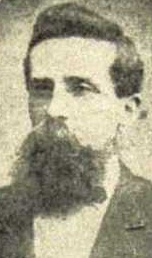
Sergeant, U.S. Army
Support & adopt this hero ↓
He Left the Line to Keep the Guns Firing
John Pointon Beech was born in Staffordshire, England, on May 1, 1844. He later came to the United States and settled in Trenton, New Jersey. When the American Civil War began, Beech was still a teenager, but he soon entered Union service and began a military career that would carry him through battle, captivity, and one of the most desperate engagements of the war.
On August 9, 1861, Beech enlisted at Trenton in Company B of the 4th New Jersey Infantry. The regiment became part of the Army of the Potomac and entered the hard campaigning that followed as Union forces attempted to advance toward Richmond.
Beech’s first great ordeal came during the Peninsula Campaign of 1862.
On June 27, the 4th New Jersey fought at the Battle of Gaines’ Mill. Confederate attacks placed enormous pressure on the Union position, and the fighting continued until evening. As the Federal line collapsed, much of the 4th New Jersey was surrounded and captured.
Beech was among the prisoners.
Years later, he described how the captured soldiers were marched into Richmond. They were initially confined in Libby Prison before being transferred elsewhere and eventually to Belle Isle, the prison camp situated in the James River.
For a young soldier, captivity introduced a completely different struggle. Beech later recalled the harsh conditions, limited food, and uncertainty experienced by prisoners on Belle Isle. He and thousands of other Union soldiers waited for exchange while separated from their regiments and unable to know when they would return to the war.
On August 5, 1862, Beech was among thousands of prisoners exchanged.
He survived captivity and returned to Union service.
Over the following two years, the 4th New Jersey Infantry remained deeply involved in the Army of the Potomac’s campaigns. By the spring of 1864, Lieutenant General Ulysses S. Grant had begun the Overland Campaign, a relentless series of operations intended to keep continuous pressure on General Robert E. Lee’s Army of Northern Virginia.
After the brutal Battle of the Wilderness, the armies moved toward Spotsylvania Court House.
There, on May 12, 1864, John Beech performed the act that would eventually earn him the Medal of Honor.
The fighting at Spotsylvania had become extremely violent. Union and Confederate troops battled around powerful earthworks, and artillery batteries were positioned close enough to the fighting that their crews were exposed to devastating enemy fire.
Near the position of the 4th New Jersey Infantry, an artillery battery was struck heavily.
Its crew was cut down.
With men at the guns killed or wounded, the battery risked losing its ability to continue firing at a critical moment in the battle.
Beech voluntarily left his own position and went forward to help.
Under severe enemy fire, he joined the surviving artillerymen and assisted in working the guns. He was not serving as an artilleryman, and no ordinary duty required him to leave his infantry position and take the place of fallen cannoneers.
He did so voluntarily.
His official Medal of Honor citation later captured the action in a single sentence: he voluntarily assisted in working the guns of a battery whose members had been killed or wounded.
The simplicity of the citation concealed the danger of the decision. Artillery crews working exposed guns were highly visible targets. The battery had already suffered devastating casualties, yet Beech moved toward the guns rather than away from them and helped keep them in action.
The battle continued through some of the most savage fighting of the Overland Campaign. May 12 became especially associated with the terrible struggle around the Confederate salient known as the Mule Shoe and the Bloody Angle, where soldiers fought for hours at extremely close range.
Beech survived Spotsylvania and continued serving with the 4th New Jersey.
His military record also shows the advancement that followed his continued service. On September 1, 1864, he was promoted to corporal. On February 1, 1865, he became a sergeant, the highest verified rank of his wartime career.
By then the Confederacy was entering its final months.
Beech remained with the regiment through the closing period of the war and was honorably mustered out on July 9, 1865. He had entered service as a young immigrant soldier and left four years later as a sergeant who had experienced combat, captivity, exchange, and some of the hardest campaigning endured by the Army of the Potomac.
Nearly thirty years passed before his action at Spotsylvania received the nation’s highest military recognition.
In June 1894, John Pointon Beech received the Medal of Honor for his conduct on May 12, 1864.
The decoration recognized a moment when he saw an artillery battery losing its crew and chose to expose himself to the same fire that had already killed or wounded the men operating the guns.
His broader Union Army service was later represented by the Civil War Campaign Medal, which commemorated qualifying Army service during the conflict. Beech lived for decades after the decoration was established and into the period associated with its later ribbon design.
The two decorations reflected different aspects of his wartime record. The Civil War Campaign Medal represented his service through the conflict, while the Medal of Honor preserved one extraordinary decision at Spotsylvania.
After the war, Beech returned to civilian life in New Jersey. The former prisoner of war and Union sergeant lived long enough to see the generation of Civil War veterans gradually pass into history.
He also preserved part of that history himself. In later years, Beech wrote about his capture at Gaines’ Mill and his imprisonment in Richmond and on Belle Isle, leaving a firsthand account of experiences that had taken place more than twenty years earlier.
John Pointon Beech died on November 27, 1926. He was buried at Mercer Cemetery in Trenton, New Jersey.
More than six decades had passed since Spotsylvania.
Yet the moment remembered above all others remained May 12, 1864.
An artillery battery had been devastated. Its guns still needed men to serve them. John Pointon Beech stepped out of the infantry line, moved into the fire, and helped keep those guns firing.
Thirty years later, the Medal of Honor ensured that his decision would not be forgotten.
Become the named supporter for this profile and edit the tribute biography and portrait (Owner account required). Proceeds help keep the archive online.
$25 USD / year — annual sponsorship renewal. Keeps the page online and, where enabled, the family anniversary remembrance emails active.