★
Loading archive…
Loading archive…
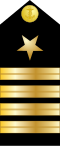
He stayed aboard a sinking submarine to guard vital secrets.
Captain John Philip Cromwell, a United States Navy Medal of Honor recipient, gave his life aboard USS Sculpin on 19 November 1943 rather than risk the capture of critical Pacific Fleet intelligence. His final decision made the loss of a submarine a lasting example of duty carried to its ultimate limit.
Born on 11 September 1901 in Henry, Illinois, Cromwell graduated from the U.S. Naval Academy in June 1924. He began his naval career aboard the battleship USS Maryland, attended submarine school in 1926 and served in USS S-24. Diesel engineering instruction and further submarine assignments developed the technical experience that shaped his later career.
He commanded USS S-20 in 1936–1937, then served on the staff of Submarine Division 4. After promotion to lieutenant commander in 1939, he worked with the Bureau of Engineering and Bureau of Ships. In May 1941, he became engineering officer for the Pacific Fleet submarine force. During 1942–1943, he commanded Submarine Divisions 203, 44 and 43, supporting the demanding work of preparing submarines and crews for war.
In November 1943, Cromwell embarked in Sculpin as prospective commander of a coordinated submarine attack group. He was the senior embarked officer, while Lieutenant Commander Fred Connaway commanded the submarine. The planned group had not been activated before Sculpin was lost. Her ninth war patrol was Cromwell's first personal wartime patrol, supporting interception operations north of Truk ahead of the Gilbert Islands offensive.
On 18–19 November, Japanese escorts subjected Sculpin to repeated depth-charge attacks. With the submarine badly damaged, Connaway ordered her to surface. A gun battle with the destroyer Yamagumo followed, killing Connaway and other men on the bridge. Cromwell agreed to scuttle and abandon the stricken boat, but chose to remain aboard himself.
Cromwell knew submarine tactics, planned fleet movements and details of forthcoming operations. His Medal of Honor citation recognized his deliberate sacrifice to protect those secrets from disclosure under interrogation. Although the citation broadly credits him with authorizing the surfacing, the Navy's later account identifies Connaway as the officer who gave that order. Cromwell's distinction was his decision to deny the enemy access to the intelligence he carried.
His posthumous Legion of Merit recognized exceptionally meritorious submarine-division command, including the skill and initiative with which he managed complex responsibilities. His established honours also include the Purple Heart, American Defense Service Medal, American Campaign Medal, Asiatic-Pacific Campaign Medal and World War II Victory Medal.
The Medal of Honor was presented to his widow and son in San Francisco on 24 April 1946. His remains were never recovered. He is commemorated at the National Memorial Cemetery of the Pacific in Honolulu, and his medal is held by the Submarine Force Library and Museum in Groton. The destroyer escort USS Cromwell (DE-1014) carried his name into a new generation of naval service.
Official Medal of Honor citation:
For conspicuous gallantry and intrepidity at the risk of his life above and beyond the call of duty as commander of a submarine coordinated attack group with flag in the U.S.S. Sculpin, during the 9th war patrol of that vessel in enemy-controlled waters off Truk Island, 19 November 1943. Undertaking this patrol prior to the launching of our first large-scale offensive in the Pacific, Capt.
Cromwell, alone of the entire Task Group, possessed secret intelligence information of our submarine strategy and tactics, scheduled Fleet movements, and specific attack plans. Constantly vigilant and precise in carrying out his secret orders, he moved his undersea flotilla inexorably forward despite savage opposition and established a line of submarines to southeastward of the main Japanese stronghold at Truk.
Cool and undaunted as the submarine, rocked and battered by Japanese depth charges, sustained terrific battle damage and sank to an excessive depth, he authorized the Sculpin to surface and engage the enemy in a gunfight, thereby providing an opportunity for the crew to abandon ship. Determined to sacrifice himself rather than risk capture and subsequent danger of revealing plans under Japanese torture or use of drugs, he stoically remained aboard the mortally wounded vessel as she plunged to her death.
Preserving the security of his mission, at the cost of his own life, he had served his country as he had served the Navy, with deep integrity and an uncompromising devotion to duty. His great moral courage in the face of certain death adds new luster to the traditions of the U.S. Naval Service. He gallantly gave his life for his country.
Become the named supporter for this profile and edit the tribute biography and portrait (Owner account required). Proceeds help keep the archive online.
$25 USD / year — annual sponsorship renewal. Keeps the page online and, where enabled, the family anniversary remembrance emails active.
