★
Loading archive…
Loading archive…
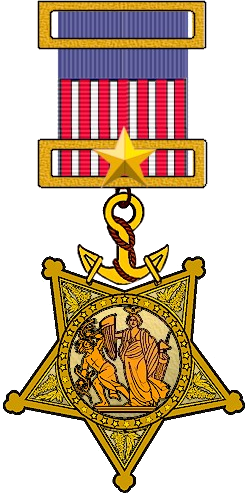
Captain of the Forecastle, U.S. Navy
Support & adopt this hero ↓
He Stayed Under Fire Until Fort Fisher Fell
John P. Erickson was born in Sweden in 1826 and later came to the United States. By the time of the American Civil War, he had entered the United States Navy and was serving as a seasoned sailor aboard USS Pontoosuc. His naval rating was Captain of the Forecastle, a position that placed him among the experienced enlisted men responsible for important work on the forward part of the ship.
USS Pontoosuc operated with Union naval forces along the Atlantic coast during the closing stages of the Civil War. By late 1864, the vessel had become involved in the campaign against Wilmington, North Carolina, one of the Confederacy’s most important remaining ports.
Wilmington was protected by a network of coastal defenses, with Fort Fisher standing as the strongest barrier guarding access to the Cape Fear River.
As long as Fort Fisher remained in Confederate hands, blockade runners could still attempt to reach Wilmington with supplies from overseas. Union leaders therefore regarded the destruction of the fort and the closing of the port as a major strategic objective.
USS Pontoosuc joined the naval force assembled for the attack.
On December 24 and 25, 1864, Union warships opened a massive bombardment of Fort Fisher as part of the first attempt to capture the position. Naval guns hammered the Confederate works, but the accompanying land assault failed to take the fort.
The operation was not over.
Union forces returned in January 1865 with a stronger and better coordinated attack.
For John P. Erickson, the renewed fighting would become the defining period of his military service.
Beginning in late December and continuing through the operations of early 1865, Erickson performed his duties aboard USS Pontoosuc while the ship operated under enemy fire. His Medal of Honor citation later recognized his gallantry, skill, and coolness during the campaign.
The second attack on Fort Fisher began in January 1865.
Once again, Union naval forces subjected the fort to a sustained bombardment. The Confederate position was powerful, but constant fire from the fleet weakened its defenses while Union troops prepared to assault from land.
Erickson remained at his station through the dangerous operation.
During the assault on Fort Fisher, he was severely wounded.
The injury was serious enough that he was eventually sent to a naval hospital at Portsmouth, Virginia. Yet his conduct during the campaign had already earned the respect of those who witnessed his service under fire.
Fort Fisher finally fell to Union forces on January 15, 1865.
Its capture was a major strategic victory.
With the fort no longer protecting the entrance to the Cape Fear River, Wilmington became increasingly vulnerable. Union naval and land forces continued their operations up the river, striking additional Confederate positions and helping open the route toward the city.
USS Pontoosuc remained involved in the campaign.
In February 1865, Union forces moved against Fort Anderson and the remaining defenses along the Cape Fear River. The pressure eventually forced Confederate troops to abandon Wilmington.
The city fell on February 22, 1865.
For Erickson, the entire period from December 1864 through February 1865 represented sustained combat service during one of the final major naval campaigns of the war.
His Medal of Honor citation did not single out one brief moment.
Instead, it recognized the courage and professional skill he displayed throughout the operations connected with Fort Fisher and Wilmington.
That distinction is important.
Erickson was not honored for a single captured flag or one isolated rescue. His award reflected repeated performance under combat conditions over an extended campaign.
His rating as Captain of the Forecastle also gives important context to his service.
This was not a commissioned officer’s position. Erickson was an experienced enlisted sailor carrying responsibility aboard a fighting ship during major combat operations. His work demanded seamanship, discipline, and the ability to continue functioning while the ship and its crew operated under hostile fire.
He demonstrated those qualities during the Fort Fisher campaign.
On June 22, 1865, John P. Erickson’s service was formally recognized under Navy General Order No. 59.
He received the Medal of Honor for the gallantry, skill, and coolness he displayed during the operations of USS Pontoosuc from December 24, 1864, through February 22, 1865.
By then, the Civil War itself had effectively ended.
Robert E. Lee had surrendered the Army of Northern Virginia in April, and the remaining major Confederate forces had followed. The campaign in which Erickson had distinguished himself had helped close one of the Confederacy’s last major ports only weeks before the final collapse.
His Medal of Honor therefore represented both personal courage and participation in a strategically important operation during the final months of the war.
Erickson survived his wounds and lived for more than four decades after the conflict.
His later life was spent in New York, where he became part of the large community of Civil War veterans who carried the memory of the conflict into the twentieth century.
John P. Erickson died in Brooklyn, New York, on August 2, 1907.
He was buried at Green-Wood Cemetery in Brooklyn.
By the time of his death, more than forty years had passed since the guns of Fort Fisher had fallen silent.
Yet his Medal of Honor preserved the story of those months in 1864 and 1865, when a Swedish-born sailor aboard USS Pontoosuc remained at his duty station during repeated combat operations, endured enemy fire, and was seriously wounded in the assault.
His legacy rests on that sustained courage.
From the bombardment of Fort Fisher to the final advance toward Wilmington, John P. Erickson served with the steadiness expected of an experienced sailor and displayed the gallantry that earned him the Medal of Honor.
Become the named supporter for this profile and edit the tribute biography and portrait (Owner account required). Proceeds help keep the archive online.
$25 USD / year — annual sponsorship renewal. Keeps the page online and, where enabled, the family anniversary remembrance emails active.