★
Loading archive…
Loading archive…

He Stormed a Stockade to Save a Vital Bridge
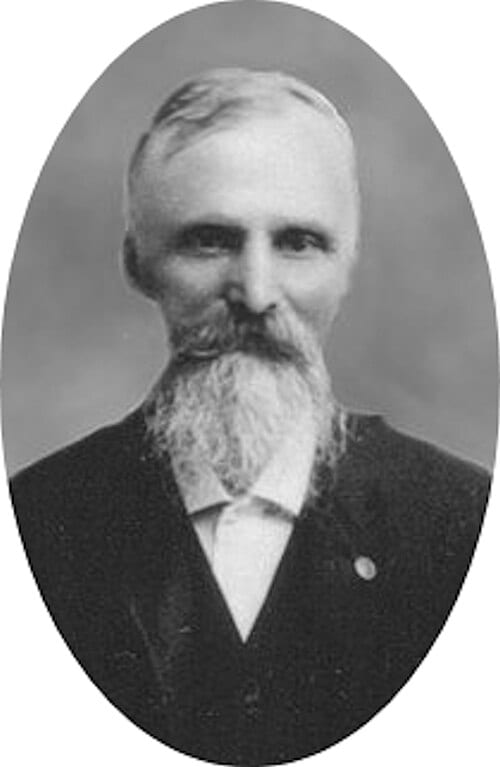
John Shapland was born on March 4, 1832, in England. Like many immigrants of his generation, he eventually made his way to the United States, where the outbreak of the American Civil War would draw him into military service. He enlisted in the Union Army and served as a Private in Company D of the 104th Illinois Infantry.
The 104th Illinois Infantry became part of the Union armies operating in the Western Theater, where soldiers were frequently required to protect transportation routes, rivers, bridges, and other infrastructure essential to military movement. Railroads and bridges were especially important because the destruction of even a single crossing could delay troops, ammunition, food, and reinforcements.
Shapland’s defining moment came on July 2, 1863, at Elk River, Tennessee.
A strategically important bridge in the area was threatened by Confederate forces occupying a stockade. The defensive position gave the enemy protection while allowing them to threaten Union control of the crossing. Removing that threat required soldiers to approach the fortified position while exposed to hostile fire.
Shapland voluntarily joined a small party assigned to attack the stockade.
The mission was dangerous from the beginning. The soldiers had to advance while the defenders were firing on them, and the limited size of the attacking group meant there was little margin for failure. Shapland nevertheless continued forward with the volunteers.
Under heavy enemy fire, the small Union party reached and captured the stockade.
Their success prevented the bridge from being destroyed or lost and preserved an important route for Union forces.
Shapland’s Medal of Honor citation later recognized his voluntary participation in the assault and his conduct while helping capture the enemy position under heavy fire. His courage was demonstrated not in a massive charge by an entire army, but in a focused and hazardous mission carried out by a small group of soldiers against a fortified defensive point.
The action occurred during a crucial period of the Civil War. In early July 1863, major operations were unfolding across several theaters, including Gettysburg in Pennsylvania and Vicksburg in Mississippi. At the same time, smaller engagements across Tennessee and the surrounding region remained strategically significant because Union and Confederate forces continued competing for control of transportation networks and key territory.
Shapland survived the Elk River operation and continued his service as a Private with the 104th Illinois Infantry. His verified military records show that he entered and left service at the same rank, making Private both his rank at the time of his Medal of Honor action and his highest verified military rank.
Recognition for his heroism came many years after the war.
On October 30, 1897, more than thirty-four years after the fight at Elk River, John Shapland was awarded the Medal of Honor.
The Army Medal of Honor had been established during the Civil War as the nation’s highest military decoration for extraordinary conduct. Many Civil War actions were reviewed years later, resulting in decorations being presented long after the battles themselves had ended.
For Shapland, the Medal of Honor permanently connected his name with the small assault force that advanced through enemy fire, captured a stockade, and preserved a strategically important bridge.
No additional clasp, star, or device accompanied his Medal of Honor.
His wider Union Army service was later represented by the Civil War Campaign Medal. Established after the conflict, the campaign medal commemorated qualifying Army service during the Civil War and represented the broader wartime experience surrounding the single action recognized by the Medal of Honor.
For Shapland, the Civil War Campaign Medal marked his service as a Union infantryman, while the Medal of Honor specifically recognized the courage he displayed at Elk River.
After the Civil War, Shapland lived for many decades as one of the surviving veterans of the conflict. His life extended well into the twentieth century, allowing him to witness the Civil War pass from recent memory into national history.
As the veteran generation aged, their service became increasingly preserved through reunions, monuments, military records, cemeteries, and public commemorations. Medal of Honor recipients occupied a particularly important place within that memory because their decorations preserved individual acts of courage that might otherwise have disappeared within the enormous scale of the war.
John Shapland died on February 5, 1923.
He was buried in Greenwood Cemetery in York, Nebraska.
By the time of his death, nearly sixty years had passed since the action at Elk River. Yet the reason for his Medal of Honor remained clear.
A bridge was threatened.
An enemy stockade stood in the way.
A small group of Union soldiers volunteered to attack it.
John Shapland went with them.
Under heavy fire, they advanced, captured the fortified position, and saved the bridge.
For his voluntary courage during that assault on July 2, 1863, Private John Shapland earned the Medal of Honor and a permanent place among the soldiers recognized for extraordinary bravery during the American Civil War.
Become the named supporter for this profile and edit the tribute biography and portrait (Owner account required). Proceeds help keep the archive online.
$25 USD / year — annual sponsorship renewal. Keeps the page online and, where enabled, the family anniversary remembrance emails active.