★
Loading archive…
Loading archive…
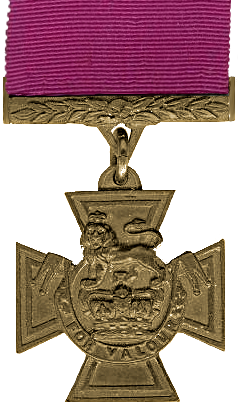
Sergeant, Bengal Army
Support & adopt this hero ↓
A burning fuse, a massive explosion, and a handful of engineers facing the full force of enemy fire. On 14 September 1857, during the assault on Delhi, Sergeant John Smith of the Bengal Sappers and Miners stood among the men tasked with blowing open the heavily defended Kashmir Gate. As others fell around him, Smith took responsibility for completing the dangerous mission. His courage under fire helped create the breach through which British and allied troops entered the city, earning him one of the British Army's highest honours, the Victoria Cross.
John Smith was born at Ticknall, Derbyshire, in February 1814, the son of a shoemaker. Before entering military service, he followed his father's trade. In October 1837, he enlisted in the service of the Honourable East India Company, beginning a military career that would take him from Britain to the battlefields of Afghanistan and northern India. After joining the Bengal Sappers and Miners, he received engineering training at Chatham before sailing for India in 1839.
Smith's early military service coincided with the First Anglo-Afghan War. He served with the Bengal Sappers and Miners during the difficult operations in Afghanistan, including the advance towards Kabul and the events surrounding its reoccupation in 1842. His company marched towards Peshawar under Brigadier-General Wild, and Smith experienced the demanding conditions of campaigning across the frontier. These early operations established the foundation of a military career that would span several major campaigns in British India.
His service continued during the First Anglo-Sikh War of 1845–1846. Smith took part in the Sutlej campaign and was present at the decisive Battle of Sobraon on 10 February 1846. The fighting was intense, and the Bengal engineers played an important role in the movement and operations of the army. His campaign experience expanded further during the Second Anglo-Sikh War of 1848–1849, when he served at the Siege of Mooltan and the Battle of Goojerat. These operations placed him among the experienced soldiers who had witnessed some of the most significant military campaigns of nineteenth-century British India.
By 1857, Smith had risen to the rank of sergeant and was serving with the Bengal Sappers and Miners. When the Indian Rebellion broke out, he joined the loyal engineering personnel serving with the Delhi Field Force. The campaign to recapture Delhi became one of the most demanding operations of the uprising. British and allied troops faced determined resistance, fortified positions and relentless fire from defenders occupying the historic city.
On 14 September 1857, the assault on Delhi began. One of the most important objectives was the destruction of Kashmir Gate, a fortified entrance that obstructed the attacking force. A small party of engineers was ordered to carry explosive charges to the gate and prepare it for demolition. The approach was exposed to enemy fire, making the task exceptionally dangerous. Every man carrying the powder faced the possibility of being struck before reaching the target.
Smith was third in command of the demolition party. As the engineers advanced, they came under heavy fire. Lieutenant Home, Lieutenant Salkeld and other members of the party pressed forward despite the danger. Smith carried his own powder charge and recovered another bag from beside a fallen comrade. The operation quickly became a desperate struggle for survival as men were wounded or killed around the gate.
When responsibility for firing the charge passed to Smith, he found himself confronting a critical moment. Believing that the fuse had failed, he attempted to relight it. He then realised that the fuse was already burning. With only moments remaining before the explosion, he threw himself into the ditch for protection. The charge detonated, tearing open the entrance and creating the breach required for the assault.
The explosion did not end Smith's work. In the aftermath, he helped care for the wounded Lieutenant Salkeld and Sergeant Burgess, obtained stretchers and assisted in clearing the entrance. The assaulting troops were then able to advance through the breach into Delhi. The destruction of Kashmir Gate became one of the defining episodes of the siege and an enduring example of the courage displayed by the Bengal Sappers and Miners.
For his extraordinary bravery during the assault on Kashmir Gate, John Smith was awarded the Victoria Cross. His award was officially announced in the London Gazette on 27 April 1858. His actions placed him among the distinguished recipients of Britain's highest award for military gallantry and secured his place in the history of the Indian Rebellion of 1857.
Smith's military career did not end with the capture of Delhi. He continued serving in India and undertook further responsibilities within the military establishment. In July 1859, he became a Sub-Conductor and served as an acting barrack master. In March 1860, he received a commission as an ensign in the Royal Bengal Engineers. He subsequently held barrack and administrative appointments at several Indian stations, continuing his service in the engineering establishment.
Away from military operations, Smith had established a family life in India. He married Mary Ann Styles at Umballa in 1844, and the couple had four daughters. His career had taken him far from his birthplace in Derbyshire, but his final years were spent in the service of the British Indian military establishment.
John Smith died at Jullundur in June 1864, aged 50. He was buried with military honours in the Artillery Cemetery. He left his property to his widow, bringing to a close a life that had begun in a small English village and culminated in one of the most remarkable acts of courage during the Indian Rebellion.
Today, Sergeant John Smith VC is remembered for his extraordinary bravery at Kashmir Gate on 14 September 1857. His story is not simply one of a soldier receiving a distinguished decoration. It is the story of a military engineer who continued his duty under deadly fire, accepted responsibility when others had fallen, and helped open the way into one of the most fiercely defended cities of the rebellion. His Victoria Cross stands as a lasting tribute to his courage, determination and service.
Become the named supporter for this profile and edit the tribute biography and portrait (Owner account required). Proceeds help keep the archive online.
$25 USD / year — annual sponsorship renewal. Keeps the page online and, where enabled, the family anniversary remembrance emails active.