★
Loading archive…
Loading archive…
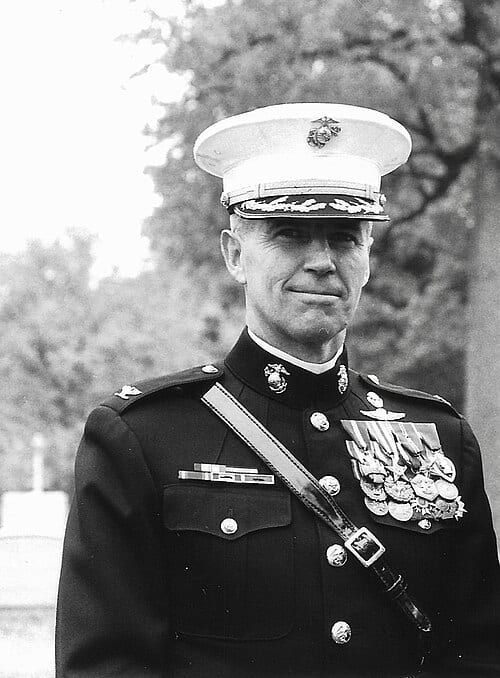
Colonel John Walter Ripley, USMC, was one of the most extraordinary combat leaders in United States Marine Corps history. On 2 April 1972, during the North Vietnamese Easter Offensive, he performed an act of extraordinary courage that would become legendary. Suspended beneath the Dong Ha Bridge in the face of relentless enemy fire, Ripley repeatedly climbed along its steel girders to position approximately 500 pounds of explosives. For three hours, he risked his life to destroy a vital crossing and prevent an advancing North Vietnamese mechanized force from pushing further south. His extraordinary actions ultimately earned him the Medal of Honor, awarded posthumously in 2026, securing his place among America's most distinguished military heroes.
Born on 29 June 1939 in Radford, Virginia, John Walter Ripley graduated from Radford High School in 1957 and immediately enlisted in the United States Marine Corps. After serving one year as an enlisted Marine, he received an appointment to the United States Naval Academy. He graduated on 6 June 1962 with a Bachelor of Science degree in electrical engineering and was commissioned as a second lieutenant in the Marine Corps. From the beginning of his officer career, Ripley demonstrated an exceptional combination of determination, intellectual ability and commitment to military service. His early assignments included service aboard the aircraft carrier USS Independence and leadership positions with 2nd Battalion, 2nd Marines.
In May 1965, Ripley transferred to 2nd Force Reconnaissance Company, where he completed demanding Airborne, Scuba, Ranger and Jumpmaster training. His first Vietnam assignment began in October 1966, when he joined 3rd Battalion, 3rd Marines in the northern sector of South Vietnam. Taking command of Lima Company, he became a respected frontline leader in the dangerous operational area known as Leatherneck Square, which included Dong Ha, Con Thien and Khe Sanh. His company became known through his leadership and fighting spirit, earning the nickname Ripley's Raiders. On 2 March 1967, he was wounded in action while commanding his Marines. Refusing to let his injuries end his mission, he returned to duty later that month and continued leading his men through some of the most demanding fighting of the Vietnam War. His exceptional leadership and courage during this tour earned him the Silver Star.
Ripley's military experience extended far beyond Vietnam. In October 1969, he was selected as an exchange officer with the British Royal Marines, an assignment that broadened his experience in expeditionary warfare and international military cooperation. After completing the Royal Marines Commando Course at Lympstone, England, he served with the 3rd Commando Brigade in Singapore and 40 Commando in northern Malaya, where he operated alongside the famous Gurkha Rifles. He also served with the Special Boat Service and participated in demanding operations and training in Norway. His experience in mountain and Arctic warfare further developed his reputation as a highly capable infantry and amphibious warfare officer.
In 1971, Captain Ripley returned to Vietnam as Senior Marine Advisor to the 3rd Vietnamese Marine Battalion, operating along the Demilitarized Zone. His second Vietnam tour placed him directly in the path of one of the war's most dangerous offensives. On 2 April 1972, as North Vietnamese forces launched a massive mechanized assault during the Easter Offensive, the strategically important Dong Ha Bridge became a critical obstacle. If the enemy captured the crossing, its forces could advance rapidly into South Vietnam. The destruction of the bridge became essential to slowing the offensive.
What happened next would define Ripley's legacy. With approximately 500 pounds of explosives already positioned near the bridge, access to the necessary structural points was blocked by a chain-link fence. Under continuous enemy fire, Ripley climbed beneath the bridge and moved hand over hand along its steel girders, repeatedly exposing himself to devastating danger as he repositioned the explosive charges. Exhausted, physically strained and fully aware of the possibility of death, he continued until the charges were properly emplaced. After completing the dangerous task, he detonated the explosives and destroyed the bridge, successfully stopping the enemy's immediate advance. His courage and determination helped prevent a potentially catastrophic breakthrough and became one of the most celebrated acts of individual heroism in Marine Corps history.
For this extraordinary action, Ripley was originally awarded the Navy Cross in 1972. More than five decades later, following sustained efforts to secure the highest recognition for his heroism, his award was upgraded. On 18 June 2026, President Donald J. Trump posthumously presented Colonel John Walter Ripley with the Medal of Honor at the White House. The recognition formally acknowledged the extraordinary gallantry and selfless devotion to duty he had demonstrated at Dong Ha Bridge. The following day, he was inducted into the Pentagon's Hall of Heroes.
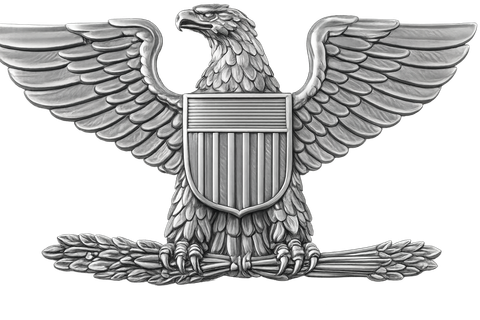
His remarkable career continued long after his combat service. Ripley commanded 1st Battalion, 2nd Marines, from 1979 to 1981, leading the battalion through demanding training and Arctic warfare operations in Norway. He subsequently graduated from the Naval War College in 1982 and served on the Joint Staff of the Joint Chiefs of Staff as a political-military planner. Promoted to colonel in 1984, he became Senior Marine and Director of the Division of English and History at the United States Naval Academy. During this assignment, he helped commission more than 500 midshipmen into the Marine Corps. He later served with 3rd Marine Expeditionary Force in Okinawa and assumed command of 2nd Marine Regiment in 1988. His final major military assignments included leadership of the Navy-Marine Corps ROTC programme at Virginia Military Institute.
Colonel Ripley retired from active military service in July 1992 after a remarkable 35 years of combined enlisted and commissioned service. Yet retirement did not end his contribution to American military and educational institutions. He became President of Southern Virginia College, where he helped stabilize the financially troubled institution and later served as Chancellor. In 1997, he assumed the presidency of Hargrave Military Academy in Virginia, applying his experience in leadership, education and institutional development. In 1999, he returned to Marine Corps service as Director of the Marine Corps History and Museums Division, a position he held until August 2005. Through his work, he helped preserve the history, traditions and sacrifices of generations of Marines.
His achievements extended beyond the battlefield. In 2002, Ripley became the first Marine officer to receive the United States Naval Academy's Distinguished Graduate Award, its highest recognition for distinguished professional achievement and service. In June 2008, he became the first Marine inducted into the United States Army Ranger Hall of Fame. His combat experiences, leadership philosophy and commitment to education made him a sought-after speaker whose insights influenced generations of military personnel and future leaders. His extraordinary career was also documented in numerous military histories and publications.
Colonel John Walter Ripley died on 28 October 2008 in Annapolis, Maryland, and was laid to rest at the United States Naval Academy Cemetery. His story, however, did not end with his passing. From a young enlisted Marine to a decorated combat commander, from the jungles of Vietnam to the highest levels of military leadership, Ripley demonstrated an unwavering commitment to duty, courage and the men entrusted to his command. His destruction of the Dong Ha Bridge remains an enduring example of extraordinary bravery under fire, while his lifelong contributions to military education and historical preservation continue to inspire. The posthumous Medal of Honor in 2026 brought renewed recognition to a Marine whose actions embodied the highest traditions of the United States Marine Corps.
Become the named supporter for this profile and edit the tribute biography and portrait (Owner account required). Proceeds help keep the archive online.
$25 USD / year — annual sponsorship renewal. Keeps the page online and, where enabled, the family anniversary remembrance emails active.