★
Loading archive…
Loading archive…
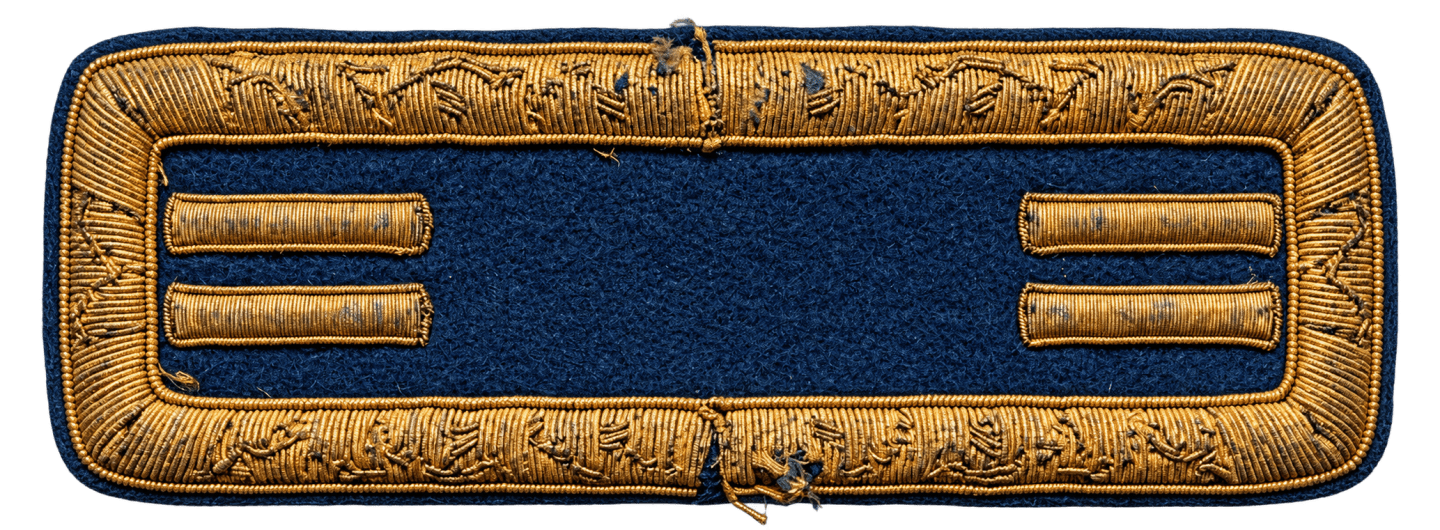
He Charged Straight Into the Confederate Guns
He charged straight into the Confederate guns, leading mounted Union soldiers against a heavily defended artillery position while enemy fire threatened to destroy the advancing cavalry. On December 17, 1864, near the Harpeth River in Tennessee, First Lieutenant Joseph Snively Hedges of the 4th United States Cavalry demonstrated extraordinary courage during the pursuit of a retreating Confederate army. His determined charge helped break the enemy's defensive line and capture three artillery pieces and numerous prisoners, an achievement that eventually earned him the Medal of Honor.
Joseph Snively Hedges was born on June 12, 1836, in Mansfield, Ohio. He grew up during a period of significant national expansion and political uncertainty, as the United States experienced increasing tensions over slavery and the future of the Union. Mansfield, located in north-central Ohio, developed as an important regional community during these years, and Hedges would maintain a lifelong connection with his birthplace.
Details of his childhood and early education are limited, but his military career eventually brought him into the United States Cavalry. Unlike temporary volunteer formations raised specifically for the Civil War, the Regular Army cavalry regiments formed part of the nation's permanent military establishment. Their officers and enlisted soldiers were expected to maintain professional standards of mounted warfare, reconnaissance, discipline, and field operations.
Hedges served in the 4th United States Cavalry, a regiment originally organized as the 1st United States Cavalry in 1855. Following the reorganization of mounted units in 1861, the regiment received its new designation. Its soldiers had previously served in frontier operations, but the outbreak of the American Civil War transformed its responsibilities as the Regular Army became an essential component of Union military operations.
Throughout the conflict, elements of the 4th Cavalry participated in numerous campaigns across the Western Theater. The regiment saw service in Missouri, Kentucky, Tennessee, Mississippi, and Georgia, contributing to reconnaissance missions, cavalry screens, raids, and direct combat operations. Its mounted soldiers were frequently required to move rapidly across difficult territory while confronting Confederate cavalry, infantry, and artillery.
By October 1862, Hedges was serving as a First Lieutenant and carrying out military responsibilities associated with the regiment's personnel. His position placed him among the professional officers responsible for maintaining the effectiveness of the cavalry during the increasingly demanding campaigns of the war.
The 4th Cavalry participated in important engagements during 1862 and 1863, including operations around Stones River, Shelbyville, Chickamauga, and Chattanooga. The regiment developed a reputation for aggressive mounted action, particularly when cavalry charges offered an opportunity to disrupt Confederate positions or exploit weaknesses in enemy formations.
During 1864, Union armies intensified their military operations across the Confederacy. In the Western Theater, Major General William T. Sherman's forces advanced through Georgia, while Confederate General John Bell Hood eventually attempted to reverse the Union's gains by launching an offensive into Tennessee.
Hood hoped to threaten Union communications, disrupt Federal supply lines, and force Union commanders to divert troops from other operations. His Army of Tennessee advanced northward, bringing Confederate forces into confrontation with Union troops under Major General George H. Thomas.
The campaign reached a decisive stage in December 1864. After suffering severe losses during the Battle of Franklin on November 30, Hood's army continued toward Nashville, where Confederate troops established defensive positions south of the city.
On December 15 and 16, Union forces under Thomas launched a major offensive against Hood's army. The Battle of Nashville resulted in a decisive Federal victory, forcing Confederate troops into a difficult retreat toward the south. Union cavalry, commanded by Major General James H. Wilson, played an essential role in disrupting Confederate positions and pursuing the withdrawing army.
The pursuit continued on December 17, 1864, as Wilson's mounted forces pressed southward from Nashville. Confederate troops attempted to establish defensive positions along the retreat route, using artillery and infantry formations to delay the rapidly advancing Federal cavalry.
Near the West Harpeth River, Confederate forces formed a defensive line supported by field artillery. The position threatened to delay the Union pursuit and provided the retreating Confederate army with an opportunity to withdraw additional troops and equipment.
At this critical moment, First Lieutenant Hedges was commanding the 4th United States Cavalry, which was serving as part of Wilson's mounted force. Wilson ordered the regiment to attack the Confederate center while other Union cavalry units moved against the enemy's flanks.
The assignment was exceptionally dangerous. Confederate artillery stood ready to fire upon the approaching cavalry, while supporting infantry provided additional defensive strength. A direct mounted assault against such a position required exceptional speed, coordination, and courage.
Hedges immediately led his soldiers forward. With sabers drawn, the cavalry advanced toward the enemy's position, confronting artillery fire as they closed the distance. Confederate gunners opened fire at close range, but the Union horsemen continued their charge.
The mounted attack struck the Confederate center with considerable force. As Hedges and his soldiers pressed forward, other Union cavalry formations attacked the enemy's flanks, creating a coordinated assault that disrupted the Confederate defensive line.
The resulting engagement forced Confederate troops to abandon their position. Union cavalry captured three artillery pieces and numerous prisoners, while the retreating Confederate formations were driven back toward and across the West Harpeth River.
The official account of the action emphasized the courage displayed by Hedges and the speed of the cavalry attack. His leadership helped transform a potentially dangerous confrontation with Confederate artillery into an important tactical success during the Union pursuit.
Contemporary descriptions also recorded the extraordinary risks Hedges personally encountered during the charge. Advancing ahead of his soldiers, he became separated from portions of his command and was repeatedly confronted by Confederate troops. Accounts of the engagement describe how he escaped these dangerous encounters amid the confusion of the retreating enemy formations.
Despite the danger, Hedges survived the action and continued his military responsibilities. The charge demonstrated the effectiveness of aggressive cavalry operations when coordinated with supporting mounted forces and applied against an enemy already under severe pressure.
The encounter near the Harpeth River became one of the distinguished actions of the 4th United States Cavalry during the Civil War. By capturing Confederate artillery and prisoners, Hedges and his fellow soldiers contributed to the continuing disintegration of Hood's defeated Army of Tennessee.
The Confederate retreat following Nashville effectively ended Hood's attempt to regain the strategic initiative in Tennessee. His army suffered devastating losses, and Union control over the region was further strengthened.
Hedges's bravery did not go unnoticed by his superiors. On May 19, 1865, Major General James H. Wilson formally recommended him for advancement to Captain and the brevet rank of Major in recognition of his exceptional gallantry during the pursuit of Hood's army. The recommendation specifically referred to his leadership in charging the Confederate rear guard near the West Harpeth River and capturing three artillery pieces.
A brevet rank was a form of military recognition that could acknowledge distinguished or gallant service without necessarily granting the full command authority or compensation associated with a permanent promotion. Hedges's later recorded highest rank was Captain, reflecting his advancement beyond the First Lieutenant's commission he held during his famous cavalry action.
Following the conclusion of the Civil War, Hedges returned to civilian life and renewed his connection with Mansfield, Ohio. In 1865, he married Jeanette Wallace Purdy, a member of a prominent local family. The couple established their family in Mansfield, and their daughter, Grace Purdy Hedges, was born in 1867.
Hedges subsequently pursued a successful career in banking. Through his connection with the Purdy family, he became associated with the Farmers' National Bank, an important financial institution founded by his father-in-law, James Purdy. Over time, Hedges advanced to the position of bank president, establishing himself as a respected figure in Mansfield's commercial life.
His civilian achievements demonstrated a different dimension of his career. Having served as a cavalry officer during one of the most turbulent periods in American history, he applied his leadership and organizational experience to the development of his hometown's financial community.
More than thirty-three years after his courageous action near the Harpeth River, Hedges received the nation's highest military recognition for valor. On April 5, 1898, Joseph S. Hedges was awarded the Medal of Honor for his extraordinary bravery on December 17, 1864.
The Medal of Honor had been established during the American Civil War to recognize exceptional military courage and distinguished service. Hedges's award honored his leadership at the head of the 4th United States Cavalry, his charge against a Confederate artillery position supported by infantry, and the successful capture of three guns and numerous prisoners.
The decoration represented official recognition of an achievement that had taken place decades earlier but remained significant in the history of Union cavalry operations. Hedges was the first member of the 4th United States Cavalry to receive the Medal of Honor, creating a lasting connection between his personal courage and the regiment's military heritage.
During his later years, Hedges continued living in Mansfield, where he remained connected to the community and family that had shaped his civilian life. He witnessed the United States undergo enormous changes following the Civil War, including rapid industrial expansion, economic development, and the emergence of a new generation of Americans increasingly distant from the conflict.
Joseph Snively Hedges died on August 12, 1910, in Mansfield, Ohio, at the age of seventy-four. He was laid to rest in his hometown, preserving his connection to the community where his life had begun.
His legacy remains closely associated with the dramatic cavalry charge near the West Harpeth River on December 17, 1864. At a moment when Confederate artillery threatened to obstruct the Union pursuit, Hedges led his mounted soldiers directly against the enemy's position, helping break the defensive line and secure an important battlefield success.
The Medal of Honor awarded to Joseph Snively Hedges stands as a lasting tribute to his exceptional courage, military leadership, and service to the United States. His life also reflects the transition of a distinguished Civil War officer into a successful civilian leader, demonstrating that his contributions continued long after the fighting ended. His extraordinary charge against Confederate guns remains an enduring chapter in the history of the 4th United States Cavalry and the American Civil War.
Become the named supporter for this profile and edit the tribute biography and portrait (Owner account required). Proceeds help keep the archive online.
$25 USD / year — annual sponsorship renewal. Keeps the page online and, where enabled, the family anniversary remembrance emails active.