★
Loading archive…
Loading archive…
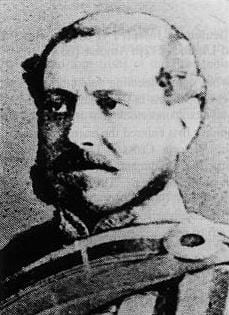
Deputy Surgeon General, British Army
Support & adopt this hero ↓He carried wounded men through heavy fire into safe shelter.
Joseph Jee was born in 1819 and studied medicine in London, Edinburgh and Paris, qualifying as a surgeon in 1841. He entered the Army medical service in 1842 and joined the 78th Highlanders as surgeon in 1854. He served in the Persian campaign before accompanying the regiment to India.
During the advance into Lucknow on 25 September 1857, Jee treated casualties after the fighting at Char Bagh Bridge and organised their evacuation. Trapped with the wounded at the Moti Mahal, he repeatedly exposed himself to fire while attending men near an artillery position. He later brought wounded men into the Residency by the river bank despite warnings that the route was dangerously exposed. He received the Victoria Cross from Queen Victoria in 1860.
He became a surgeon-major in 1862, served with the Royal Dragoons and retired in 1868 with honorary senior medical rank. In 1880 he married Norah Carola Riley and subsequently lived at Queniborough Hall, Leicestershire. Appointed honorary surgeon to Queen Victoria shortly before his death, he died on 17 March 1899 and was buried at Ratcliffe College.
Official award citation
For most conspicuous gallantry and important services, on the entry of the late Major-General Havelock’s relieving force into Lucknow, on the 25th September, 1857, in having during action (when the 78th Highlanders, then in possession of the Char Bagh, captured two 9-pounders at the point of the bayonet), by great exertion and devoted exposure, attended to the large number of men wounded in the charge, whom he succeeded in getting removed on cots and the backs of their comrades, until he had collected the Dooly bearers who had fled. Subsequently, on the same day, in endeavouring to reach the Residency with the wounded men, Surgeon Jee became besieged by an overwhelming force in the Mote-Mehal, where he remained during the whole night and following morning, voluntarily and repeatedly exposing himself to a heavy fire in proceeding to dress the wounded men who fell while serving a 24-pounder in a most exposed situation. He eventually succeeded in taking many of the wounded, through a cross fire of ordnance and musketry, safely into the Residency, by the river-bank, although repeatedly warned not to make the perilous attempt.
Become the named supporter for this profile and edit the tribute biography and portrait (Owner account required). Proceeds help keep the archive online.
$25 USD / year — annual sponsorship renewal. Keeps the page online and, where enabled, the family anniversary remembrance emails active.