★
Loading archive…
Loading archive…
Sergeant, British Army
Support & adopt this hero ↓
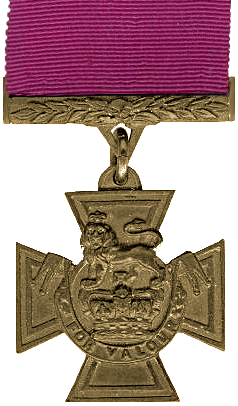
A machine gun position threatened to halt an entire British advance. Rather than wait for reinforcements, Sergeant Joseph Lister charged forward alone, silenced the gun crew and compelled an enemy stronghold to surrender. His extraordinary courage at Passchendaele in 1917 would earn him the Victoria Cross, Britain's highest award for gallantry.
Joseph Lister was born on 19 October 1886 in Higher Broughton, Salford, Lancashire. He later settled in Reddish, near Stockport, where he worked at Lowe's Chemical Works. He enlisted in the Lancashire Fusiliers in September 1914 and arrived in France on 25 September 1915. Serving on the Western Front, he experienced the brutal fighting of the Somme in 1916, where he was wounded. After recovering, he returned to active service and became a sergeant.
On 9 October 1917, during the Third Battle of Ypres near Poelcapelle, Belgium, Lister's company encountered devastating machine-gun fire from German pillboxes. Recognising that the fire threatened to disrupt the advancing troops and their supporting artillery barrage, he dashed ahead of his men towards the enemy position. He shot two machine-gunners, forcing the remaining crew to surrender. He then approached the pillbox and demanded the surrender of its occupants. After one man resisted and was shot, approximately 100 additional German soldiers emerged from nearby shell holes and surrendered. His action enabled the British line to advance with hardly a check. The official citation described his conduct as "most conspicuous bravery in attack." His Victoria Cross was announced in the Fourth Supplement to The London Gazette on 26 November 1917, Issue 30400, page 12328.
Lister's distinguished service was also recognised through the 1914–15 Star, British War Medal 1914–1920 and Victory Medal 1914–1919, the latter bearing his First World War Mentioned in Despatches oak-leaf emblem. His later service during the Second World War brought the Defence Medal 1939–1945 and War Medal 1939–1945. His honours also included the King George VI Coronation Medal of 1937, Queen Elizabeth II Coronation Medal of 1953 and Belgium's Military Decoration, awarded in recognition of exceptional service or acts of courage.
After the First World War, Lister returned to civilian life in Reddish, working as a postman and later as a works watchman. He re-enlisted in the Lancashire Fusiliers in 1940, continuing his connection with the regiment during the Second World War. Afterwards, he worked as a school crossing patrolman and remained connected with the Victoria Cross community.
Joseph Lister died on 19 January 1963 and was buried with military honours at Willow Grove Cemetery, Reddish.
From the battlefields of Flanders to the streets of his adopted hometown, Joseph Lister's story is a reminder that extraordinary courage can emerge from an ordinary soldier determined not to let his comrades down. His Victoria Cross remains a lasting testament to the initiative, determination and selflessness that changed the course of a battlefield advance.
Become the named supporter for this profile and edit the tribute biography and portrait (Owner account required). Proceeds help keep the archive online.
$25 USD / year — annual sponsorship renewal. Keeps the page online and, where enabled, the family anniversary remembrance emails active.