★
Loading archive…
Loading archive…
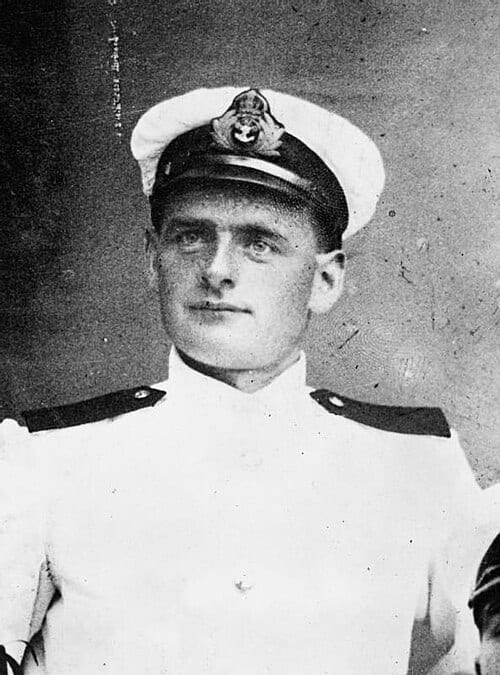
Temporary Chief Skipper, Royal Navy
Support & adopt this hero ↓An enemy cruiser ordered him to abandon his tiny fishing vessel. Joseph Watt refused. Outgunned, exposed to devastating enemy fire, and facing almost certain destruction, the Royal Naval Reserve skipper chose to fight on. His extraordinary courage during the Battle of the Otranto Barrage on 15 May 1917 earned him the Victoria Cross, Britain's highest award for gallantry.
Joseph Watt VC was born on 25 June 1887 at Gardenstown, Banffshire, Scotland. Raised in a fishing community on Scotland's rugged northeast coast, he grew up surrounded by the dangers and hardships of the North Sea. His father drowned while fishing when Joseph was still a child, an early tragedy that brought the realities of maritime life into sharp focus. After his family moved to nearby Broadsea, Watt followed in his father's footsteps, learning the fishing trade and developing the seamanship that would eventually distinguish him in wartime service. Through years of experience aboard fishing vessels, he became a skilled skipper and part-owner, earning a reputation as a capable and determined seaman.
When the First World War began, Watt volunteered for naval patrol duties and joined the Royal Naval Reserve. In January 1915, he received a temporary skipper's commission. His knowledge of fishing vessels and North Sea waters made him particularly valuable in the dangerous naval operations being conducted around the British coastline and the Mediterranean. He commanded the drifter Gowan Lea, one of the small fishing vessels employed in the Otranto Barrage, an Allied naval barrier across the Strait of Otranto designed to restrict Austro-Hungarian submarine movements between the Adriatic and Mediterranean seas.
The Otranto Barrage was an extraordinary undertaking. Fishing drifters, modest vessels never designed to confront enemy warships, were employed to patrol the waters, tow anti-submarine nets and help maintain the Allied blockade. Their crews faced submarines, mines, hostile surface vessels and unpredictable sea conditions. Watt understood the risks, but his greatest test was still to come.
On 15 May 1917, Austro-Hungarian cruisers launched a devastating attack against the Allied drifters guarding the barrage. The small vessels were hopelessly outmatched by the enemy warships. When an enemy cruiser approached Gowan Lea, Watt was ordered to abandon his vessel. Rather than surrender or flee, he refused to leave his command. He ordered his small gun into action and manoeuvred towards the enemy, displaying extraordinary determination in the face of overwhelming firepower.
The enemy guns opened fire. Gowan Lea was struck and damaged, and members of her crew were wounded. Yet Watt continued to fight and refused to abandon his vessel. His courage and leadership helped ensure that his drifter survived the encounter. But his actions did not end when the immediate danger passed. After the enemy cruisers withdrew, Watt took his damaged vessel to assist another drifter and helped rescue its surviving crew. His conduct demonstrated not only exceptional personal bravery but also a profound sense of responsibility towards his fellow sailors.
For his outstanding gallantry and determination during the Otranto Barrage action, Joseph Watt was awarded the Victoria Cross. His courage also brought international recognition. He received the French Croix de Guerre 1914–1918 and the Italian Silver Medal for Military Valour. Earlier, his wartime service had also earned him the Serbian Gold Medal for Good Service. His promotion to Chief Skipper was backdated to the date of his heroic action. On 6 April 1918, King George V personally presented him with the Victoria Cross at Buckingham Palace.
Watt's contribution to the war effort extended beyond the famous encounter of May 1917. In 1916, he had also assisted with the evacuation of Serbian troops from the Albanian coast, a difficult maritime operation undertaken amid the wider Allied efforts in the Balkans. His service demonstrated the importance of experienced civilian seamen who accepted the dangers of naval warfare and performed vital duties far beyond the traditional battlefield.
After the First World War, Watt returned to the fishing industry along Scotland's northeast coast. The sea remained central to his life, and he continued working as a skipper, commanding vessels including Benachie and Flora Fraser. His marriage to Jessie Ann Noble in 1915 had also established a family life that would remain important throughout his years at sea.
When the Second World War brought another generation into conflict, Watt once again answered the call of duty. He returned to maritime service, commanding a drifter attached to the Home Fleet. His son, who had been wounded while serving with the Gordon Highlanders, subsequently served alongside him. For a man whose life had already been shaped by two world wars, this return to wartime service reflected a remarkable continuity of duty and commitment.
Joseph Watt died at Fraserburgh on 13 February 1955 and was buried at Kirktown Cemetery beside his wife. His medals eventually became part of the Lord Ashcroft Collection, preserving the physical record of an extraordinary life of courage and service.
Joseph Watt VC remains an outstanding example of the bravery displayed by the Royal Naval Reserve and the civilian seamen who served aboard the small fishing vessels of the First World War. On 15 May 1917, when a powerful enemy cruiser demanded his surrender, he chose to stand his ground. His story is a reminder that extraordinary courage is not measured by the size of a ship, the strength of its weapons or the odds of victory, but by the determination of those who refuse to abandon their duty when others depend upon them.
Become the named supporter for this profile and edit the tribute biography and portrait (Owner account required). Proceeds help keep the archive online.
$25 USD / year — annual sponsorship renewal. Keeps the page online and, where enabled, the family anniversary remembrance emails active.