★
Loading archive…
Loading archive…
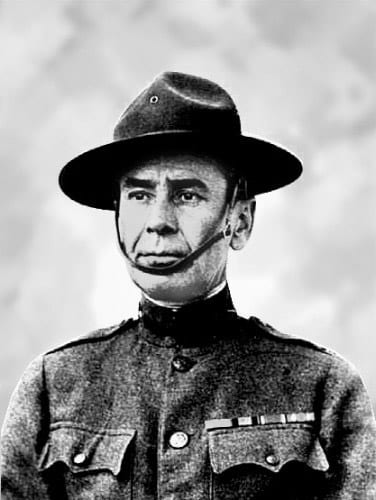
Colonel, U.S. Army
Support & adopt this hero ↓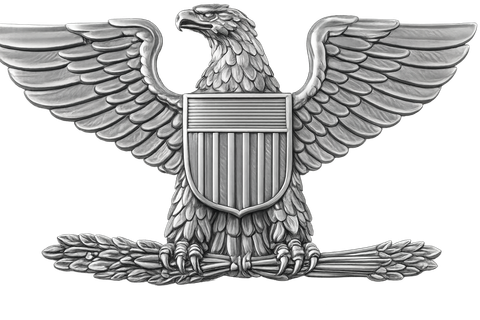
What does it take to cross a battlefield under enemy fire, not to attack, but to prevent a massacre? On 13 April 1911, Captain Julien Edmund Victor Gaujot of the United States Army did exactly that at Agua Prieta, Mexico, in an act of courage and humanity that earned him the Medal of Honor, America's highest military decoration.
Born on 22 October 1874 at Eagle Harbor, Michigan, Gaujot attended Virginia Agricultural and Mechanical College, now Virginia Tech, in 1889 and 1890 before embarking on a military career. He entered federal service with the 2nd West Virginia Volunteer Infantry during the Spanish-American War and subsequently served as an officer with the 27th United States Volunteers during the Philippine-American War. Rising to captain, he commanded Company I and later the 2nd Company of Ilocano Scouts. His Philippine service included operations at Algon, Novaliches, Pinanran, San Jose and Bagbay. His career also included a serious and troubling episode. In 1902, he pleaded guilty to charges relating to the water torture of three Filipino priests and was sentenced to three months' suspension from command and a fine of $150. He subsequently continued his career in the Regular Army.
Gaujot went on to serve with the 11th U.S. Cavalry during the Army of Cuban Pacification and later participated in the Mexican Punitive Expedition of 1916 and 1917, where he served as the expedition's provost marshal at Colonia Dublán. His defining moment, however, came during the Mexican Revolution. As commander of Troop K, 1st U.S. Cavalry, he was stationed near the international border when fighting erupted at Agua Prieta. Approximately thirty Mexican federal soldiers were surrounded by rebel forces, while five Americans were being held prisoner. Under intense enemy fire, Gaujot crossed the battlefield to obtain the rebel commander's permission to accept the federal soldiers' surrender. He then escorted the surrounded troops and American prisoners safely to the American line. His official Medal of Honor citation specifically recognized this extraordinary action. President William Howard Taft personally presented the Medal of Honor to Gaujot at the White House on 23 November 1912.
His military career continued into the First World War. From March to August 1918, Gaujot served in France as a linguist on the staff of General John J. Pershing. He was subsequently assigned to the newly organized 95th Division, serving first in command and then as its chief of staff. He later commanded the 1st U.S. Cavalry and held senior appointments with the 2nd Cavalry Brigade, 1st Cavalry Division and 66th Cavalry Division. His campaign and service record was recognized through the Spanish War Service Medal, Philippine Campaign Medal, Army of Cuban Pacification Medal, Mexican Service Medal and World War I Victory Medal.
An especially remarkable part of his family history was that his younger brother, Antoine August Michel Gaujot, also received the Medal of Honor for a separate act of bravery during the Philippine Insurrection. Their distinction as brothers who independently earned America's highest military decoration remains an extraordinary chapter in American military history.
After more than three decades of military service, Julien Gaujot retired from the United States Army on 30 September 1934 with the rank of colonel. He died on 7 April 1938 in Radford, Virginia, and was laid to rest at Arlington National Cemetery. His story reflects the complexity of military service, encompassing courage under fire, international conflict, controversial wartime conduct and a remarkable act of humanity that secured the lives of both American prisoners and surrounded Mexican soldiers.
Become the named supporter for this profile and edit the tribute biography and portrait (Owner account required). Proceeds help keep the archive online.
$25 USD / year — annual sponsorship renewal. Keeps the page online and, where enabled, the family anniversary remembrance emails active.