★
Loading archive…
Loading archive…

The Saviour of Ceylon
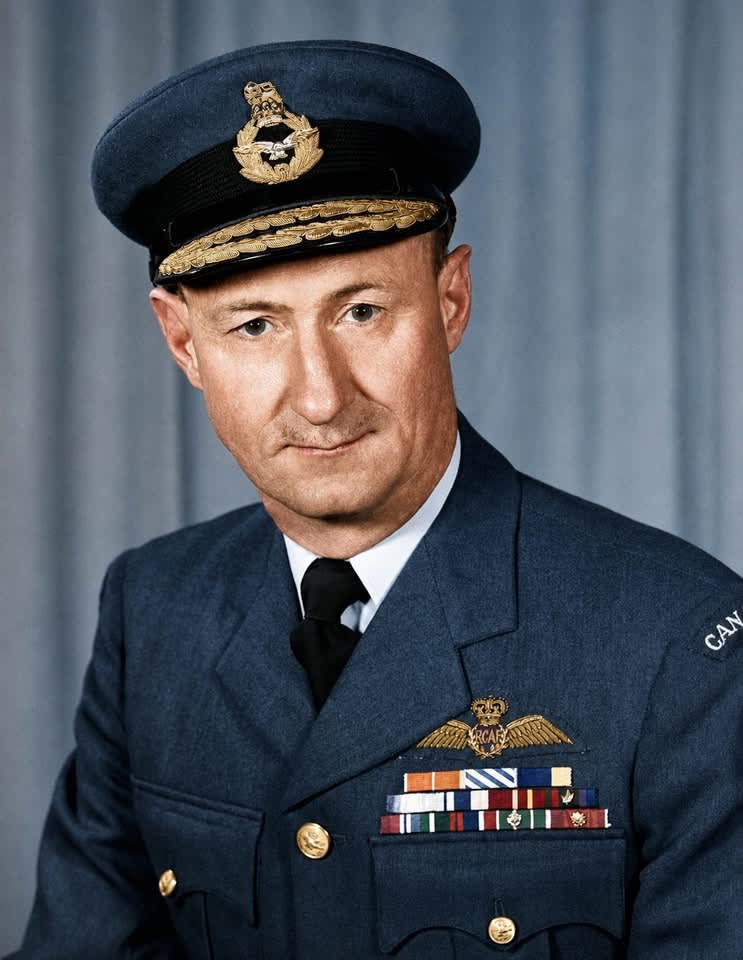
Air Commodore Leonard Joseph Birchall was a Canadian airman whose courage was demonstrated not only during a few desperate minutes over the Indian Ocean, but throughout three and a half years of brutal captivity. His reconnaissance on 4 April 1942 gave Ceylon's defenders crucial confirmation that a powerful Japanese carrier force was approaching, while his leadership as a prisoner of war repeatedly placed him between brutal guards and Allied prisoners who were sick, injured or unable to protect themselves.
Leonard Birchall was born on 6 July 1915 in St. Catharines, Ontario. He attended St. Catharines Collegiate and entered the Royal Military College of Canada in 1933 as cadet number 2364. After graduating in 1937, he served with the Royal Canadian Corps of Signals before transferring to the Royal Canadian Air Force to train as a pilot.
At the outbreak of the Second World War, Flying Officer Birchall served with No. 5 Squadron RCAF, flying Supermarine Stranraer flying boats on convoy protection and anti-submarine patrols from Nova Scotia.
On 10 June 1940, shortly after Canada entered the war against Italy, Birchall was credited with locating the Italian merchant vessel Capo Nola in the Gulf of St. Lawrence. After he made a low pass over the vessel, its captain ran the ship aground and the crew was subsequently taken into custody. The incident became one of the notable episodes of Birchall's early wartime flying career.
In 1941, Birchall joined No. 413 Squadron RCAF, which operated Catalina flying boats on maritime reconnaissance. After operating from the Shetland Islands, the squadron was urgently transferred to Ceylon, now Sri Lanka, as the Japanese advance into the Indian Ocean created an increasing threat to British naval and air forces there.
Birchall arrived at Koggala, Ceylon, on 2 April 1942. Less than two days later, on 4 April, he took off in Catalina AJ155 with a crew of nine for a long-range reconnaissance patrol southeast of the island.
Late in the patrol, approximately 360 miles southeast of Ceylon, the crew sighted ships on the horizon. Birchall altered course to investigate. The vessels proved to be the Japanese carrier striking force, Kido Butai, commanded by Vice Admiral Chūichi Nagumo. The force included the aircraft carriers Akagi, Hiryū, Sōryū, Shōkaku and Zuikaku, accompanied by battleships, cruisers and destroyers. Five of the six Japanese carriers that had taken part in the attack on Pearl Harbor were therefore present; Kaga was absent in Japan undergoing repairs.
Birchall immediately understood the significance of the sighting. The Japanese fleet was moving toward Ceylon, from where its aircraft would strike Colombo and British forces in the region.
The Catalina's wireless operator began transmitting a sighting report as the aircraft approached the Japanese force. Detailed RCAF historical analysis indicates that the report giving the enemy force's position and course reached Ceylon, although its composition had not been successfully transmitted before communications were lost. Japanese Zero fighters were launched against the slow flying boat as Birchall and his crew attempted to complete their reconnaissance report.
The Catalina was repeatedly hit and badly damaged during the attack. With the aircraft no longer capable of remaining airborne, Birchall brought it down on the sea.
Three members of the crew, Warrant Officer Lucien Angelo Colarossi, Sergeant Ian Nicholson Davidson and Sergeant John Henzell, were killed during the attack and sinking. Birchall and the other five survivors were picked up by the Japanese destroyer Isokaze and taken prisoner.
Birchall's warning reached Ceylon at a critical moment. British intelligence had already indicated that a Japanese carrier attack was likely, and Allied commanders had taken preliminary defensive measures before his patrol. Birchall's sighting nevertheless provided vital confirmation that Nagumo's carrier force was actually approaching and gave the defenders roughly 15 hours' warning before Japanese aircraft appeared over Colombo. The Japanese attacks of 5 and 9 April still inflicted serious losses, and the Colombo raid achieved a measure of tactical surprise because of later failures in the warning system, but Birchall's reconnaissance gave commanders information they would otherwise not have possessed at that crucial stage.
His Distinguished Flying Cross was gazetted in May 1943 while he was still a prisoner. The citation emphasized that his timely warning had enabled defensive preparations to be made before the Japanese attack. His reconnaissance became one of the most celebrated Canadian air actions of the war, and Birchall became widely known as the “Saviour of Ceylon.”
For Birchall, however, the ordeal had only begun. He and the surviving members of his crew were interrogated and transported to Japan. He spent approximately three and a half years as a prisoner of war, passing through four successive Japanese camps.
As a senior Allied officer, Birchall regarded the welfare of the prisoners under him as a direct responsibility. He repeatedly confronted camp authorities over beatings, inadequate medical treatment and attempts to force seriously ill men to work. In his own later account, Birchall recalled attacking a guard who habitually beat very sick prisoners. He was subjected to severe punishment and later said that he barely survived the consequences of his intervention.
When guards later resumed attempts to force sick prisoners onto work details, Birchall organized a sit-down strike. He and the other prisoners refused to move until the Japanese authorities agreed that the sick men would not be required to work. Birchall was again beaten and was subsequently transferred to the notorious Omori camp, but the resistance secured protection for the sick prisoners.
Birchall also maintained secret diaries and records of conditions inside the camps. He concealed portions of those records by burying them, and they were recovered after the war. The material subsequently contributed evidence concerning the treatment of Allied prisoners and was used in connection with Japanese war-crimes proceedings.
His conduct in captivity earned him appointment as an Officer of the Order of the British Empire. His citation emphasized his constant concern for the welfare of his fellow prisoners, his disregard for his own safety and his efforts to prevent beatings and the denial of medical attention. The award recognized not a single incident, but sustained leadership and courage throughout his captivity.
Birchall was liberated at the end of the war in an extremely weakened condition, weighing approximately 95 pounds. He later returned to Japan as a member of the prosecution team assisting with the investigation and trial of Japanese war criminals.
After the war, Birchall continued his RCAF career. His appointments included service on the Canadian Joint Staff in Washington, command of RCAF Station Goose Bay, duty with Canada's NATO delegation in Paris, command of RCAF Station North Bay and appointment as Chief of Air Operations at RCAF headquarters. He was also appointed an Officer of the United States Legion of Merit, one of the foreign honours recognizing his distinguished wartime and postwar service.
In 1963, Birchall returned to the Royal Military College as its Commandant. He held the appointment until retiring from the Regular Force in 1967. He subsequently maintained a close connection with the Canadian military as an honorary colonel, first with No. 400 Squadron and later with No. 413 Squadron, the unit with which he had flown over Ceylon.
Outside the military, Birchall became chief executive and administrative officer of the Faculty of Administrative Studies at York University, serving there from 1967 until 1982. He remained active in military, educational and charitable organizations throughout his retirement.
In 1989, Birchall was appointed a Member of the Order of Ontario. On 21 April 1996, after 62 years of service, he qualified for the fifth clasp to his Canadian Forces Decoration. The fifth clasp was presented at Rideau Hall on 5 February 1997. At the same ceremony, the Chief of the Defence Staff presented him with the Canadian Forces Medallion for Distinguished Service.
Birchall was appointed a Member of the Order of Canada on 21 October 1999 and invested on 9 February 2000. His official citation recognized him as a Second World War hero, a senior RCAF officer and a dedicated contributor to Canada's military and civilian life.
He was inducted into Canada's Aviation Hall of Fame in 2001 and was also the 2001 recipient of the Vimy Award for his outstanding contribution to the defence and security of Canada.
Air Commodore Leonard Joseph Birchall died in Kingston, Ontario, on 10 September 2004. He was 89 years old.
Birchall's legacy rests upon two distinct forms of courage. On 4 April 1942, he and his crew remained exposed to attack while attempting to report the Japanese carrier force approaching Ceylon. During the years that followed, Birchall repeatedly placed himself between brutal guards and prisoners who were sick, injured or exhausted, accepting punishment when he believed the welfare of the men under his authority was at stake.
The Royal Canadian Air Force later described Birchall as “the epitome of an officer,” a leader whose career was characterized by devotion to duty and by placing the safety and welfare of those under his command ahead of his own. His life remains an exceptional Canadian example of duty, moral courage and leadership under the most extreme conditions.
Become the named supporter for this profile and edit the tribute biography and portrait (Owner account required). Proceeds help keep the archive online.
$25 USD / year — annual sponsorship renewal. Keeps the page online and, where enabled, the family anniversary remembrance emails active.