★
Loading archive…
Loading archive…
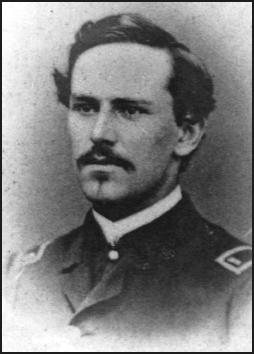
Brigadier General , U.S. Army
Support & adopt this hero ↓
Led a charge straight across a burning bridge in Georgia!
Llewellyn Garrish Estes was a United States Army officer and Medal of Honor recipient who distinguished himself during the American Civil War. Beginning his military career with the 1st Maine Volunteer Cavalry, he advanced from an enlisted noncommissioned officer to a commissioned cavalry officer and ultimately received the brevet rank of Brigadier General. He earned the Medal of Honor for his actions at the Flint River in Georgia on August 30, 1864, when he voluntarily led troops in a charge across a burning bridge.
Estes was born on December 27, 1843, in Old Town, Penobscot County, Maine. He entered military service in October 1861, joining Company A of the 1st Maine Volunteer Cavalry as a sergeant. Still a teenager when he enlisted, he became part of a regiment that would serve extensively in the Union cavalry operations of the Civil War.
By the spring of 1862, Estes was seeking promotion to a commissioned position. A surviving letter dated April 6, 1862, written at Martinsburg, Virginia, records his request for promotion from orderly sergeant to First Lieutenant. His subsequent military service established him as a commissioned cavalry officer.
During the Shenandoah Valley operations of 1862, Estes experienced some of his earliest documented combat. On May 24, he was wounded during fighting near Middletown, Virginia. Later that year, on August 22, he was captured near Warrenton while Union cavalry forces were operating in northern Virginia. He remained a Confederate prisoner until his exchange and return to Union service in December 1862.
Following his return to duty, Estes continued his military career with the 1st Maine Cavalry. In the spring of 1863, he was selected for staff service with Brigadier General Hugh Judson Kilpatrick, whose cavalry brigade participated in the operations of the Army of the Potomac.
During Stoneman's Raid in 1863, Estes served on Kilpatrick's staff and undertook duties involving the transmission of military messages. A regimental historical account records that Estes and accompanying soldiers were captured while carrying a message but subsequently escaped and brought Confederate prisoners back to Union lines.
His staff responsibilities continued during the Gettysburg Campaign. Historical accounts of the 1st Maine Cavalry identify his participation in Kilpatrick's cavalry operations during the summer of 1863, including the engagements associated with Brandy Station and the advance toward Upperville.
During 1863, Estes advanced to the rank of Captain and continued serving in cavalry staff assignments. He subsequently became an Assistant Adjutant General of Volunteers, undertaking responsibilities connected with operational orders, military correspondence, and the coordination of cavalry units.
In the spring of 1864, Estes accompanied Kilpatrick to the Western Theater, where Federal cavalry forces were operating in support of Major General William T. Sherman's campaign against Atlanta, Georgia.
On August 30, 1864, Estes participated in an operation near the Flint River during the Union cavalry movements south of Atlanta. Kilpatrick's cavalry had been assigned to disrupt Confederate communications and railroad connections supporting the defense of the city.
During the operation, Union forces encountered Confederate resistance near a bridge crossing the Flint River. The position required an assault to drive the defenders away and secure the crossing.
Estes, then serving as a Captain and Assistant Adjutant General, voluntarily assumed a leading role in the attack. As the crossing became the focus of the engagement, he led troops forward in a charge over a burning bridge.
His conduct was later formally recognized in the official Medal of Honor citation, which recorded that he voluntarily led troops in the charge across the burning structure. The action demonstrated his direct participation in combat despite the responsibilities associated with his staff appointment.
Estes continued serving during the final campaigns of the Civil War. In September 1864, he received promotion to Major in the United States Volunteers.
During Sherman's subsequent operations through Georgia and the Carolinas, Estes remained associated with Kilpatrick's cavalry command. His duties included assisting with cavalry operations and the movement of military orders during the campaign.
In the closing months of the war, Estes continued his staff service as Union forces advanced through the Carolinas. Following the surrender of Confederate forces under General Joseph E. Johnston in April 1865, he served in administrative responsibilities connected with Union military authority in western North Carolina.
On September 30, 1865, Estes concluded his volunteer military service. He received the honorary brevet rank of Brigadier General in recognition of his wartime service. This brevet appointment was distinct from his substantive military rank of Major.
After leaving the Army, Estes remained in North Carolina. He married Julia Whiting on August 30, 1866, beginning a family life that continued beyond his military career.
His postwar public service included elected political office. In April 1868, Estes was elected to the North Carolina House of Representatives from New Hanover County. His election was recorded in the official military orders announcing the results of the state's elections under Reconstruction. He served in the legislature before resigning in 1869.
Nearly thirty years after his recognized action at the Flint River, Estes received the Medal of Honor. The award was presented on August 29, 1894, for his conduct during the engagement of August 30, 1864. His citation identified him as Captain and Assistant Adjutant General, U.S. Volunteers, and specifically recognized his voluntary leadership during the charge across the burning bridge.
Estes remained associated with Civil War veterans' organizations in his later years. He participated in activities of the Grand Army of the Republic, maintaining connections with veterans of the Union military service.
By the early twentieth century, Estes was living in Washington, D.C. He became seriously ill with pneumonia in February 1905 and died at his home on February 21, 1905, at the age of sixty-one.
He was buried in Arlington National Cemetery in Arlington, Virginia, in Section 3, Grave 1437.
Following his death, his widow, Julia W. Estes, became the subject of congressional pension proceedings. A United States Senate report dated January 8, 1906, recorded his military rank, wartime service, marriage, and death, providing additional documentary evidence of his life and career.
Llewellyn Garrish Estes's military record documents his progression from a young Maine cavalryman to a senior volunteer officer who served in several major Union military operations. His Medal of Honor preserves the recognition of his actions at the Flint River, while his later service in North Carolina's legislature reflects another documented chapter of his life after the Civil War.
Become the named supporter for this profile and edit the tribute biography and portrait (Owner account required). Proceeds help keep the archive online.
$25 USD / year — annual sponsorship renewal. Keeps the page online and, where enabled, the family anniversary remembrance emails active.