★
Loading archive…
Loading archive…
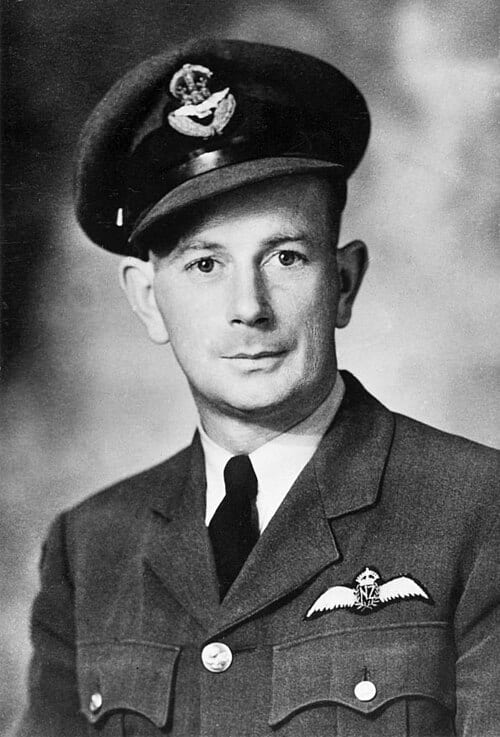
Flying Officer, Royal New Zealand Air Force
Support & adopt this hero ↓
Pressed on in his burning bomber to sink an enemy submarine.
Lloyd Allan Trigg was a Northland farmer before volunteering for the Royal New Zealand Air Force. He trained in New Zealand and Canada, earning his wings in January 1942. In January 1943 he joined No. 200 Squadron RAF in West Africa, flying Hudsons on convoy escort and anti-submarine patrols. His earlier attacks on submarines earned him the Distinguished Flying Cross.
On 11 August 1943, Flying Officer Trigg captained a Liberator on his first operational flight in that type. After eight hours searching the Atlantic he sighted the surfaced German submarine U-468. As he approached, anti-aircraft fire struck the bomber and flames spread around its tail. He continued the attack instead of breaking away to attempt a landing on the sea.
Trigg brought the burning Liberator over the submarine at less than fifty feet and released depth charges that devastated the vessel. The aircraft crashed into the sea, killing Trigg and his entire crew. U-468 sank within twenty minutes. Its surviving sailors used a dinghy that had broken loose from the bomber and were subsequently rescued. Their testimony established the circumstances of Trigg's final attack.
The Victoria Cross was announced posthumously in November 1943 and presented to his widow in New Zealand in 1944.
Official Victoria Cross citation:
Flying Officer Trigg had rendered outstanding service on convoy escort and anti-submarine duties. He had completed 46 operational sorties and had invariably displayed skill and courage of a very high order. One day in August, 1943, Flying Officer Trigg undertook, as captain and pilot, a patrol in a Liberator although he had not previously made any operational sorties in that type of aircraft. After searching for 8 hours a surfaced U-boat was sighted. Flying Officer Trigg immediately prepared to attack. During the approach, the aircraft received many hits from the submarine's anti-aircraft guns and burst into flames, which quickly enveloped the tail. The moment was critical. Flying Officer Trigg could have broken off the engagement and made a forced landing in the sea. But if he continued the attack, the aircraft would present a 'no deflection' target to deadly accurate anti-aircraft fire, and every second spent in the air would increase the extent and intensity of the flames and diminish his chances of survival. There could have been no hesitation or doubt in his mind. He maintained his course in spite of the already precarious condition of his aircraft and executed a masterly attack. Skimming over the U-boat at less than 50 feet with anti-aircraft fire entering his opened bomb doors, Flying Officer Trigg dropped his bombs on and around the U-boat where they exploded with devastating effect. A short distance further on the Liberator dived into the sea with her gallant captain and crew. The U-boat sank within 20 minutes and some of her crew were picked up later in a rubber dinghy that had broken loose from the Liberator. The Battle of the Atlantic has yielded many fine stories of air attacks on underwater craft, but Flying Officer Trigg's exploit stands out as an epic of grim determination and high courage. His was the path of duty that leads to glory.
Become the named supporter for this profile and edit the tribute biography and portrait (Owner account required). Proceeds help keep the archive online.
$25 USD / year — annual sponsorship renewal. Keeps the page online and, where enabled, the family anniversary remembrance emails active.