★
Loading archive…
Loading archive…
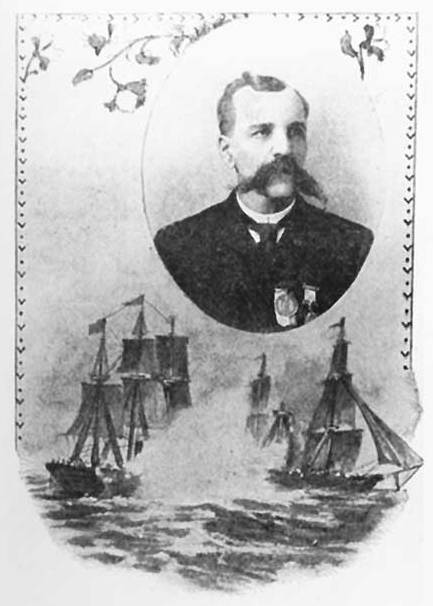
Ordinary Seaman, U.S. Navy
Support & adopt this hero ↓
Cutlass in hand, he stormed inside the walls of Fort Fisher.
Armed with only a revolver and cutlass, Louis Capet Shepard advanced through heavy Confederate fire during the assault on Fort Fisher, North Carolina, on January 15, 1865. While serving as an Ordinary Seaman aboard USS Wabash, he reached the fort's defenses and became one of the few members of the naval landing force to enter the fortification. His actions earned him the Medal of Honor and marked the defining achievement of a military career that included service in both the Union Army and the United States Navy.
Louis Capet Shepard was born on September 2, 1841, in Ashtabula, Ohio. His name also appears as Lewis C. Shepard and Lewis Sheppard in historical records, particularly those documenting his earlier Army service. The official Navy Medal of Honor records identify him as Louis C. Shepard.
When the American Civil War began in April 1861, Shepard entered the Union Army. On April 27, 1861, he enlisted as a Private in Company I of the 19th Ohio Volunteer Infantry for a three-month term of service.
After completing this initial period of enlistment, he continued his military career by joining the 11th Independent Battery, New York Light Artillery. He enlisted at Ashtabula, Ohio, on September 18, 1861, and was mustered into service as a Private on October 22.
The battery subsequently served with Union forces in Virginia. Its duties included operating field artillery in support of infantry and other formations during military campaigns in the Eastern Theater. Shepard's individual military record establishes his service with the organization, although it does not independently document his participation in every engagement associated with the battery.
On January 2, 1863, Shepard was promoted to Corporal. He continued serving with the 11th Independent Battery during the following year.
On February 8, 1864, Shepard reenlisted as a veteran volunteer. His Army service ended when he transferred to the United States Navy on April 23, 1864.
This transfer began the final phase of his Civil War military career.
Shepard entered naval service as an Ordinary Seaman. During the remainder of the war, he served aboard Union naval vessels, including USS Wabash, a steam frigate operating with the North Atlantic Blockading Squadron.
By January 1865, Shepard was serving aboard Wabash during the Union operation against Fort Fisher, near Wilmington, North Carolina.
Fort Fisher defended the entrance to the Cape Fear River, an important route used by Confederate blockade runners supplying Wilmington. Union forces had previously attempted to capture the fort in December 1864 without success.
A second operation began in January 1865, involving a combined Army and Navy force. Rear Admiral David Dixon Porter commanded the naval vessels supporting the attack, while Major General Alfred H. Terry led the Union Army's assault force.
On January 15, 1865, a naval landing party composed of sailors and Marines advanced against the fort's northeastern defenses. Shepard was among the sailors from USS Wabash who took part in this assault.
As the attacking force approached the Confederate works, it came under severe enemy fire. Shepard carried a revolver and cutlass, weapons suited to close combat but insufficient for effectively answering the defenders' fire at the distance from which the Confederates were shooting.
Despite this disadvantage, Shepard continued forward.
He advanced through the exposed ground toward the Confederate fortifications and succeeded in reaching the angle of the fort. Rather than stopping at the outer defenses, he pressed forward and became one of the few sailors who entered the position.
The naval assault encountered determined resistance. Confederate fire inflicted heavy losses and forced much of the attacking force behind Shepard to retreat.
With the men supporting his advance driven back, Shepard could no longer maintain his position inside the fort. He withdrew and found temporary shelter behind one of the earth mounds near the stockade.
From that position, he eventually escaped the immediate danger and returned safely to USS Wabash.
His actions were distinguished by his continued advance despite the intense fire, his ability to reach and enter the Confederate defenses, and his successful withdrawal after the troops behind him had been forced to retreat.
Although the naval landing party did not capture its section of the fort, Union Army troops successfully breached the Confederate defenses elsewhere. Fort Fisher fell to Federal forces on January 15, 1865.
Shepard's individual conduct during the naval assault was subsequently recognized by the United States government.
Under Navy General Orders No. 59, dated June 22, 1865, Louis C. Shepard was awarded the Medal of Honor for his gallantry during the attack on Fort Fisher.
His official citation identified him as an Ordinary Seaman aboard USS Wabash and specifically recognized his advance through heavy fire, his entry into the fort, and his return to safety after the withdrawal of the supporting force.
The decoration represented the highest military recognition of Shepard's wartime service.
After the Civil War, Shepard returned to civilian life. Details of his employment and family circumstances during the following decades are not sufficiently established in the surviving military and historical records.
He remained connected to the memory of his wartime service. A surviving photographic portrait, now preserved by the Smithsonian Institution, shows Shepard wearing his Medal of Honor along with a commemorative badge associated with the 1893 Gettysburg anniversary gathering of Civil War veterans.
The photograph provides historical evidence of his identity and his recognition as a Medal of Honor recipient.
Shepard spent his later years in Ohio and died in Danbury, Ottawa County, in 1919. He was buried in Lakeview Cemetery in Port Clinton, Ohio, in Section F, Lot 10.
His military career was unusual in that he served in the Union Army as both a Private and Corporal before transferring to the Navy, where he participated in the final major assault on Fort Fisher.
Louis Capet Shepard's Medal of Honor commemorates his courage on January 15, 1865, when he advanced into the Confederate defenses under heavy fire and became one of the few sailors to enter the fort. His documented service in two branches of the United States military remains an important part of his Civil War history.
Become the named supporter for this profile and edit the tribute biography and portrait (Owner account required). Proceeds help keep the archive online.
$25 USD / year — annual sponsorship renewal. Keeps the page online and, where enabled, the family anniversary remembrance emails active.