★
Loading archive…
Loading archive…

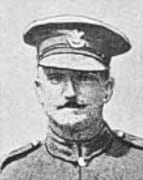
The Irish Soldier Who Stormed a German Stronghold at Ledeghem What would drive an ordinary infantryman to advance against a heavily defended enemy position when others were pinned down by murderous fire? On 14 October 1918, near the Belgian village of Ledeghem, Private Martin Moffat answered that question with extraordinary courage. Armed with grenades and determined to break the enemy's resistance, he led a small party against a fortified German position, helping capture approximately thirty enemy soldiers. His remarkable actions earned him the Victoria Cross, Britain's highest award for gallantry in the face of the enemy.
Born in Sligo, Ireland, on 24 April 1884, Martin Moffat grew up in a large family and attended St Vincent's School. Before entering military service, he experienced working life at sea, employed as a fireman aboard ships. His early years were far removed from the battlefields of continental Europe, yet the outbreak of the First World War would take him into one of the most devastating conflicts in modern history.
Moffat enlisted in the British Army in 1914 and joined the 6th Battalion, Connaught Rangers. After arriving in France in December 1915, he entered the Western Front, where soldiers endured relentless artillery bombardments, machine-gun fire and the terrible conditions of trench warfare. He served through some of the conflict's most demanding campaigns, including the Somme and Messines, gaining experience in the harsh realities of frontline infantry service.
By 1918, Moffat had transferred to the 2nd Battalion, Leinster Regiment, serving with the 29th Division. The British advance in October was part of the Allied offensive that would eventually force the German Army into retreat. Yet even as the tide of war turned, fortified positions and determined enemy resistance continued to inflict casualties and obstruct the advancing troops.
It was during this offensive that Moffat performed the act of bravery that would secure his place in Victoria Cross history.
On 14 October 1918, near Ledeghem in Belgium, his party came under intense fire from a strongly defended house occupied by German soldiers. The building had become a dangerous obstacle to the advance. Rather than remain pinned down, Moffat took the initiative. Leading several comrades towards the rear of the position, he approached the building and launched a grenade attack against its defenders.
The assault was decisive. Two German soldiers were killed, while approximately thirty others surrendered. Moffat's courage, initiative and determination had overcome a defended enemy strongpoint and helped clear the way for the advancing British forces.
His actions demonstrated something remarkable about the character of the First World War infantryman. Extraordinary courage did not always belong to senior commanders or celebrated military leaders. Sometimes it emerged from an ordinary private who recognised that something had to be done and possessed the determination to do it.
For his conspicuous bravery at Ledeghem, Martin Moffat was awarded the Victoria Cross. His achievement also brought him international recognition, including Belgian decorations for his distinguished wartime service. He received the Belgian Croix de Guerre and the Belgian Military Decoration. He was also Mentioned in Despatches, further recognising his service during the conflict.
On 12 June 1919, King George V presented Moffat with his Victoria Cross at Buckingham Palace. For the young Irish soldier who had experienced the terrible realities of the Western Front, the ceremony represented a remarkable recognition of courage displayed during one of the final offensives of the First World War.
Following his military service, Moffat returned to Sligo and began a new chapter of his life. He found employment with the harbour police, maintaining his connection with the coastal community where he had grown up. In October 1921, he married Annie McNiffe, and together they raised five children. Away from the battlefield, his life was centred on family, work and the community.
His later years also included a pilgrimage to Lourdes in 1934, reflecting a personal life that extended far beyond his wartime reputation. Although he had become one of Sligo's most distinguished military figures, Moffat continued to live relatively quietly.
Tragically, his life ended under mysterious and distressing circumstances. On 5 January 1946, shortly after leaving his harbour employment, Moffat disappeared at Rosses Point, near Sligo. His body was recovered two days later. An inquest recorded death by drowning, although the precise circumstances in which he entered the water were never conclusively established.
Martin Moffat was buried in Sligo Cemetery, leaving behind his family and a remarkable legacy of courage.
His Victoria Cross remains a testament to an extraordinary act of initiative and bravery during the First World War. At Ledeghem, when a fortified German position threatened the advance and others were held under fire, Moffat chose to move forward. His actions helped turn a dangerous obstacle into a position of surrender.
Today, Martin Moffat VC deserves to be remembered not simply as an Irish recipient of Britain's highest gallantry decoration, but as a soldier whose courage made a tangible difference on the battlefield. His story is a powerful reminder that history's most extraordinary acts of heroism can emerge from the determination of ordinary men placed in extraordinary circumstances.
Become the named supporter for this profile and edit the tribute biography and portrait (Owner account required). Proceeds help keep the archive online.
$25 USD / year — annual sponsorship renewal. Keeps the page online and, where enabled, the family anniversary remembrance emails active.