★
Loading archive…
Loading archive…

Major, U.S. Army
Support & adopt this hero ↓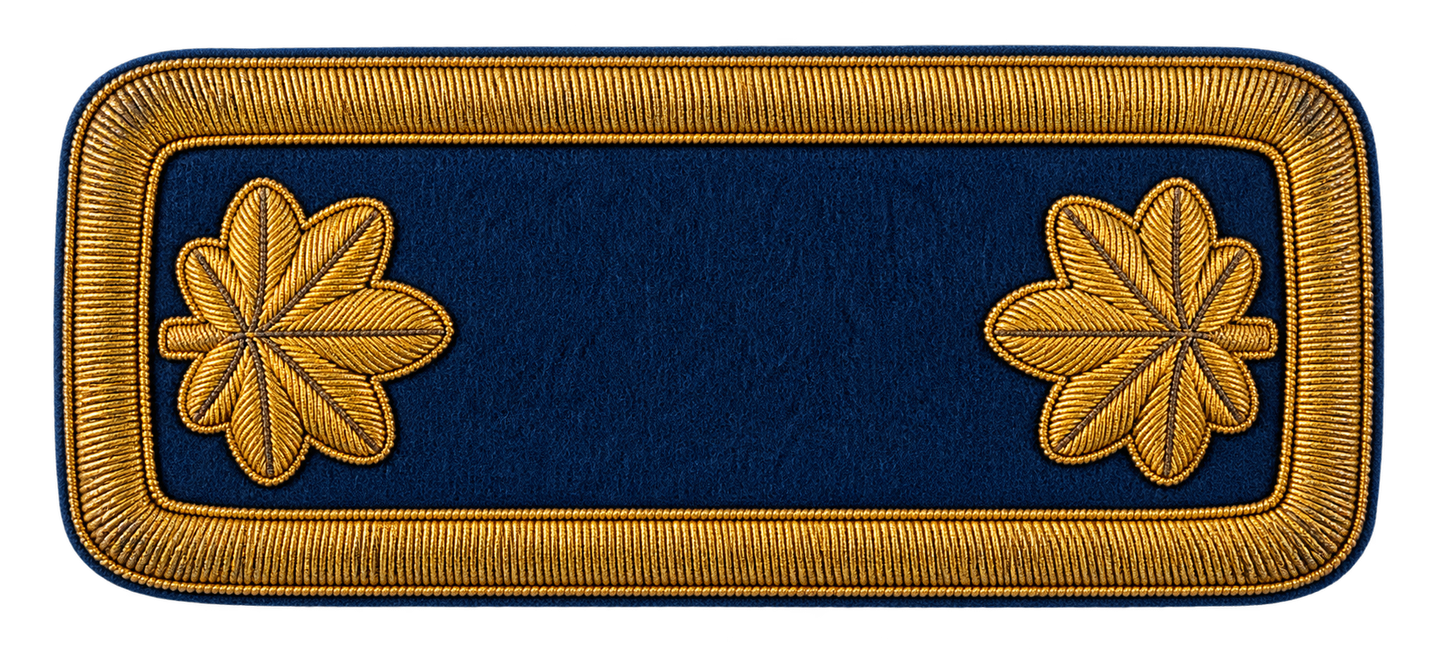
Led a devastating charge against hostile forces under fire.
Mason Carter (January 26, 1834 – December 11, 1909) was an American military officer and Medal of Honor recipient whose career extended from naval service before the Civil War to nearly four decades in the United States Army. He distinguished himself during the Battle of Bear Paw in Montana Territory on September 30, 1877, when, as a first lieutenant in the 5th United States Infantry, he led a hazardous assault against Nez Perce defenders under intense fire. His conduct earned him the Medal of Honor on November 27, 1894, and became the most prominent recorded achievement of his military career.
Carter was born in Augusta, Georgia, the son of John Carter, a physician, and Martha Flournoy Carter. Early biographical accounts identify his birth name as Cary Carter. His maternal grandfather, Thomas Flournoy, had served as an American military officer during the War of 1812. Carter's early military career began in the United States Navy in 1848, when he entered service as an acting midshipman at approximately fourteen years of age.
During his naval service, Carter alternated between assignments at sea and attendance at the United States Naval Academy in Annapolis, Maryland. His assignments included service in the Mediterranean and Atlantic waters. After several unsuccessful attempts to complete the academy's final examinations, he resigned from the Navy in 1856.
In 1860, Carter entered the United States Army under the name Mason Howard, serving initially with the 1st United States Infantry. He was assigned to the Indian Territory, where federal troops were engaged in frontier military operations. When the American Civil War began in 1861, United States forces withdrew from parts of the territory following the secession of Texas.
Carter subsequently served with Union forces in Missouri. During the Battle of Wilson's Creek on August 10, 1861, he was wounded while serving in the campaign associated with Brigadier General Nathaniel Lyon. The engagement resulted in a Confederate victory and the death of Lyon, marking a significant early confrontation in the struggle for control of Missouri.
In 1862, Carter received a commission in the Regular Army's 5th United States Infantry. He was appointed a second lieutenant on May 12 and later advanced to first lieutenant. His Civil War service formed the beginning of a longer Army career that continued through the postwar campaigns on the western frontier.
His documented military service during the Civil War fell within the period subsequently recognized by the Army Civil War Campaign Medal, established in 1907. The decoration commemorated qualifying Union Army service during the conflict, including the years in which Carter served.
After the Civil War, Carter remained in the Regular Army as federal military operations increasingly concentrated on the Great Plains and western territories. His assignments included service in Kansas and other frontier regions. In October 1867, he received brevet recognition for military conduct during operations between Fort Hays and Fort Harker. He continued serving with the 5th Infantry during the following decade.
By 1877, Carter was a first lieutenant participating in the Army's campaign against the Nez Perce people, who were attempting to escape to Canada after resisting forced relocation from their homeland. Their extended journey through the northern Rocky Mountains had involved several engagements with United States forces.
In September 1877, Colonel Nelson A. Miles led a combined command of infantry, cavalry, and scouts to intercept the Nez Perce near the Bear Paw Mountains in northern Montana Territory. Carter served with the 5th Infantry, whose soldiers were mounted for rapid movement during the campaign.
On the morning of September 30, Miles's command encountered the Nez Perce near Snake Creek. The initial American attacks met determined resistance from warriors defending a camp that included women, children, and elderly people. Nez Perce fighters used the surrounding ravines and elevated ground to resist the advancing troops.
As the fighting continued, Miles prepared another assault against the defensive positions. Carter was placed in command of a small attacking detachment drawn from Companies I and F of the 5th Infantry. The soldiers were ordered to advance toward the Nez Perce positions while supporting riflemen provided covering fire.
Carter led his men forward through difficult ground and toward the camp. The attacking soldiers encountered concentrated rifle fire from defenders positioned in pits and gullies. Although the detachment penetrated toward the village, the resistance prevented it from securing its objective.
Several soldiers were wounded during the assault and withdrawal, and Carter's detachment was forced to take cover in a ravine. The men remained in their exposed position for several hours before receiving instructions to withdraw. Their retreat required careful movement through the terrain to avoid further casualties.
Colonel Miles later reported that enemy fire had disabled approximately thirty-five percent of Carter's men during the operation. Despite the unsuccessful assault, he recognized the determination displayed by the detachment under Carter's command.
The engagement continued into a siege as American forces surrounded the Nez Perce positions. On October 5, 1877, Chief Joseph and much of the remaining group surrendered to Miles's command. The battle marked the conclusion of the principal military operations of the Nez Perce War.
Carter's leadership during the September 30 assault received formal recognition seventeen years later. On November 27, 1894, he was awarded the Medal of Honor for his conduct at Bear Paw Mountain. His official citation stated:
"Led a charge under a galling fire, in which he inflicted great loss upon the enemy."
The award specifically recognized his leadership under heavy fire during the attempted assault. It did not imply that his detachment had captured the Nez Perce position, which remained defended after the attack.
Carter's participation in the 1877 campaign also placed his service within the qualifying historical period recognized by the Indian Campaign Medal, established in 1907. The decoration commemorated eligible United States Army service in designated campaigns against Native American nations during the nineteenth century.
Following the Nez Perce campaign, Carter continued his Regular Army career. He was promoted to captain on September 4, 1878, and remained in military service for nearly twenty additional years. He retired from active duty on January 26, 1898, his sixty-fourth birthday. In 1904, he attained the rank of major on the retired list.
After retiring, Carter served as a professor of military science at the University of the South in Sewanee, Tennessee. His teaching appointment continued for approximately ten years, drawing upon his extensive experience in naval and military service.
Carter eventually moved to California, where he spent the final period of his life. He died in San Diego on December 11, 1909, at the age of seventy-five.
He was buried at Fort Rosecrans National Cemetery in San Diego, California, in Section PS-4, Site 102. He is recognized as the first Medal of Honor recipient interred at that cemetery.
Mason Carter's military career encompassed service in the United States Navy, the American Civil War, and the Army's western campaigns. His Medal of Honor records the particular action for which he received national recognition: leading a small detachment into intense fire at Bear Paw Mountain on September 30, 1877. The surviving military accounts preserve both the courage of his command and the heavy losses sustained during an assault that ultimately failed to capture its objective.
Become the named supporter for this profile and edit the tribute biography and portrait (Owner account required). Proceeds help keep the archive online.
$25 USD / year — annual sponsorship renewal. Keeps the page online and, where enabled, the family anniversary remembrance emails active.