★
Loading archive…
Loading archive…

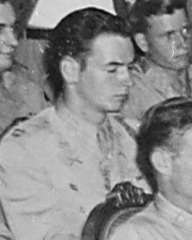
He left West Point to fight as an enlisted soldier, landed at Omaha Beach on D-Day, and before his twenty-first birthday had earned the Medal of Honor and three Silver Stars. Captain Michael Joseph Daly became one of the most highly decorated young American infantry officers of World War II, repeatedly placing himself in the most dangerous positions so that the soldiers under his command would have a better chance of surviving.
Michael Joseph Daly was born on September 15, 1924, in New York City and grew up in the Southport area of Fairfield, Connecticut. After attending Georgetown Preparatory School, he entered the United States Military Academy at West Point. Daly ultimately left the academy and entered the Army as an enlisted infantryman. He trained for combat and served with the 18th Infantry Regiment, 1st Infantry Division, landing at Omaha Beach during the Normandy campaign. His wartime progression was remarkable. He went from private to battlefield-commissioned officer and ultimately captain while still barely out of his teens.
Daly's courage was already evident within days of the Normandy invasion. On June 15, 1944, while serving as a private with Company I, 3rd Battalion, 18th Infantry Regiment, he earned his first Silver Star. Under a heavy enemy artillery barrage, Daly deliberately moved his observation position to exposed ground where he could see the battlefield more clearly. From there he opened fire on a German patrol attempting to infiltrate American lines. His official citation credited his disregard for personal safety and stated that his actions contributed greatly to the security of his unit.
After receiving a battlefield commission and joining Company A, 1st Battalion, 15th Infantry Regiment, 3rd Infantry Division, Daly continued to lead from the front. On January 25, 1945, he earned a second Silver Star after placing himself at the head of a 24-man platoon and leading it approximately 300 yards across heavily shelled and bullet-swept terrain against a German strongpoint. Advancing to within about 30 yards of an enemy machine gun, he killed its gunner, allowing his men to capture the weapon. His platoon cleared its objective in roughly 45 minutes, killing 20 enemy soldiers and capturing or wounding many more. The citation praised his inspirational leadership, skill and complete disregard for his own life.
Only days later, Daly again risked himself to save his men. On February 4, 1945, he earned his third Silver Star when more than half of his patrol had become casualties. For approximately 30 minutes, Daly remained standing on an exposed road under concentrated fire from German machine guns and automatic weapons, deliberately drawing attention away from his soldiers while they evacuated the wounded. He also engaged an enemy group approaching within close range, killing two soldiers and warning his patrol in time to resist the attack. His citation again emphasized gallantry and devotion to duty without regard for his own safety.
On March 18, 1945, near Hornbach, Germany, Daly's leadership at the Siegfried Line brought him the Bronze Star Medal for valor. When the assault elements of his company were pinned by artillery and machine-gun fire near German fortifications, Daly left his command position and moved forward through the fire. He helped drive the assault forward, personally led a squad against a fortified pillbox, and when the company was ordered back, remained behind to cover the withdrawal. He then organized a defensive position, reconnoitered exposed ground himself and held forward until relief arrived.
Then came April 18, 1945, at Nuremberg, the action that placed Michael Daly among America's Medal of Honor recipients. Leading Company A through streets filled with rubble, snipers and machine-gun positions, Daly repeatedly ordered his men to remain under cover while he confronted enemy positions himself. When machine-gun fire trapped his company, he rushed forward and destroyed the three-man crew. He next attacked an enemy patrol armed with rocket launchers that threatened American armor, killing all six members despite concentrated fire around him. Continuing ahead of his company, Daly eliminated another machine-gun position and then fought a final emplacement from only about ten yards away. By the end of the fighting, his Medal of Honor citation credited him with four single-handed engagements, 15 enemy soldiers killed, three machine-gun positions silenced and an entire enemy patrol destroyed, while repeatedly assuming the greatest risks to protect the men he commanded.
Daly was seriously wounded the following day, adding to wounds he had already suffered earlier in the European campaign. He ultimately received two Purple Hearts. On August 23, 1945, President Harry S. Truman presented him with the Medal of Honor at the White House. Daly's wartime record also included the American Campaign Medal, European-African-Middle Eastern Campaign Medal, World War II Victory Medal and unit recognition earned during his service.
What makes Daly's story especially powerful is that he consistently resisted being portrayed as extraordinary. His record tells a different story: an enlisted infantryman who fought through Normandy, became an officer on the battlefield, earned three Silver Stars in separate actions, received a Bronze Star for valor, survived two wounds, and finally earned the nation's highest military decoration by repeatedly advancing alone against enemy positions to protect his soldiers.
After the war, Daly returned to Connecticut, pursued a business career and devoted decades of service to St. Vincent's Medical Center in Bridgeport, where he became a longtime trustee. In 2007, he was inducted into the Connecticut Veterans Hall of Fame. Captain Michael Joseph Daly died on July 25, 2008, in Fairfield, Connecticut, at the age of 83. He was buried at Oak Lawn Cemetery with full military honors. His legacy remains not simply one of battlefield courage, but of leadership defined by a willingness to accept danger himself rather than pass it to the men he commanded. Congressional Medal of Honor Society
Become the named supporter for this profile and edit the tribute biography and portrait (Owner account required). Proceeds help keep the archive online.
$25 USD / year — annual sponsorship renewal. Keeps the page online and, where enabled, the family anniversary remembrance emails active.