★
Loading archive…
Loading archive…

Lt General , U.S. Army
Support & adopt this hero ↓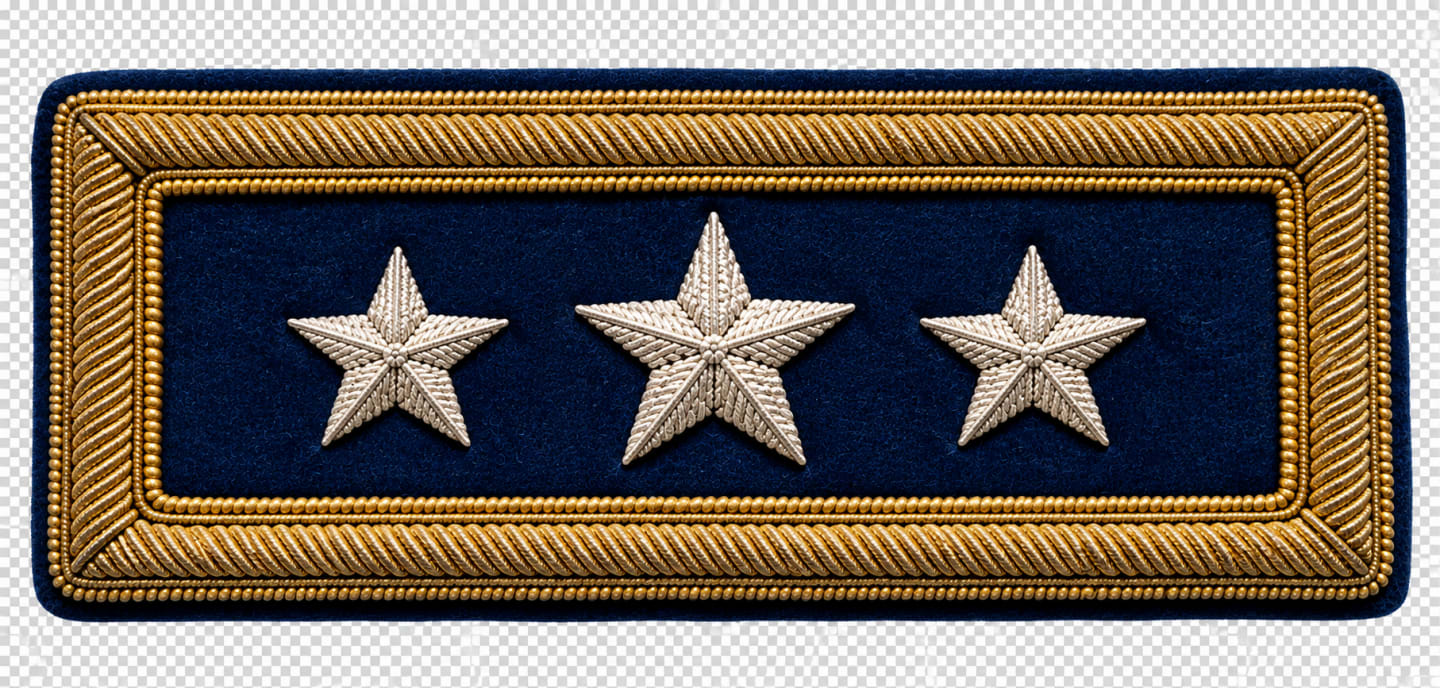
The Colonel Who Held the Line at Chancellorsville!
Nelson Appleton Miles was a distinguished American military officer whose career extended from the American Civil War through the Indian Wars and the Spanish–American War. Rising from a volunteer officer to Lieutenant General and Commanding General of the United States Army, he became one of the country's most prominent military figures of the nineteenth century. His courage at the Battle of Chancellorsville on May 2–3, 1863, where he held an advanced position against repeated Confederate assaults despite suffering a severe wound, earned him the Medal of Honor on July 23, 1892.
Miles was born on August 8, 1839, in Westminster, Massachusetts, to Daniel Miles and Mary Curtis Miles. He received his early education in Westminster before moving to Boston, where he worked as a clerk in a crockery store. Before entering military service, he pursued additional education and studied military subjects under a former French army officer. His early career gave little indication that he would eventually command the United States Army.
When the Civil War began in 1861, Miles helped organize a company of volunteers and entered Union military service with the 22nd Massachusetts Volunteer Infantry. He subsequently served on the staff of Brigadier General Oliver O. Howard. His early wartime experience included the Peninsula Campaign and the Battle of Fair Oaks, where he was wounded.
In 1862, Miles advanced to lieutenant colonel in the 61st New York Volunteer Infantry. During the Battle of Antietam in September, he assumed command when his superior officer was wounded. His conduct contributed to his promotion to colonel, placing him in command of the regiment during some of the Army of the Potomac's most demanding operations. He was wounded again at the Battle of Fredericksburg in December 1862.
The defining act of his military career occurred during the Battle of Chancellorsville in Virginia on May 2–3, 1863. As a colonel commanding the 61st New York Infantry, Miles occupied an advanced position facing repeated Confederate attacks. His command maintained its position despite pressure from a strong enemy force.
On May 3, while inspecting his forward line, Miles was struck by a bullet in the abdomen. The wound was so severe that his survival was initially considered doubtful. His conduct during the engagement, particularly his defense of the advanced position under repeated assault, became the basis of his Medal of Honor citation.
Miles eventually recovered, although his injuries prevented him from participating in the Battle of Gettysburg. Returning to active service in 1864, he fought during the Overland Campaign, including the Battles of the Wilderness and Spotsylvania Court House. He subsequently participated in operations around Petersburg and was promoted to brigadier general of volunteers in 1864. By October 1865, he had attained the rank of major general of volunteers.
Following the Confederate surrender, Miles received command of the District of Fort Monroe, Virginia, where former Confederate president Jefferson Davis was imprisoned. In 1866, he entered the reorganized Regular Army as a colonel and assumed command of the 40th United States Infantry, a regiment composed of African American enlisted soldiers. He also undertook Reconstruction responsibilities in North Carolina, including service connected with the Freedmen's Bureau.
In 1868, Miles married Mary Hoyt Sherman, a niece of General William Tecumseh Sherman. The following year, he transferred to the 5th United States Infantry and began an extended period of military service on the western frontier.
During the 1870s and 1880s, Miles commanded forces in campaigns against several Native American nations. His military operations included the Red River War of 1874–1875, campaigns involving the Lakota and Northern Cheyenne, and the 1877 campaign against the Nez Perce led by Chief Joseph. In 1886, he directed the military operations that resulted in the surrender of the Apache leader Geronimo and his followers.
These campaigns took place amid United States territorial expansion and government policies that displaced Indigenous communities and restricted them to reservations. Miles's military successes contributed to his professional advancement, while the broader consequences of these operations remain an important part of the history of American westward expansion.
Promoted to brigadier general in the Regular Army in 1880 and major general in 1890, Miles assumed increasingly extensive military responsibilities. During the Ghost Dance crisis of 1890, he commanded the military department responsible for operations that included the events at Wounded Knee, South Dakota, where United States soldiers killed and wounded numerous Lakota people, including women and children. Miles subsequently condemned the killings as a massacre and relieved Colonel James W. Forsyth of his command.
On July 23, 1892, nearly three decades after the Battle of Chancellorsville, Miles received the Medal of Honor for his distinguished gallantry during the engagement. The decoration formally recognized his leadership in maintaining an advanced position against repeated Confederate attacks and the severe wound he sustained while carrying out his duties. It became the defining personal military honor of his long career.
In 1894, Miles commanded federal troops deployed to Chicago during the Pullman Strike. The following year, on October 5, 1895, he became Commanding General of the United States Army, succeeding Lieutenant General John M. Schofield.
During the Spanish–American War in 1898, Miles directed American military operations against Spanish forces in Puerto Rico. The expedition landed at Guánica on July 25, 1898, and advanced into the island before hostilities ended. Miles subsequently served in a senior military administrative role in Puerto Rico.
His military career reached its highest rank when he became a lieutenant general, receiving a brevet appointment in 1900 followed by permanent promotion in 1901. He continued as Commanding General until August 8, 1903, when he retired upon reaching the mandatory retirement age of sixty-four. His retirement coincided with the reorganization that replaced the office of Commanding General with the Army Chief of Staff system.
Miles remained interested in military affairs after retirement. When the United States entered the First World War in 1917, he offered to return to active service, but President Woodrow Wilson declined his request.
Nelson Appleton Miles died on May 15, 1925, in Washington, D.C., at the age of eighty-five. He was buried in Arlington National Cemetery, Section 3, Grave 1873, where his remains rest in a prominent mausoleum.
His military career spanned more than four decades and several major transformations in American military history. From his battlefield leadership during the Civil War to his senior command responsibilities during the Spanish–American War, Miles occupied important positions in the development of the United States Army. His legacy encompasses both his recognized personal bravery at Chancellorsville and the complex, often controversial history of American military operations on the western frontier. His Medal of Honor remains a lasting recognition of the courage he demonstrated under Confederate fire in May 1863.
Become the named supporter for this profile and edit the tribute biography and portrait (Owner account required). Proceeds help keep the archive online.
$25 USD / year — annual sponsorship renewal. Keeps the page online and, where enabled, the family anniversary remembrance emails active.