★
Loading archive…
Loading archive…
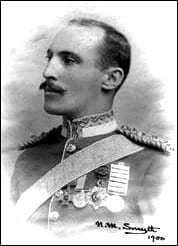
Major-General, British Army
Support & adopt this hero ↓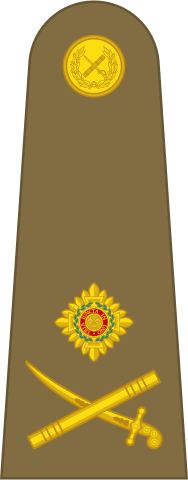
A spear thrust could have ended his life on the battlefield of Omdurman. Instead, Captain Nevill Maskelyne Smyth pressed forward, confronted his attacker and saved the lives of others at the cost of a severe wound. That act of extraordinary courage earned him the Victoria Cross and began one of the most remarkable military careers of a British officer who would later command Australian troops at Gallipoli and on the Western Front.
Major-General Sir Nevill Maskelyne Smyth, VC, KCB, was born on 14 August 1868 in London, England, into a distinguished family. He was the son of Sir Warington Wilkinson Smyth, a renowned mineralogist, and Anna Maria Antonia Story-Maskelyne. Educated at Westminster School, Smyth entered the Royal Military College, Sandhurst, graduating in 1888. He was commissioned into the 2nd Dragoon Guards, also known as the Queen's Bays, and began his military career in India. His early service included participation in the Zhob Valley expedition of 1890, during which he was attached to the Royal Engineers for railway survey work. These early assignments developed his experience in reconnaissance, military intelligence and operations in challenging terrain.
Smyth's career took a defining turn when he joined the Egyptian Army and became involved in the British-led campaigns to reconquer Sudan. During the Nile expeditions of the 1890s, he undertook important reconnaissance and surveying duties, helping chart sections of the Nile in preparation for the advance against the Mahdist forces. He also commanded machine guns aboard a Royal Navy riverboat during operations around Metemmeh. His courage was tested most dramatically on 2 September 1898 at the Battle of Omdurman. As an intelligence officer and orderly to Major-General Sir Archibald Hunter, Smyth witnessed a Dervish attacking a group of war correspondents as the battle drew to a close. Without hesitation, he galloped forward to intervene. Although severely wounded by a spear, he shot and killed his attacker, preventing further loss of life. For this extraordinary act of gallantry in the face of the enemy, Captain Smyth was awarded the Victoria Cross, Britain's highest award for military valour. His name was subsequently published in the London Gazette on 15 November 1898.
His service in Sudan did not end at Omdurman. In 1899, he commanded a small force during the suppression of a Mahdist rising in the Blue Nile region. His operations resulted in the capture of Khalifa Muhammad al-Sharif and two sons of the Mahdi. The campaign further demonstrated his experience in military command, intelligence and the complexities of frontier warfare. In 1902, Smyth joined the British forces during the Second Boer War in South Africa. During an engagement against Boer commandos, his party became isolated and came under heavy fire. Although he and his five accompanying soldiers were wounded, Smyth refused to surrender when called upon by the enemy. He eventually escaped on horseback, demonstrating once again the determination and personal courage that had distinguished his earlier service. He was promoted to major in 1903 and subsequently transferred to the 6th Dragoon Guards, the Carabiniers. He later commanded the regiment as a lieutenant-colonel and returned to England with it in 1912.
Smyth's military experience continued to expand in the years before the First World War. He obtained an aviator's certificate in 1913, but instead of joining the newly developing Royal Flying Corps, he accepted further service with the Egyptian Army. Appointed commandant of the Khartoum district in 1913, he became involved in efforts to combat the slave trade. When the First World War began, his extensive experience in Sudan and the Middle East made him a valuable choice for senior command. Lord Kitchener sent him to the Dardanelles, and he arrived at Gallipoli in May 1915. There, he supervised the historic truce of 24 May, allowing Turkish forces to bury their dead following the intense fighting. It was a moment that demonstrated the importance of humanity and military honour even amid the brutality of war.
In August 1915, Smyth assumed command of the 1st Australian Infantry Brigade as a temporary brigadier-general. His leadership was tested during the Battle of Lone Pine, one of the fiercest engagements of the Gallipoli campaign. The fighting involved brutal close-quarter combat, sustained bombardment and heavy casualties. Smyth earned the respect of the Australian soldiers under his command through his steady leadership and willingness to understand the battlefield conditions personally. He was remembered for directing reinforcements into the tunnels and trenches with remarkable calm under fire. During the evacuation of Gallipoli in December 1915, he was among the last officers to leave the peninsula.
The fighting continued on the Western Front. Smyth led the 1st Australian Infantry Brigade through the devastating battles of Pozières and Mouquet Farm on the Somme in 1916. His experience and command ability resulted in his appointment as commander of the 2nd Australian Division in December 1916, with promotion to major-general. Under his leadership, the division participated in the operations that followed the German withdrawal to the Hindenburg Line, including the capture of Bapaume, the fighting at Bullecourt and the Third Battle of Ypres. Drawing upon his earlier experience in Sudan, Smyth became particularly effective in planning small-scale raids against German positions, known as peaceful penetration operations. These carefully organised attacks inflicted damage on enemy positions while seeking to avoid the enormous casualties associated with conventional assaults.
In May 1918, Smyth returned to British Army command, taking responsibility first for the 58th Division and subsequently the 59th Division. His leadership of the 59th Division during the liberation of Lille in October 1918 marked another important chapter in his military career. An unusually hands-on commander, he was known to borrow an aircraft to observe enemy positions personally, reflecting his lifelong interest in reconnaissance and military innovation. Following the Armistice, he took responsibility for controlling several important Channel ports and was subsequently appointed General Officer Commanding the 47th Division of the Territorial Army in 1919.
His long and distinguished service brought international recognition. He was appointed Companion of the Order of the Bath in 1916 and elevated to Knight Commander of the Order of the Bath in 1919. His foreign honours included Commander of the Belgian Order of Leopold, the Belgian Croix de Guerre and Officer of the French Legion of Honour. Across his military career, he was Mentioned in Despatches eleven times, reflecting repeated recognition of his service during operations in Africa and Europe. His decorations represented decades of service across different armies, theatres and generations of warfare.
Smyth retired from the British Army in 1924, but his connection with Australia remained strong. Having developed enormous respect for the Australian soldiers he had commanded, he chose to make Australia his permanent home. In 1925, he emigrated with his wife, Evelyn Olwen Smyth, and their three children, settling on a grazing property near Balmoral in Victoria. Away from military command, he became involved in local affairs and continued to take an interest in public life. In 1931, he unsuccessfully contested a Victorian Senate vacancy as a Nationalist Party candidate.
Major-General Sir Nevill Maskelyne Smyth died at his home in Balmoral, Victoria, on 21 July 1941, aged 72. He was buried in the local cemetery, far from the battlefields of Sudan, South Africa, Gallipoli and France where he had earned his reputation. His legacy, however, remains closely connected with the men he led and the extraordinary courage he demonstrated throughout his career.
From the Sudan campaign to the trenches of the Western Front, Nevill Smyth's military life was defined by courage, discipline and an enduring commitment to personal leadership. His Victoria Cross for gallantry at Omdurman remains the most celebrated chapter of his story, but his contribution to the Australian Imperial Force at Gallipoli and in France reveals a much broader legacy. He was not simply a decorated British officer. He was a soldier whose experience crossed continents, whose leadership earned the respect of Australian troops, and whose remarkable career secured his place in the history of the Victoria Cross and the British Army.
Become the named supporter for this profile and edit the tribute biography and portrait (Owner account required). Proceeds help keep the archive online.
$25 USD / year — annual sponsorship renewal. Keeps the page online and, where enabled, the family anniversary remembrance emails active.