★
Loading archive…
Loading archive…
He kept his guns firing after shells shattered that foretop.
Norman Augustus Finch was born in Birmingham in 1890 and worked as a tool machinist before joining the Royal Marine Artillery in 1908. After service in cruisers, he became a gunnery instructor and sergeant.
During the Zeebrugge raid of 22-23 April 1918, he served in the exposed foretop of HMS Vindictive. Direct shell hits killed or disabled his companions and severely wounded him. He continued firing at the mole until another hit put the remaining weapons out of action. Elected by the Marines for the Victoria Cross, he received it that July.
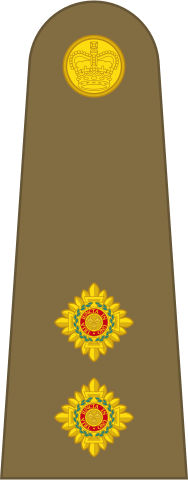
He continued as an instructor, retired in 1929 and worked as a postman and bank messenger. He joined the Yeomen of the Guard in 1931 and returned to Marine service during the Second World War, becoming a temporary lieutenant and quartermaster. Later a sergeant-major of the royal bodyguard, he received the silver Royal Victorian Medal in 1964. He died at Portsmouth on 15 March 1966 and was cremated at Portchester.
Official Victoria Cross citation (London Gazette, 23 July 1918, page 8586):
For most conspicuous gallantry. Serjeant Finch was second in command of the pompoms and Lewis guns in the foretop of “Vindictive,” under Lieutenant Charles N. B. Rigby, R.M.A. At one period the “Vindictive” was being hit every few seconds, chiefly in the upper works, from which splinters caused many casualties. It was difficult to locate the guns which were doing the most damage, but Lieutenant Rigby, Serjeant Finch and the Marines in the foretop, kept up a constant continuous fire with pompoms and Lewis guns, changing rapidly from one target to another and thus keeping the enemy’s fire down to some considerable extent. Unfortunately two heavy shells made direct hits on the foretop, which was completely exposed to enemy concentration of fire. All in the top were killed or disabled except Serjeant Finch, who was, however, severely wounded; nevertheless he showed consummate bravery, remaining in his battered and exposed position. He once more got a Lewis gun into action, and kept up a continuous fire, harassing the enemy on the mole, until the foretop received another direct hit, the remainder of the armament being then completely put out of action. Before the top was destroyed Serjeant Finch had done invaluable work, and by his bravery undoubtedly saved many lives. This very gallant serjeant of the Royal Marine Artillery was selected by the 4th Battalion of Royal Marines, who were mostly Royal Marine Light Infantry, to receive the Victoria Cross under Rule 13 of the Royal Warrant dated 29th January, 1856.
Become the named supporter for this profile and edit the tribute biography and portrait (Owner account required). Proceeds help keep the archive online.
$25 USD / year — annual sponsorship renewal. Keeps the page online and, where enabled, the family anniversary remembrance emails active.
