★
Loading archive…
Loading archive…
The Night Charge That Opened the Way at Cold Harbor
Patrick H. Doody was an Irish-born Union Army soldier whose exceptional courage during the American Civil War earned him the Medal of Honor, the United States' highest military decoration for valor. On June 7, 1864, during the Battle of Cold Harbor, Virginia, Doody conducted a successful personal reconnaissance of Confederate positions and then led Union skirmishers in a daring nighttime attack. His actions enabled military pioneers to construct defensive works in an advanced position, helping Union troops strengthen their lines under dangerous battlefield conditions.
Born in Ireland on July 7, 1840, according to later Medal of Honor records, Patrick H. Doody eventually immigrated to the United States. His original military enrollment record records an age inconsistent with that birth date, leaving the precise year of his birth uncertain. Little reliable information survives concerning his childhood, family background, or early civilian occupation. By 1862, however, he was living in Brooklyn, New York, where he volunteered for military service during the second year of the American Civil War.
On August 15, 1862, Doody enlisted at Brooklyn for a three-year term of service. He became associated with Company E of the 164th New York Volunteer Infantry, a regiment formed from volunteers recruited in New York City, Brooklyn, Buffalo, and surrounding communities.
The 164th New York belonged to Corcoran's Irish Legion, a brigade of predominantly Irish-American soldiers organized under Brigadier General Michael Corcoran. The regiment was formally mustered into United States service at Newport News, Virginia, on November 19, 1862. Doody entered service as a corporal, having been appointed to that rank shortly before the regiment's formal muster.
Following its organization, the regiment served in southeastern Virginia. During the winter of 1862–1863, the 164th New York performed military duties around Suffolk and participated in operations against Confederate forces in the region. Its recorded engagements included the action at Deserted House in January 1863 and the Siege of Suffolk during April and May.
Doody's service record documents his continued presence with the regiment throughout much of this period. By October 1863, he was recorded as a private, indicating that he had returned to the ranks after initially serving as a corporal. The surviving roster does not establish the reason for this change.
During the latter part of 1863 and the opening months of 1864, the regiment performed duties in the defenses of Washington, D.C., and northern Virginia. In April 1864, Doody was recorded on detached duty at headquarters, demonstrating that his responsibilities were not limited to ordinary company service.
In May 1864, the 164th New York joined the Army of the Potomac in the field. Assigned to the Second Corps, the regiment entered the Overland Campaign under the overall command of Lieutenant General Ulysses S. Grant. Union forces were engaged in a sustained offensive against General Robert E. Lee's Army of Northern Virginia, fighting through a series of costly battles as they advanced toward Richmond.
The regiment participated in operations around Spotsylvania Court House, the North Anna River, and Totopotomoy Creek before reaching Cold Harbor in early June 1864.
At Cold Harbor, Union and Confederate forces faced one another across increasingly fortified positions. Confederate troops occupied defensive lines protected by earthworks and other obstacles, while Union commanders attempted to identify opportunities for an advance. The fighting was particularly destructive because attacking infantry often had to cross exposed ground under concentrated rifle and artillery fire.
On June 3, 1864, Union forces launched a major assault against Confederate defenses. The 164th New York participated in the attack and suffered severe casualties. Its commanding officer, Colonel James Power McMahon, was killed during the fighting. Although the regiment initially reached part of the Confederate defensive line, the assault ultimately failed, and the surviving soldiers withdrew.
The unsuccessful attack left the opposing armies facing each other across a dangerous and contested battlefield. Both sides continued strengthening their defensive positions, while patrols, skirmishers, and working parties operated near the front lines.
Four days later, on June 7, 1864, Patrick Doody performed the action for which he would receive the Medal of Honor.
Serving as a corporal in Company E, Doody personally reconnoitered the enemy's position. This assignment required him to examine Confederate defenses and gather information needed for a planned movement against them. Reconnaissance near an active battlefield carried considerable danger, particularly when opposing forces occupied prepared positions at close range.
Having successfully completed his reconnaissance, Doody led Union skirmishers forward in a nighttime attack. He directed the soldiers in a charge against the enemy, helping create the conditions necessary for Union pioneers to advance and construct defensive works.
The pioneers' mission was essential to maintaining the Union position. Military pioneers performed engineering and construction duties, including the preparation of earthworks and other battlefield defenses. Their work was especially vulnerable when conducted near Confederate lines, where enemy fire could interrupt construction or force the workers to withdraw.
By leading the skirmishers in the night attack, Doody helped protect the working party and enabled the pioneers to establish their fortifications. His actions combined personal reconnaissance, tactical initiative, and leadership under dangerous circumstances.
The official Medal of Honor citation specifically recognized his successful reconnaissance and his leadership of the skirmishers during the nighttime charge. The citation also established the direct result of his action: the pioneers were able to construct their defensive works.
The surviving account does not identify the exact Confederate unit involved or describe the number of soldiers Doody commanded. Nevertheless, it confirms that his conduct made a meaningful contribution to the Union Army's efforts to secure an advanced position during the continuing operations at Cold Harbor.
Following the Cold Harbor Campaign, the 164th New York continued its service with the Army of the Potomac. In mid-June 1864, the regiment moved toward Petersburg, Virginia, where Union forces attempted to capture the city and disrupt the transportation networks supporting the Confederate army.
The regiment participated in operations associated with the Petersburg Campaign, including fighting around Deep Bottom, Ream's Station, and Hatcher's Run. Its service formed part of the prolonged Union effort to weaken Confederate defenses and force the eventual abandonment of Petersburg and Richmond. These engagements are documented in the regiment's history, although Doody's individual role in each operation is not independently established.
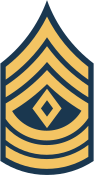
Doody continued serving with the 164th New York during the final year of the war. On January 1, 1865, he was promoted from corporal to first sergeant and transferred from Company E to Company F.
The promotion represented an important advancement within the regiment's enlisted leadership. First sergeants held significant responsibilities for company administration, personnel accountability, and the coordination of routine military duties.
By April 1865, Confederate resistance in Virginia was collapsing. The 164th New York participated in the final operations associated with the Appomattox Campaign, during which Union forces pursued Lee's retreating army. Lee surrendered the Army of Northern Virginia at Appomattox Court House on April 9, 1865, bringing an end to the principal military struggle in Virginia.
Following the Confederate surrender, the regiment returned to the Washington area. On July 15, 1865, Patrick Doody was mustered out of military service near Washington, D.C., as a first sergeant of Company F.
His documented military career had extended from August 1862 through July 1865, encompassing service in Virginia, the Overland Campaign, and the closing months of the Civil War.
Formal recognition of Doody's extraordinary courage came nearly three decades after the action at Cold Harbor. On December 13, 1893, he received the Medal of Honor for his conduct on June 7, 1864.
The Medal of Honor had been authorized by Congress during the Civil War to recognize exceptional military service and acts of distinguished bravery. By the time Doody received his decoration, it had become the nation's highest military honor for valor.
His award recognized a particularly important form of battlefield courage. Rather than commemorating the capture of a flag or the rescue of a wounded soldier, it honored his successful reconnaissance and leadership of an attack that allowed Union engineers to establish defenses closer to the enemy.
The decoration ensured that Doody's contribution at Cold Harbor would remain part of the official history of the Medal of Honor and the distinguished military record of the 164th New York Infantry.
Following his discharge, Doody returned to civilian life in New York. The available historical records provide limited information about his later occupation, family relationships, and personal activities. He nevertheless lived for many decades after the war and was among the surviving Union veterans who witnessed the national recognition of Civil War service during the late nineteenth century.
Patrick H. Doody died on March 5, 1924, in Brooklyn, New York, at the age of eighty-three according to his commonly recorded birth date. He was buried in Calvary Cemetery in Woodside, Queens, where his grave commemorates his service and Medal of Honor recognition.
Doody's legacy rests upon his courage and leadership during the dangerous nighttime operations at Cold Harbor. By personally reconnoitering Confederate positions and leading Union skirmishers in an attack that protected the construction of defensive works, he demonstrated the determination and initiative required of soldiers operating close to enemy lines.
From his beginnings in Ireland to his service with Corcoran's Irish Legion and his later recognition with the Medal of Honor, Patrick H. Doody's life forms part of the history of Irish-American participation in the Union Army. His actions on June 7, 1864, remain an enduring example of battlefield leadership, personal bravery, and distinguished military service during the American Civil War.
Become the named supporter for this profile and edit the tribute biography and portrait (Owner account required). Proceeds help keep the archive online.
$25 USD / year — annual sponsorship renewal. Keeps the page online and, where enabled, the family anniversary remembrance emails active.