★
Loading archive…
Loading archive…
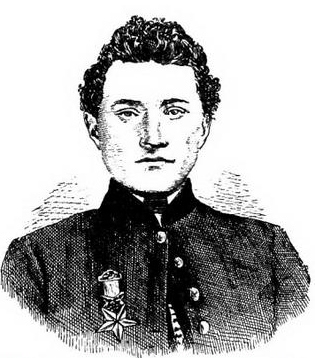
Lieutenant Colonel, U.S. Army
Support & adopt this hero ↓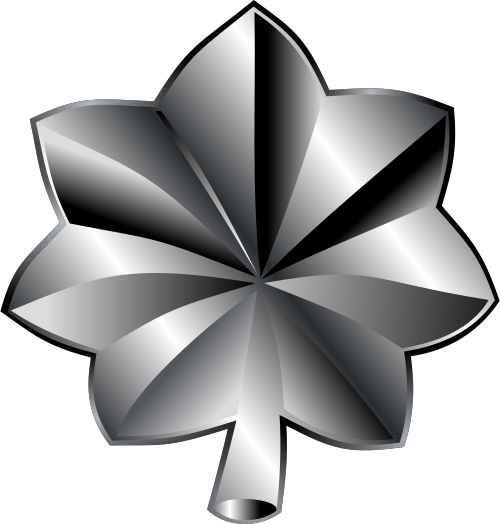
He Reclaimed a Union Flag From Enemy Hands
Patrick Henry Monaghan was an Irish-born American soldier whose extraordinary courage during the American Civil War earned him the Medal of Honor, the United States' highest military decoration for valor. On June 17, 1864, during the Union assault on Petersburg, Virginia, Monaghan recovered the captured colors of the 7th New York Heavy Artillery from a Confederate soldier. His daring action took place during a fierce engagement in which Union troops stormed enemy fortifications, captured prisoners, and advanced against determined resistance. His achievement became one of the distinguished episodes in the history of the 48th Pennsylvania Volunteer Infantry.
Born in Belmullet, County Mayo, Ireland, in the early 1840s, Patrick Henry Monaghan immigrated to the United States with his family around 1848. They settled in Schuylkill County, Pennsylvania, where he attended school in Minersville. He later pursued further education, preparing for a career that would eventually lead him into public teaching and school administration.
When the American Civil War began in April 1861, Monaghan was living in Pennsylvania. On August 12, 1861, he enlisted at Minersville in Company F of the 48th Pennsylvania Volunteer Infantry. The regiment was composed largely of men recruited from the coal-mining communities of Schuylkill County and became an important part of Pennsylvania's contribution to the Union war effort.
Initially serving as a private, Monaghan entered military service with a regiment preparing for operations along the Atlantic coast. In September 1861, the 48th Pennsylvania traveled to Fortress Monroe, Virginia, before proceeding to North Carolina. Its early assignments included duty around Hatteras Island and participation in operations associated with the capture of Roanoke Island in February 1862.
During the summer of 1862, the regiment returned to Virginia and became involved in the Northern Virginia Campaign. It fought at the Second Battle of Bull Run and subsequently participated in the Maryland Campaign, including the battles of South Mountain and Antietam. These engagements exposed the Pennsylvania volunteers to increasingly severe combat as the Union and Confederate armies contested strategic positions across the eastern theater.
Monaghan continued his service as the 48th Pennsylvania took part in further military operations. He advanced to the rank of corporal and, from September through December 1863, was temporarily attached to Battery M of the 3rd United States Artillery during operations associated with the East Tennessee Campaign.
On January 1, 1864, he reenlisted for continued Union military service. During the following months, the 48th Pennsylvania participated in the Overland Campaign under Lieutenant General Ulysses S. Grant. The regiment fought through the difficult operations around the Wilderness, Spotsylvania Court House, and Cold Harbor before advancing toward Petersburg.
By June 1864, Petersburg had become a major objective of the Union Army. The city was an important transportation and supply center for the Confederate capital at Richmond. Grant sought to capture it or sever the railroad connections supporting General Robert E. Lee's Army of Northern Virginia.
On June 15, the 48th Pennsylvania crossed the James River and moved rapidly toward Petersburg. The following evening, the regiment approached Confederate defensive positions as Union forces attempted to break through the city's outer fortifications.
During the fighting on June 16, troops of the 7th New York Heavy Artillery suffered heavy losses in an unsuccessful assault. Confederate soldiers captured the regiment's colors, depriving the New Yorkers of one of their most important symbols of military identity and honor.
That night, the 48th Pennsylvania prepared for another attack. Monaghan later recalled that the soldiers moved silently across marshy ground and positioned themselves near the Confederate defenses. The troops were instructed to avoid unnecessary noise as they prepared for a surprise assault before dawn.
On the morning of June 17, the 48th Pennsylvania and the 36th Massachusetts Infantry charged the Confederate position. Advancing under intense fire, the Union soldiers crossed the enemy's breastworks and overwhelmed the defenders. The attack resulted in the capture of artillery, weapons, and hundreds of Confederate prisoners.
The fighting was extremely dangerous. In his own account, Monaghan remembered a Confederate soldier firing a weapon so close to his head that the discharge singed his hair and injured his ear. Several of his comrades were killed or wounded during the assault.
After the Confederate line collapsed, Monaghan and a small group of Union soldiers pursued the retreating defenders toward another position. Their advance carried them across uneven terrain near a stream bordered by trees and undergrowth, where some Confederate soldiers continued resisting.
During the pursuit, Monaghan encountered Confederate soldiers attempting to surrender or escape. He described helping secure prisoners before noticing an enemy soldier approaching with a rifle and a flag carried over his shoulder.
When the Confederate soldier attempted to use his weapon, Monaghan aimed his own rifle and ordered him to surrender. The man dropped his weapon, allowing Monaghan to seize the flag.
Monaghan immediately carried the captured colors back toward the Union position. As he approached his company, his fellow soldiers recognized him and stopped firing in his direction. He climbed onto the captured breastworks and displayed the flag, prompting cheers from the men around him.
Lieutenant John L. Williams of Company F embraced Monaghan in celebration before the soldiers returned to cover as Confederate fire continued from the opposing line.
When the flag was unfurled, the Union soldiers discovered that it belonged to the 7th New York Heavy Artillery. It was the same regimental flag that Confederate troops had captured during the previous day's fighting.
Monaghan's achievement was particularly significant because he had recovered the colors of another Union regiment rather than capturing an ordinary piece of enemy equipment. Regimental flags served as symbols of identity, unity, and honor, and their loss could become a lasting source of distress to the soldiers who had fought beneath them.
The action also distinguished Monaghan among the men of the 48th Pennsylvania. During the same engagement, fellow soldier Robert Alexander Reid captured a Confederate battle flag and likewise received the Medal of Honor. The achievements of both men became part of the regiment's enduring military history.
On December 1, 1864, Patrick H. Monaghan was awarded the Medal of Honor for recovering the colors of the 7th New York Heavy Artillery at Petersburg on June 17.
The Medal of Honor had been established during the Civil War to recognize exceptional military conduct. Authorized for the Army in 1862, it provided national recognition for soldiers whose courage distinguished them during battle. Monaghan received the original Civil War-era Army Medal of Honor, acknowledging an action that combined personal initiative, bravery, and determination under enemy fire.
Contemporary regimental research also records that Major General George G. Meade personally presented Monaghan's decoration on December 16, 1864, recognizing his distinguished conduct before fellow members of the Union Army.
Following the engagement at Petersburg, Monaghan continued serving with the 48th Pennsylvania during the remaining months of the war. The regiment participated in operations associated with the prolonged Siege of Petersburg and the final offensive that forced Confederate troops to abandon the city in April 1865.
Monaghan remained in military service until July 17, 1865, when he was mustered out with his regiment following the conclusion of the war. His military career had extended for nearly four years and included service in several major Union campaigns.
After returning to Pennsylvania, Monaghan resumed civilian life in Schuylkill County. Around 1870, he married Bridget Derrick, who, like him, had emigrated from County Mayo, Ireland. The couple established their family in Pennsylvania and eventually became the parents of several children.
Monaghan developed a long career in public education, beginning his teaching work in 1873. He served in the Schuylkill County school system and became an important figure in education at Girardville, where he held school leadership responsibilities for many years. His career in education continued until 1916.
His military involvement also continued after the Civil War. On July 24, 1872, Monaghan was commissioned as a captain in the Pennsylvania National Guard. He subsequently advanced to major on August 5, 1879, and lieutenant colonel on July 15, 1880.
His National Guard responsibilities included service during periods of civil unrest in Pennsylvania. His command was involved in maintaining public order during disturbances associated with labor disputes and the Great Railroad Strike of 1877. His advancement to lieutenant colonel represented the highest recorded rank of his military career, separate from his Civil War service with the 48th Pennsylvania Infantry.
Throughout his later years, Monaghan maintained an interest in the experiences of Union veterans. He attended regimental reunions and participated in events commemorating the service of the 48th Pennsylvania. In 1900, he delivered an address titled "The Rank and File" during a reunion of his former regiment.
His contribution to the community extended beyond military affairs. Through decades of work in education, he became associated with generations of students in the Girardville area, adding a substantial record of public service to his earlier distinction as a Medal of Honor recipient.
Patrick Henry Monaghan died in Girardville, Pennsylvania, in October of the 1910s. Historical sources disagree on whether the year was 1916 or 1917. He was buried in St. Joseph's Catholic Cemetery in Girardville, where his grave commemorates his military service and Medal of Honor recognition.
His legacy continued after his death. In 1939, the community of Girardville honored him with a memorial plaque at the local high school, recognizing both his military achievements and his long service to public education.
Patrick Henry Monaghan's life reflected a remarkable journey from his childhood in Ireland to military distinction and community leadership in Pennsylvania. His recovery of the 7th New York Heavy Artillery's captured colors on June 17, 1864, remains the defining act of his military career.
His courage at Petersburg earned him the Medal of Honor, while his later achievements as a National Guard officer and educator demonstrated a continuing commitment to public service. Monaghan is remembered not only for reclaiming a Union flag from Confederate hands but also for the lasting contributions he made to his adopted country during and after the American Civil War.
Become the named supporter for this profile and edit the tribute biography and portrait (Owner account required). Proceeds help keep the archive online.
$25 USD / year — annual sponsorship renewal. Keeps the page online and, where enabled, the family anniversary remembrance emails active.