★
Loading archive…
Loading archive…

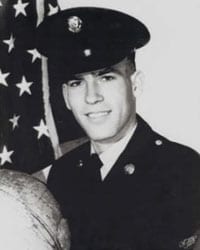
Peter Charles Lemon earned the Medal of Honor for extraordinary bravery during the defence of Fire Support Base Illingworth on 1 April 1970. A Canadian-born United States Army soldier, he continued fighting despite repeated wounds and overwhelming enemy pressure.
Born in Toronto on 5 June 1950, Lemon grew up in Michigan and enlisted in February 1969. Following initial military and infantry training from February to May, he served with Company D, 3rd Battalion, at Fort Polk, Louisiana, from May to July 1969. He deployed to South Vietnam in July 1969, serving with Company I (Airborne-Ranger), 75th Infantry, attached to the 1st Infantry Division, until March 1970. He then joined Company E (Recon), 2nd Battalion, 8th Cavalry, 1st Cavalry Division.
During the attack on Fire Support Base Illingworth in Tây Ninh Province, Specialist Four (E-4) Lemon served as an assistant machine gunner. When his machine gun and rifle malfunctioned, he fought with grenades and in close combat. Repeatedly wounded, he carried a seriously injured comrade to medical assistance, returned to his threatened position and operated another machine gun while exposed to enemy fire until he collapsed. After regaining consciousness, he refused evacuation until more seriously wounded comrades had been evacuated. These actions formed one sustained defining mission within one confirmed major engagement; the confirmed minimum does not imply that he experienced no other combat.
His Company E assignment continued to July 1970. From July to December 1970 he served with 2nd Battalion, 61st Infantry, 5th Infantry Division (Mechanized), at Fort Carson, Colorado. President Richard Nixon presented his Medal of Honor at the White House on 15 June 1971. Lemon reached the final rank of Sergeant (E-5) and left Army service in 1972.
Medal of Honor citation
For conspicuous gallantry and intrepidity in action at the risk of his life above and beyond the call of duty. Sgt. Lemon (then Sp4c.), Company E, distinguished himself while serving as an assistant machine gunner during the defense of Fire Support Base Illingworth. When the base came under heavy enemy attack, Sgt. Lemon engaged a numerically superior enemy with machine-gun and rifle fire from his defensive position until both weapons malfunctioned. He then used hand grenades to fend off the intensified enemy attack launched in his direction. After eliminating all but one of the enemy soldiers in the immediate vicinity, he pursued and disposed of the remaining soldier in hand-to-hand combat. Despite fragment wounds from an exploding grenade, Sgt. Lemon regained his position, carried a more seriously wounded comrade to an aid station, and, as he returned, was wounded a second time by enemy fire. Disregarding his personal injuries, he moved to his position through a hail of small-arms and grenade fire. Sgt. Lemon immediately realized that the defensive sector was in danger of being overrun by the enemy and unhesitatingly assaulted the enemy soldiers by throwing hand grenades and engaging in hand-to-hand combat. He was wounded yet a third time, but his determined efforts successfully drove the enemy from the position. Securing an operable machine gun, Sgt. Lemon stood atop an embankment fully exposed to enemy fire, and placed effective fire upon the enemy until he collapsed from his multiple wounds and exhaustion. After regaining consciousness at the aid station, he refused medical evacuation until his more seriously wounded comrades had been evacuated. Sgt. Lemon's gallantry and extraordinary heroism are in keeping with the highest traditions of the military service and reflect great credit on him, his unit, and the U.S. Army.
Become the named supporter for this profile and edit the tribute biography and portrait (Owner account required). Proceeds help keep the archive online.
$25 USD / year — annual sponsorship renewal. Keeps the page online and, where enabled, the family anniversary remembrance emails active.