★
Loading archive…
Loading archive…
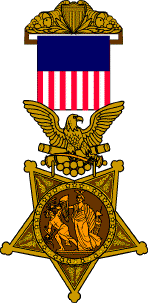
Private, U.S. Army
Support & adopt this hero ↓
He Seized the Enemy Flag—and Made History
Philip Baybutt was a British-born Union Army cavalryman whose extraordinary courage during the American Civil War earned him the Medal of Honor, the United States' highest military decoration for valor. On September 24, 1864, during a cavalry engagement near Luray, Virginia, Baybutt captured a Confederate battle flag while serving with Company A of the 2nd Massachusetts Cavalry. His remarkable action transformed an English immigrant serving in a foreign war into one of the earliest British-born recipients of America's most prestigious military honor.
Born in Manchester, England, in 1844, Philip Baybutt grew up in an industrial city profoundly affected by the American Civil War. Manchester was an important center of Britain's cotton industry, and the Union blockade of Confederate ports created widespread economic hardship among its workers. Despite these difficulties, many residents maintained strong opposition to slavery and expressed sympathy for the Union cause. This complicated political and economic environment formed part of the world Baybutt knew before his journey across the Atlantic.
Before entering military service, Baybutt worked as a teamster, a profession involving the handling of horses and the transportation of goods. His experience with horses would later prove particularly relevant to his wartime duties. In late 1863 or early 1864, he traveled to the United States, where his brother was living in Massachusetts. Although his original journey was associated with a family visit, he soon became involved in the conflict that was dividing the United States.
In February 1864, Baybutt enlisted in the Union Army from Massachusetts. He joined Company A of the 2nd Massachusetts Cavalry, an experienced mounted regiment that had already participated in demanding military operations. Company A had originated with volunteers from California and became associated with the designation "California Hundred." By the time Baybutt entered the regiment, continued campaigning had created a need for replacement soldiers, and he joined its ranks as a private.
Cavalry service demanded considerable endurance, horsemanship, and adaptability. Mounted troops performed reconnaissance, protected army movements, carried communications, guarded strategic routes, and engaged enemy cavalry. In northern Virginia, the 2nd Massachusetts Cavalry frequently operated against Confederate mounted forces, including units associated with the celebrated partisan commander John Singleton Mosby. For Baybutt, military service meant exposure to the hazards of mobile warfare, where engagements could develop suddenly and fighting often occurred across difficult countryside.
The summer and autumn of 1864 brought increasingly intense operations in Virginia's Shenandoah Valley. Union General Philip H. Sheridan commanded a major campaign intended to defeat Confederate Lieutenant General Jubal Early, secure the region, and disrupt the agricultural and transportation networks supporting Confederate armies. Cavalry played an essential role in these operations, pursuing enemy formations, protecting Union movements, and challenging Confederate control of important roads and settlements.
Baybutt experienced the dangers of this campaign firsthand. Accounts of his service describe multiple engagements, injuries sustained during combat, and the loss of horses beneath him. His wartime experiences demonstrated the physical demands of cavalry operations, particularly during the rapid movements and frequent skirmishes that characterized fighting in the Shenandoah Valley.
On September 24, 1864, Union cavalry advanced toward Luray, Virginia, following major operations in the valley. Confederate cavalry under Colonel William H. F. Payne had withdrawn toward the area, while Union mounted forces operating with Brigadier General George Armstrong Custer and Colonel Charles Russell Lowell Jr. moved to challenge them. Baybutt's regiment participated in the advance, placing him directly in the path of the developing engagement.
The opposing cavalry forces clashed near Luray as Union troops pressed their attack. During the fighting, Baybutt accomplished the extraordinary act for which he would become nationally recognized: he captured a Confederate battle flag. The official Medal of Honor citation records the achievement simply as "Capture of flag."
The seizure of an enemy flag carried exceptional military significance during the Civil War. Regimental colors served as identifying symbols, helped soldiers maintain formation, and represented the identity and honor of a military unit. In the confusion of battle, capturing an opposing regiment's colors was regarded as a notable act of courage because flags were closely associated with the soldiers responsible for protecting them. Such captures became important measures of battlefield achievement and were frequently recognized through military awards.
Baybutt's action at Luray distinguished him among the soldiers engaged in the Shenandoah Valley campaign. His achievement became particularly remarkable because he was a British-born private serving in the Union Army rather than a native-born American soldier. The capture demonstrated his willingness to undertake the risks of mounted combat in circumstances where courage and initiative were essential.
Recognition followed with unusual speed. On October 19, 1864, less than a month after the engagement, Baybutt's Medal of Honor was recorded as issued for his action at Luray. The decoration recognized his individual gallantry and permanently associated his name with one of the most significant military honors awarded during the Civil War.
The Medal of Honor had been established by the United States Congress during the early years of the conflict. The Army version was authorized in 1862 to recognize exceptional military conduct, and it became the principal federal military decoration available to Union soldiers for distinguished acts of bravery. Its early design featured a five-pointed star suspended from a ribbon, establishing the visual tradition of an award that would eventually become America's highest decoration for military valor.
For Baybutt, the award represented the formal acknowledgment of a remarkable action performed during a demanding cavalry campaign. Unlike decorations introduced long after a conflict, his Medal of Honor recognized his service while the Civil War was still being fought. He remained part of the generation of Union soldiers whose individual battlefield achievements helped establish the early history and traditions of the decoration.
Baybutt continued serving with the 2nd Massachusetts Cavalry through the remaining months of the war. The Shenandoah Valley campaign contributed significantly to weakening Confederate military strength, while Union successes elsewhere steadily brought the conflict toward its conclusion. Following the Confederate surrender in April 1865, Baybutt remained in service until his discharge in July 1865, completing his military career with the rank of private.
After leaving the Army, Baybutt returned to England and resumed civilian life in Manchester. His return marked a transition from the dangerous world of cavalry warfare to the responsibilities of family and employment. He worked in commercial occupations and eventually married Harriet Jones on December 26, 1872. The couple raised eight children, establishing a family whose descendants would later play an important role in preserving his military legacy.
Although Baybutt had survived the Civil War, its effects continued into his later life. Historical accounts describe lasting difficulties associated with the injuries and physical hardships he experienced during military service. His experiences reflected those of many Civil War veterans who returned to ordinary life carrying the consequences of wounds, illness, and the demanding conditions of wartime campaigning.
In 1907, the United States War Department established the Army Civil War Campaign Medal to commemorate qualifying military service during the conflict. This decoration differed fundamentally from the Medal of Honor. Rather than recognizing an individual act of battlefield valor, it acknowledged service during the Civil War. Its design incorporated a portrait of Abraham Lincoln and the years 1861–1865, while its blue and gray ribbon symbolized the opposing armies. Baybutt's documented service from 1864 to 1865 fell within the historical period commemorated by this campaign decoration.
Philip Baybutt died in Manchester on April 17, 1907, at approximately sixty-two years of age. He was buried in Southern Cemetery, Manchester, bringing his life back to the English city where it had begun. For many years, his grave did not prominently reflect the extraordinary military distinction he had received while serving in the United States.
His military achievements eventually received renewed public recognition. In September 2002, a commemorative ceremony was held at Southern Cemetery to honor his wartime service and Medal of Honor. His granddaughter, Edna Baybutt, unveiled a special memorial headstone recognizing the courage of her grandfather. The event brought together family members, local representatives, and Civil War history enthusiasts, connecting his descendants with a remarkable chapter of their family's past.
The ceremony also highlighted the international character of the American Civil War. Thousands of foreign-born soldiers entered Union military service, contributing their experience, labor, and courage to a conflict that would determine the future of the United States. Baybutt's journey from Manchester to the battlefields of Virginia demonstrated how the war drew individuals from far beyond America's borders.
Today, Philip Baybutt is remembered for his decisive act at Luray on September 24, 1864. His capture of a Confederate battle flag earned him the Medal of Honor and secured his place among the distinguished soldiers of the Union Army. His life reflects courage, migration, military sacrifice, and the enduring consequences of war. From his service with the 2nd Massachusetts Cavalry to the recognition restored to his grave more than a century later, Baybutt's story remains a significant part of both American military history and the history of British participation in the American Civil War.
Become the named supporter for this profile and edit the tribute biography and portrait (Owner account required). Proceeds help keep the archive online.
$25 USD / year — annual sponsorship renewal. Keeps the page online and, where enabled, the family anniversary remembrance emails active.