★
Loading archive…
Loading archive…
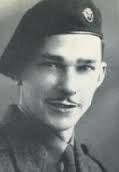
Lieutenant, British Army
Support & adopt this hero ↓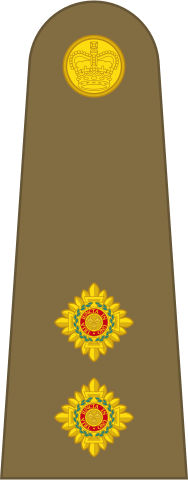
Wounded, he charged again to break an enemy machine-gun post
Philip Kenneth Edward Curtis was born in Plymouth, Devon, on 7 July 1926. He joined the Army in 1944 and received a commission in the Duke of Cornwall's Light Infantry in 1946. His wartime service did not include an operational campaign overseas. He later served in the Middle East before leaving the Army in 1948.
A widower with a young daughter, Curtis returned to service during the Korean War. He was attached to the 1st Battalion, Gloucestershire Regiment, and led No. 1 Platoon of A Company during the Battle of the Imjin River.
On the night of 22–23 April 1951, Chinese troops attacked the battalion's positions. By dawn they had gained a foothold near another platoon on Castle Hill. Curtis led a counter-attack, which advanced before being stopped by close-range fire and grenades.
Ordering covering fire, he charged the main position and was severely wounded. His men pulled him back, but he broke away and made a second assault, throwing grenades. He was killed within a few yards of the objective. Although the position was not captured, the force of the counter-attack discouraged further enemy advances in that area and helped preserve the possibility of his company's withdrawal.
His Victoria Cross was announced on 1 December 1953 and presented to his family in 1954. He is buried in the United Nations Memorial Cemetery at Busan, South Korea.
Victoria Cross citation
During the first phase of the Battle of the Imjin River on the night of 22nd/23rd April, 1951, “A” Company, 1 Glosters, was heavily attacked by a large enemy force. By dawn on 23rd April, the enemy had secured a footing on the “Castle Hill” site in very close proximity to No. 2 Platoon's position. The Company Commander ordered No. 1 Platoon, under the command of Lieutenant CURTIS, to carry out a counter-attack with a view to dislodging the enemy from the position. Under the covering fire of medium machine guns, the counter-attack, gallantly led by Lieutenant CURTIS, gained initial success but was eventually held up by heavy fire and grenades. Enemy from just below the crest of the hill were rushed to reinforce the position and a fierce fire-fight developed, grenades also being freely used by both sides in this close-quarter engagement. Lieutenant CURTIS ordered some of his men to give him covering fire while he himself rushed the main position of resistance; in this charge Lieutenant CURTIS was severely wounded by a grenade. Several of his men crawled out and pulled him back under cover but, recovering himself, Lieutenant CURTIS insisted on making a second attempt. Breaking free from the men who wished to restrain him, he made another desperate charge, hurling grenades as he went, but was killed by a burst of fire when within a few yards of his objective.
Although the immediate objective of this counter-attack was not achieved, it had yet a great effect on the subsequent course of the battle; for although the enemy had gained a footing on a position vital to the defence of the whole Company area, this success had resulted in such furious reaction that they made no further effort to exploit their success in this immediate area; had they done so, the eventual withdrawal of the Company might well have proved impossible.
Lieutenant CURTIS'S conduct was magnificent throughout this bitter battle.
Become the named supporter for this profile and edit the tribute biography and portrait (Owner account required). Proceeds help keep the archive online.
$25 USD / year — annual sponsorship renewal. Keeps the page online and, where enabled, the family anniversary remembrance emails active.