★
Loading archive…
Loading archive…

Captain, British Army
Support & adopt this hero ↓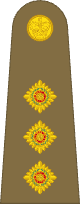
The Tank Commander Who Walked Into Enemy Fire at Tobruk
The tow rope had snapped. Enemy anti-tank guns and machine guns were firing at close range. A badly wounded officer lay beside a shattered armoured car, and Philip "Pip" Gardner had already left the protection of his tank once to reach him. He could have withdrawn. Instead, Gardner went back into the fire. Moments later he was wounded himself, yet he still carried the injured officer to his tank and refused to leave him behind. It was an act of extraordinary courage that would earn Captain Philip John Gardner VC MC of the Royal Tank Regiment the Victoria Cross and secure his place among the most remarkable British soldiers of the Second World War.
Philip John Gardner was born in Sydenham, London, on 25 December 1914. Educated at Dulwich College, he later entered his family's engineering and air-conditioning business. As a young man he spent time working in Hong Kong, where he joined the Hong Kong Volunteer Defence Force (Armoured Cars). Back in Britain, he joined the Westminster Dragoons of the Territorial Army in 1938. His transition from part-time soldier to wartime tank officer followed quickly. The London Gazette records Gardner, service number 132595, among the cadets appointed second lieutenants from the 110th Officer Cadet Training Unit, with effect from 18 May 1940. He went on to serve in the Royal Tank Regiment and was posted to the Middle East, joining the 4th Royal Tank Regiment in 1941.
Gardner proved his courage well before the action that made him famous. During fighting in the Western Desert, his tanks entered an unmarked minefield and several were immobilised. Gardner's own tank was hit, killing his driver and disabling its main gun. When a senior officer, Tom Roe, was mortally wounded by a mine, Gardner left his tank under enemy fire in an attempt to reach him. With the stranded tanks unable to escape, Gardner eventually ordered the crews to withdraw on foot. He then returned alone the following day to disable the abandoned guns and recover personal effects and identity tags from the dead. This conduct brought him the Military Cross.
The award was officially announced in the London Gazette on 21 October 1941, where "Second-Lieutenant Philip John Gardner (132595), Royal Armoured Corps (Royal Tank Regiment)" appears under the heading The Military Cross. Significantly, the Gazette notice does not provide a narrative citation explaining the deed, so later descriptions of the action should not be presented as the official MC citation itself. The award, however, is unequivocally confirmed by the primary Gazette record.
Only weeks later came the action that defined Gardner's military career. During Operation Crusader, amid the brutal fighting around Tobruk, Gardner was serving with the 4th Royal Tank Regiment in the 32nd Tank Brigade. On the morning of 23 November 1941, south-east of Tobruk, he was ordered to take two tanks to assist two disabled armoured cars of the King's Dragoon Guards. The vehicles were roughly 200 yards apart and were being systematically destroyed by enemy fire. Gardner ordered his second tank to provide covering fire, manoeuvred his own tank toward the foremost armoured car, climbed out, and under intense anti-tank and machine-gun fire attached a tow rope.
Beside the armoured car lay a gravely wounded officer, Lieutenant Peter Beame, whose legs had been shattered. Gardner lifted him into the vehicle and ordered the tow to begin, but the rope broke. Gardner immediately went back. This time enemy fire struck him in the arm and leg. Even after being wounded, he lifted Beame from the armoured car, carried him to the tank and placed him on the rear engine louvres. Gardner then climbed alongside him so that he could physically hold the wounded man in place while the tank withdrew through heavy shellfire. During the withdrawal the tank's loader was killed. Gardner nevertheless stayed with Beame until they reached safety.
The Victoria Cross citation, published in the London Gazette on 10 February 1942, formally identified him as "Lieutenant (acting Captain) Philip John Gardner, M.C. (132595), Royal Tank Regiment, Royal Armoured Corps." In summing up his conduct, the citation praised his "courage, determination and complete disregard for his own safety", stating that despite his wounds and intense close-range fire he had succeeded in saving his fellow officer's life from immediate danger. The citation remains one of the clearest records of what distinguished Gardner's bravery: he repeatedly chose to expose himself to enemy fire not to attack, but to rescue another man.
Gardner's war was far from over. After the fall of Tobruk in June 1942, he became a prisoner of war and was sent to Italy. Following Italy's surrender in September 1943, he escaped from a camp near Parma and spent months attempting to remain free before being recaptured by German forces in Rome. He was subsequently imprisoned at Mühlberg and later at Oflag 79 near Brunswick. Even captivity produced another lasting part of Gardner's legacy. He helped collect thousands of pounds in pledges from fellow prisoners for young people suffering amid wartime London, an initiative that contributed after the war to the establishment of the Brunswick Boys' Club in Fulham. Gardner remained closely associated with the club for decades.
After returning home, Gardner resumed his career in the family engineering business and eventually became chairman. He also served as Honorary Secretary of the Victoria Cross and George Cross Association, maintaining a close connection with the community of men and women recognised for exceptional courage. He married Renee Sherburn in 1939, and the couple had a son. Gardner died at Hove, East Sussex, on 15 February 2003, aged 88.
Across his lifetime, Gardner's verified ribbon entitlement reflected both his wartime service and his later status as one of Britain's surviving Victoria Cross recipients. Alongside the Victoria Cross and Military Cross, his group includes the 1939-1945 Star, Africa Star, War Medal 1939-1945, Queen Elizabeth II Coronation Medal 1953, Queen Elizabeth II Silver Jubilee Medal 1977, Queen Elizabeth II Golden Jubilee Medal 2002, and Efficiency Medal (Territorial). His Victoria Cross was the first awarded to an officer of the Royal Tank Regiment during the Second World War. In 2026, The Tank Museum brought Gardner's medal group together on display with that of Major General Henry "Bob" Foote VC, the only other Royal Tank Regiment Victoria Cross recipient of the Second World War.
Philip "Pip" Gardner's story is powerful because his courage was not confined to a single morning at Tobruk. He had already risked his life for others before winning the Victoria Cross, endured years as a prisoner of war, helped create something lasting for young people while still in captivity, and spent much of his later life serving organisations connected with courage and community. Yet it is the image from 23 November 1941 that remains unforgettable: a wounded tank officer, under direct enemy fire, climbing back onto his tank not to save himself, but to hold another wounded man in place as they fought their way back to safety. That was Philip John Gardner VC MC, and that was the courage for which his name entered the history of the Victoria Cross, the Royal Tank Regiment and the Battle of Tobruk.
Become the named supporter for this profile and edit the tribute biography and portrait (Owner account required). Proceeds help keep the archive online.
$25 USD / year — annual sponsorship renewal. Keeps the page online and, where enabled, the family anniversary remembrance emails active.